
Introduction
Silver mercury price ,Mercury represented by the chemical symbol Hg, is one of the most unique elements in the periodic table. Unlike most metals, which are solid under normal conditions, mercury exists as a liquid metal at room temperature. This unusual characteristic, combined with its high density, electrical conductivity, and chemical behavior, has made mercury an important element in scientific research and industrial applications throughout history.
Known since ancient times, mercury has played a significant role in metallurgy, medicine, chemistry, and manufacturing. Its distinctive properties made it valuable in applications such as scientific instruments, measurement devices, electrical components, and specialized industrial processes. Over time, however, advances in environmental science and occupational health have led to increased regulation and the development of alternatives for many traditional mercury applications.
Today, mercury remains an important subject in chemistry, environmental science, industrial management, and regulatory discussions. Understanding mercury requires consideration of multiple factors, including its physical and chemical properties, historical uses, industrial relevance, environmental impact, safety requirements, and international regulations.
This comprehensive guide explores mercury from a scientific and industrial perspective, providing an overview of its characteristics, applications, market considerations, responsible management practices, and the global efforts surrounding mercury use and environmental protection.
Why Mercury Is Scientifically Important
Mercury occupies a unique position among metallic elements because of its combination of physical characteristics:
- It is the only metal that remains liquid under standard atmospheric pressure at room temperature.
- It has a high density compared with many other metals.
- It expands and contracts predictably with temperature changes.
- It can form alloys, known as amalgams, with several other metals.
- It has distinct electrical and chemical properties that have contributed to its historical scientific importance.
These characteristics have made mercury an important element for researchers studying metallic behavior, chemical reactions, material science, and environmental chemistry.
Mercury in Modern Industry
The role of mercury in industry has changed significantly over time. Many historical applications have declined because of environmental and health considerations, while controlled uses continue in certain scientific, industrial, and research environments where specific properties are required.
Modern discussions about mercury often focus on:
- Understanding its chemical characteristics.
- Managing historical contamination.
- Reducing environmental releases.
- Improving recycling and recovery practices.
- Following international regulations.
- Developing safer alternatives where possible.
Because mercury has both scientific importance and environmental significance, accurate information about the element is essential for businesses, researchers, regulators, and the general public.
What Is Mercury?
Mercury (chemical symbol Hg) is a naturally occurring metallic element with atomic number 80 on the periodic table. It belongs to Group 12 and is classified as a transition metal. Unlike nearly every other metal, mercury is liquid under standard atmospheric conditions, making it one of the most recognizable elements in chemistry.
The symbol Hg comes from the Latinized Greek name hydrargyrum, meaning “liquid silver” or “water silver.” This historical name reflects mercury’s distinctive silvery appearance and fluid nature. The term “silver mercury” is still encountered in historical texts and online searches, although it is not a separate chemical substance. The silver mercury formula is simply the elemental symbol Hg, which identifies mercury as a pure chemical element.
Mercury occurs naturally in the Earth’s crust, most commonly in the mineral cinnabar (HgS). Through geological processes and industrial extraction, mercury has been used in scientific instruments, electrical equipment, analytical laboratories, and various manufacturing applications. Today, many traditional uses have been reduced because of environmental and occupational health considerations, while specialized industrial and research applications continue under strict regulatory controls.
Atomic Structure
Mercury has an atomic weight of 200.59 and an electron configuration of:
[Xe] 4f¹⁴ 5d¹⁰ 6s²
Its filled electron shells contribute to several unusual physical characteristics, including its liquid state at room temperature. Mercury also forms compounds in different oxidation states, allowing it to participate in a wide range of chemical reactions studied in laboratories and industry.
Why Is Mercury Liquid at Room Temperature?
One of mercury’s defining characteristics is that it remains liquid at temperatures where most metals are solid. This behavior results from the way its outer electrons interact, producing weaker metallic bonding than in many other metals.
Because of this unique property, mercury was historically used in:
- Thermometers
- Barometers
- Laboratory instruments
- Scientific measurement devices
- Certain electrical switches and relays
Although many of these applications have been replaced by alternative technologies, mercury remains an important subject of study in chemistry, materials science, and environmental research.
Naturally Occurring Mercury
Mercury is found in trace amounts throughout the environment, including:
- Mineral deposits
- Volcanic emissions
- Certain sedimentary rocks
- Soil and aquatic ecosystems
Natural geological activity and historical industrial processes both contribute to mercury’s presence in the environment. Understanding these sources is important for environmental monitoring and responsible resource management.
Mercury in Industry Today
Modern discussions about mercury often extend beyond its physical properties to include market trends, environmental management, and regulatory oversight. For example, people frequently ask about mercury prices, mercury price per ounce, 1g mercury price, silver mercury price, silver mercury price per kg, or mercury mineral price. While these searches reflect interest in market information, industrial pricing depends on factors such as purity, regulatory requirements, transportation, and the intended industrial application rather than a single universal price.
Another common question is “What is red mercury?” Despite persistent online claims, there is no scientifically verified evidence that “red mercury” is a distinct elemental form of mercury. The term has been associated with myths, rumors, and misinformation over several decades. Later in this guide, we examine the history of the term, the scientific evidence, and why it continues to generate public interest.
Finally, questions such as “Is it legal to buy mercury?” often arise because mercury is regulated differently around the world. Laws governing its manufacture, transport, industrial use, storage, import, export, and disposal vary by country and by intended application. Understanding these regulations is essential for organizations working with mercury in legitimate industrial, scientific, or research settings.
Chapter 3: Physical Properties of Mercury (Hg)
Mercury possesses a unique combination of physical properties that distinguish it from nearly every other metallic element. Its ability to remain liquid at room temperature, combined with its exceptional density and predictable thermal expansion, has made it valuable in scientific research, industrial manufacturing, laboratory instrumentation, and precision measurement for centuries.
Understanding these physical characteristics helps explain why mercury has historically been used in specialized applications and why it continues to be an important subject in chemistry, materials science, and environmental science.
Physical Properties at a Glance
| Property | Value |
|---|---|
| Chemical Symbol | Hg |
| Atomic Number | 80 |
| Atomic Weight | 200.59 u |
| Classification | Transition Metal |
| Appearance | Silvery-white liquid metal |
| Density (20°C) | 13.534 g/cm³ |
| Melting Point | -38.83°C (-37.89°F) |
| Boiling Point | 356.73°C (674.11°F) |
| Standard State | Liquid |
| Crystal Structure (Solid State) | Rhombohedral |
| Electrical Conductivity | Moderate |
| Thermal Conductivity | Approximately 8.3 W/m·K |
These values make mercury one of the densest naturally occurring elements while remaining liquid under ordinary environmental conditions.
Why Mercury Is Liquid at Room Temperature
Mercury is the only metallic element that exists as a liquid under standard atmospheric conditions. This unusual behavior results from the way mercury’s outer electrons interact with one another.
Unlike most metals, mercury forms relatively weak metallic bonds. These weaker interactions mean that less energy is required for the atoms to move freely, allowing mercury to remain liquid until temperatures fall below −38.83°C.
This distinctive property made mercury particularly useful in precision instruments designed to measure temperature and pressure before the widespread adoption of electronic technologies.
Density and Weight
Mercury is exceptionally dense compared with most common metals.
For comparison:
| Material | Approximate Density |
|---|---|
| Water | 1.0 g/cm³ |
| Aluminum | 2.7 g/cm³ |
| Iron | 7.9 g/cm³ |
| Copper | 8.96 g/cm³ |
| Lead | 11.34 g/cm³ |
| Mercury | 13.53 g/cm³ |
Because of this high density, relatively small volumes of mercury contain a significant amount of mass. Historically, this characteristic made mercury suitable for scientific instruments such as barometers and manometers, where compact yet heavy liquids were advantageous.
Thermal Expansion
Mercury expands in a predictable and nearly linear manner as temperature increases.
This characteristic was one of the primary reasons mercury became widely used in laboratory thermometers and industrial temperature-measurement devices for many years.
Although digital sensors have replaced mercury in many applications, the element’s predictable thermal behavior remains an important topic in scientific education and the history of measurement technology.
Electrical Properties
Mercury conducts electricity, although not as efficiently as metals such as copper or silver.
Its conductive properties historically enabled its use in:
- Electrical relays
- Tilt switches
- Specialized scientific equipment
- Certain industrial control systems
Many of these applications have since been replaced by mercury-free technologies because of evolving environmental and occupational safety standards.
Surface Tension
One of mercury’s most recognizable characteristics is its exceptionally high surface tension.
Instead of spreading across a surface like water, mercury forms rounded droplets. This behavior occurs because mercury atoms are strongly attracted to one another while interacting less strongly with many other materials.
This property has long been demonstrated in chemistry education to illustrate intermolecular forces and metallic bonding.
Appearance and Reflectivity
Fresh mercury has a bright, silvery appearance with a reflective surface that resembles polished metal.
When exposed to certain environmental conditions, however, its appearance may gradually change because of surface reactions with other substances. These changes depend on factors such as temperature, surrounding chemicals, and storage conditions.
Vapor Pressure
Although mercury is a liquid at room temperature, it slowly releases mercury vapor into the surrounding air.
The rate of vapor formation increases significantly as temperature rises. For this reason, laboratories and industrial facilities that work with mercury implement engineering controls, ventilation systems, and exposure-monitoring procedures designed to reduce occupational exposure.
Why Mercury’s Physical Properties Matter
Mercury’s physical characteristics explain both its historical importance and the reasons its use is now carefully managed.
Its:
- Liquid state
- High density
- Stable thermal expansion
- Electrical conductivity
- Surface tension
- Reflective appearance
made it valuable in scientific instruments and specialized industrial applications for generations. At the same time, these same properties require careful handling and responsible management within modern regulatory frameworks.
Chapter 4: Chemical Properties of Mercury (Hg)
Mercury is not only unique because it is liquid at room temperature—it also exhibits a distinctive set of chemical properties that influence its behavior in industrial processes, scientific research, and environmental systems. Understanding these characteristics is essential for chemists, engineers, laboratory professionals, and environmental specialists working with mercury or studying its compounds.
Unlike highly reactive alkali metals, mercury is relatively stable under ordinary conditions. However, it readily reacts with certain elements and compounds, forming a variety of inorganic and organic mercury compounds that differ significantly in their chemical behavior and environmental persistence.
Chemical Identity
| Property | Value |
|---|---|
| Element Name | Mercury |
| Chemical Symbol | Hg |
| Atomic Number | 80 |
| Atomic Mass | 200.59 u |
| Group | 12 |
| Period | 6 |
| Block | d-block |
| Standard Oxidation States | +1, +2 |
| Electron Configuration | [Xe] 4f¹⁴ 5d¹⁰ 6s² |
Mercury’s electron configuration contributes to its relatively low chemical reactivity compared with many other metals. This arrangement also explains why mercury exhibits unusual bonding characteristics and remains liquid under standard conditions.
Oxidation States
Mercury most commonly exists in two oxidation states:
Mercury(I) — Hg₂²⁺
Mercury(I), also called mercurous mercury, consists of two mercury atoms bonded together to form the Hg₂²⁺ ion. This oxidation state is less stable than mercury(II) and is encountered in a limited number of compounds.
Examples include:
- Mercury(I) chloride (calomel)
- Mercury(I) nitrate
These compounds have historically been used in laboratory chemistry and electrochemical reference systems.
Mercury(II) — Hg²⁺
Mercury(II), also known as mercuric mercury, is the most common oxidation state encountered in chemistry.
Mercury(II) compounds include:
- Mercury(II) chloride
- Mercury(II) oxide
- Mercury(II) sulfide
- Mercury(II) nitrate
These compounds differ considerably in solubility, stability, and industrial relevance, making careful identification important in laboratory and environmental analyses.
Reactivity with Air
Pure mercury is relatively stable when exposed to dry air at room temperature. Unlike iron, it does not readily rust or corrode under ordinary atmospheric conditions.
However, under certain conditions—including elevated temperatures or exposure to reactive chemicals—mercury can form oxides and other compounds. These reactions are of interest in analytical chemistry and industrial processing.
Reactions with Sulfur
One of mercury’s most significant chemical reactions is its interaction with sulfur.
When elemental mercury comes into contact with sulfur, it forms mercury sulfide (HgS), a stable compound that occurs naturally as the mineral cinnabar.
This reaction is important because mercury sulfide is generally less mobile than elemental mercury, making sulfur-based stabilization an important concept in environmental remediation and waste management.
Amalgam Formation
Mercury has the unusual ability to form amalgams, which are alloys produced when mercury combines with certain metals.
Mercury readily forms amalgams with:
- Gold
- Silver
- Zinc
- Tin
Historically, amalgams played important roles in:
- Dental materials
- Precious metal extraction
- Scientific research
- Industrial manufacturing
Today, the use of mercury-containing amalgams has declined in many applications because of environmental considerations and the availability of alternative materials.
Solubility and Chemical Behavior
Elemental mercury is only slightly soluble in water. However, many mercury compounds have very different chemical characteristics.
Depending on the compound formed, mercury may exhibit varying:
- Water solubility
- Chemical stability
- Environmental mobility
- Biological availability
These differences are important in environmental chemistry because not all forms of mercury behave in the same way. Understanding the specific chemical species present is essential when evaluating environmental or industrial systems.
Organic and Inorganic Mercury
Mercury occurs in several chemical forms, each with distinct properties:
Elemental Mercury (Hg⁰)
- Naturally occurring liquid metal.
- Used historically in measuring instruments and some industrial processes.
- Can release mercury vapor under certain conditions.
Inorganic Mercury Compounds
Produced when mercury reacts with elements such as chlorine, sulfur, or oxygen.
Examples include:
- Mercury chloride
- Mercury oxide
- Mercury sulfide
These compounds vary widely in their physical and chemical properties.
Organic Mercury Compounds
Organic mercury compounds are formed when mercury bonds with carbon-containing molecules.
Examples include:
- Methylmercury
- Ethylmercury
These compounds are primarily discussed in environmental science because of their behavior in aquatic ecosystems and food chains.
Why Mercury’s Chemistry Matters
Mercury’s chemical properties help explain:
- Its historical industrial applications.
- Its environmental behavior.
- Its interactions with other elements.
- Why different mercury compounds require different handling and management approaches.
- Why environmental scientists distinguish carefully between elemental, inorganic, and organic mercury.
A clear understanding of mercury chemistry supports better decision-making in research, environmental management, industrial operations, and regulatory compliance.
Chapter 5: Industrial Applications of Mercury
Mercury has played an important role in scientific discovery and industrial development for centuries. Its unique combination of physical and chemical properties—including its liquid state at room temperature, high density, electrical conductivity, and ability to form amalgams—made it valuable in a wide range of industrial and scientific applications.
Over the past several decades, however, increased understanding of mercury’s environmental and health impacts has led to significant changes in how it is used. Many historical applications have been replaced by safer alternatives, while remaining uses are generally limited to specialized industrial, research, analytical, and manufacturing environments operating under strict regulatory controls.
Understanding mercury’s industrial history provides valuable insight into the evolution of modern chemical engineering, laboratory science, environmental management, and materials technology.
Scientific Research and Laboratory Applications
Mercury has long been an important material in scientific laboratories because of its stable physical properties and predictable behavior under controlled conditions.
Historically, mercury was used in:
- Precision laboratory thermometers
- Barometers
- Manometers
- Vacuum systems
- Calibration equipment
- Scientific measurement instruments
Although many laboratories have transitioned to digital instrumentation, mercury-based reference devices continue to be studied in the history of science and, in some specialized contexts, maintained under regulated conditions.
Laboratory researchers also continue to investigate mercury’s physical properties, chemical reactions, environmental behavior, and analytical detection methods as part of broader research in chemistry and environmental science.
Chemical Manufacturing
Mercury has historically been associated with several chemical manufacturing processes.
One notable example is the chlor-alkali industry, where mercury-cell technology was once widely used to produce chlorine and sodium hydroxide. Advances in membrane-cell technology have significantly reduced the use of mercury in this sector, improving efficiency while reducing environmental emissions.
Today, mercury’s role in chemical manufacturing is primarily discussed in relation to historical industrial processes, environmental remediation, and the transition toward cleaner production technologies.
Electrical and Electronic Equipment
Mercury’s electrical conductivity and predictable behavior made it useful in several electrical applications.
Historically, mercury was incorporated into:
- Electrical relays
- Tilt switches
- Float switches
- Industrial control equipment
- Specialized electrical contacts
Many of these components have since been replaced by mercury-free alternatives as manufacturers adopted new technologies and responded to evolving environmental regulations.
Scientific Instruments
Mercury has contributed significantly to the development of precision scientific instrumentation.
Examples include:
Thermometers
Mercury’s predictable thermal expansion allowed accurate temperature measurement over a broad operating range.
Barometers
Its high density enabled the construction of relatively compact atmospheric pressure measurement devices.
Manometers
Mercury provided accurate pressure measurements in laboratories and industrial systems.
Calibration Equipment
Standard reference instruments frequently relied on mercury because of its stable and reproducible physical properties.
Although many modern instruments now use electronic sensors, mercury-based devices remain important in the history of scientific measurement and are still encountered in some legacy systems.
Historical Role in Mining and Metallurgy
Mercury has historically been associated with the extraction of precious metals through amalgamation processes. This technique was used in various regions because mercury readily forms amalgams with certain metals, simplifying separation in historical mining operations.
Today, many countries have restricted or phased out these practices because of environmental concerns and the availability of alternative extraction technologies. Modern mining increasingly emphasizes methods that reduce environmental impacts while improving worker safety and operational efficiency.
Medical and Dental History
Historically, mercury compounds were incorporated into certain medical treatments and dental materials.
For example:
- Some antiseptic formulations
- Historical medicinal preparations
- Dental amalgams
Advances in medical science and changes in regulatory standards have significantly reduced or eliminated many of these applications. Today, discussions of mercury in medicine are generally focused on historical context, ongoing research, and regulatory guidance.
Environmental Monitoring and Analytical Science
Mercury remains an important subject in environmental science because researchers monitor its presence in:
- Air
- Water
- Soil
- Sediments
- Aquatic ecosystems
- Biological samples
Environmental laboratories use advanced analytical techniques to detect and quantify mercury, helping governments, industries, and researchers assess environmental quality and evaluate remediation efforts.
Modern Industrial Perspective
Today’s industrial approach to mercury is shaped by three priorities:
Scientific Understanding
Research continues to improve knowledge of mercury’s chemistry, environmental behavior, and interactions within natural systems.
Responsible Management
Organizations handling mercury are expected to comply with applicable environmental, transportation, occupational safety, and waste management regulations.
Innovation
Many industries continue to develop technologies that reduce mercury use, improve recycling, and minimize environmental releases while maintaining product performance and process efficiency.
Key Industries That Study Mercury
Mercury continues to be relevant in fields such as:
- Chemistry
- Environmental science
- Materials science
- Geological research
- Toxicology
- Occupational health
- Industrial hygiene
- Analytical chemistry
- Chemical engineering
- Waste management
Chapter 6: Environmental Impact of Mercury
Mercury is naturally present in the Earth’s environment, but its movement through air, water, soil, and living organisms has made it one of the most extensively studied elements in environmental science. Unlike many pollutants that degrade over time, mercury can persist in ecosystems, change into different chemical forms, and accumulate in plants, animals, and aquatic food chains.
Understanding mercury’s environmental behavior is essential for governments, researchers, manufacturers, environmental consultants, and industries responsible for chemical management. Modern environmental policies focus not only on reducing mercury emissions but also on monitoring existing contamination, improving recycling, and promoting responsible waste management.
This chapter examines how mercury enters the environment, how it moves through ecosystems, and the international efforts aimed at minimizing its environmental impact.
Natural Sources of Mercury
Mercury occurs naturally within the Earth’s crust and is continuously released through geological processes. Long before industrial development, natural events contributed to mercury circulating through the atmosphere and environment.
Natural sources include:
- Volcanic eruptions
- Weathering of mercury-containing rocks
- Geothermal activity
- Forest fires
- Ocean emissions
These natural processes are part of Earth’s geochemical cycle and have occurred for millions of years.
Human Activities That Release Mercury
Industrial development significantly increased mercury emissions during the nineteenth and twentieth centuries.
Historically, mercury entered the environment through activities such as:
- Coal combustion
- Metal production
- Historical mining practices
- Cement manufacturing
- Waste incineration
- Improper disposal of mercury-containing products
Many countries have since introduced stricter environmental regulations, cleaner technologies, and improved emission controls to reduce these releases.
How Mercury Moves Through the Environment
Mercury does not remain in one place. It moves continuously through the atmosphere, water, soil, and living organisms in what scientists refer to as the global mercury cycle.
The cycle generally includes:
Atmospheric Transport
Mercury released into the air can travel long distances before being deposited by rainfall or dust.
Soil Deposition
Once deposited, mercury may bind to soil particles or be transported into nearby waterways through erosion and surface runoff.
Aquatic Systems
Mercury entering rivers, lakes, wetlands, and oceans can undergo chemical changes that affect how it behaves in the environment.
Biological Uptake
Certain microorganisms can convert inorganic mercury into organic forms, allowing it to enter aquatic food webs where it may accumulate over time.
Understanding these pathways is important for environmental monitoring and pollution prevention.
Bioaccumulation and Biomagnification
One of the defining characteristics of mercury is its ability to accumulate within ecosystems.
Bioaccumulation
Bioaccumulation occurs when an organism absorbs mercury faster than it can eliminate it. Over time, mercury concentrations can increase within individual plants or animals.
Biomagnification
Biomagnification occurs when mercury concentrations increase at successive levels of the food chain.
For example:
- Microorganisms absorb mercury.
- Small aquatic organisms consume the microorganisms.
- Fish consume smaller organisms.
- Larger predatory fish consume many smaller fish.
This process can result in higher mercury concentrations in top predators than in surrounding water.
Mercury in Air
Atmospheric mercury is transported across regions and continents through natural air circulation.
Scientists monitor atmospheric mercury because it can:
- Travel long distances before deposition.
- Contribute to global environmental cycling.
- Affect ecosystems far from its original source.
International cooperation has become an important part of reducing atmospheric mercury emissions.
Mercury in Water
Mercury entering aquatic environments can bind to sediments or remain suspended in the water column depending on environmental conditions.
Researchers monitor mercury levels in:
- Rivers
- Lakes
- Reservoirs
- Wetlands
- Coastal waters
- Marine ecosystems
Long-term monitoring programs help scientists evaluate environmental trends and the effectiveness of pollution-control measures.
Mercury in Soil
Mercury can accumulate in soils through both natural geological processes and historical industrial activities.
Its movement within soil depends on factors such as:
- Soil chemistry
- Organic matter
- Moisture
- Temperature
- Microbial activity
Environmental assessments often include soil sampling to identify areas requiring remediation or ongoing monitoring.
Environmental Monitoring
Modern environmental monitoring combines laboratory analysis with field observations to evaluate mercury distribution.
Common monitoring activities include:
- Air quality sampling
- Surface water analysis
- Groundwater testing
- Soil investigations
- Sediment sampling
- Wildlife monitoring
These programs provide data that supports environmental policy, risk assessment, and long-term ecosystem management.
Pollution Prevention and Risk Reduction
Many industries have adopted practices aimed at reducing mercury releases and improving environmental stewardship.
Examples include:
- Improved emission controls
- Cleaner manufacturing technologies
- Mercury recycling initiatives
- Proper storage and waste management
- Environmental monitoring programs
- Worker training and operational controls
These measures help reduce environmental impacts while supporting responsible industrial operations.
International Environmental Initiatives
Global efforts to reduce mercury pollution have expanded significantly in recent decades.
International initiatives encourage countries to:
- Reduce mercury emissions.
- Improve waste management.
- Promote environmentally sound storage.
- Strengthen monitoring programs.
- Support scientific research.
- Encourage international cooperation.
These initiatives aim to balance industrial development with long-term environmental protection.
Why Environmental Understanding Matters
Understanding mercury’s environmental behavior benefits a wide range of professionals, including:
- Environmental scientists
- Chemical engineers
- Industrial manufacturers
- Laboratory researchers
- Waste management specialists
- Environmental consultants
- Policy makers
- Students and educators
Accurate scientific information supports informed decision-making, environmental compliance, and sustainable industrial practices.
Environmental Impact of Mercury
Understanding Mercury’s Environmental Impact
Mercury is a naturally occurring element that has been part of Earth’s environment for millions of years. It is released through natural geological processes such as volcanic activity and the weathering of rocks, but it can also enter the environment through certain industrial activities, energy production, and improper waste management.
What makes mercury particularly important in environmental science is its persistence. Unlike many contaminants that break down over time, mercury can cycle repeatedly through the atmosphere, water, soil, and living organisms. Depending on environmental conditions, it may also transform into different chemical forms with different behaviors and ecological impacts.
Today, governments, industries, and researchers work together to better understand mercury’s environmental cycle, reduce emissions, improve recycling, and strengthen responsible management practices.
Quick Answer:
Mercury affects the environment because it can persist for long periods, travel through air and water, and accumulate in ecosystems. Modern environmental management focuses on reducing emissions, monitoring contamination, and supporting responsible handling and disposal.
At a Glance: Mercury in the Environment
| Environmental Factor | Description |
|---|---|
| Natural Occurrence | Found naturally in rocks, soils, and mineral deposits |
| Environmental Mobility | Can move through air, water, and soil |
| Persistence | Does not easily degrade in the environment |
| Bioaccumulation | May build up in individual organisms over time |
| Biomagnification | Concentrations can increase higher in aquatic food chains |
| Global Monitoring | Widely monitored through international environmental programs |
Where Does Mercury Come From?
Mercury enters the environment through both natural processes and human activities.
Natural Sources
Natural mercury emissions have occurred long before industrial development and continue today through Earth’s geological activity.
Examples include:
- Volcanic eruptions
- Geothermal systems
- Weathering of mercury-bearing rocks
- Forest fires
- Natural ocean emissions
These processes are part of the Earth’s long-term geochemical cycle.
Human-Related Sources
Historically, industrialization increased mercury emissions. Modern regulations and cleaner technologies have reduced many of these sources, although environmental monitoring continues in many regions.
Examples include:
- Historical mining activities
- Coal combustion
- Metal production
- Cement manufacturing
- Waste incineration
- Improper disposal of mercury-containing products
Featured Snippet
What are the main sources of mercury in the environment?
Mercury enters the environment through natural geological processes such as volcanic activity and weathering of rocks, as well as historical and modern human activities including mining, energy production, metal processing, and waste management. Environmental policies aim to reduce releases while improving monitoring and recycling. liquid mercury metal for sale
The Global Mercury Cycle
Mercury continuously moves between the atmosphere, land, freshwater systems, oceans, and living organisms in a process known as the global mercury cycle.
Unlike many pollutants that remain localized, mercury can travel thousands of kilometers before being deposited.
The cycle typically follows these stages:
- Mercury is released into the atmosphere.
- Air currents transport it across regions and continents.
- Rainfall and dust deposit mercury onto land and water.
- Mercury enters soils, rivers, lakes, and oceans.
- Some microorganisms convert it into organic forms.
- Mercury enters aquatic food webs.
- Natural and human processes continue the cycle.
Environmental Pathways
Air
Atmospheric mercury can remain airborne for extended periods, allowing it to travel far from its original source before being deposited through precipitation or dry deposition.
Water
Mercury entering rivers, lakes, wetlands, and marine environments may remain dissolved, attach to suspended particles, or settle into sediments depending on local environmental conditions.
Soil
Mercury binds differently depending on soil composition, organic matter, moisture, and microbial activity. Environmental scientists monitor these factors when assessing contaminated sites. mercury liquid metal for sale
Sediments
Riverbeds, lake sediments, and wetlands can act as long-term storage reservoirs for mercury, making sediment monitoring an important component of environmental assessment programs. where to buy mercury metal
Bioaccumulation vs Biomagnification
These two concepts are often confused.
| Bioaccumulation | Biomagnification |
|---|---|
| Mercury builds up within one organism over time. | Mercury concentrations increase as organisms consume others higher in the food chain. |
| Individual-level process | Ecosystem-level process |
| Occurs throughout an organism’s lifetime | Occurs across multiple trophic levels |
Understanding the difference helps explain why environmental scientists study both individual organisms and entire ecosystems when evaluating mercury.
Featured Snippet
What is bioaccumulation?
Bioaccumulation is the gradual build-up of a substance within an individual organism because it is absorbed faster than it is eliminated. Mercury is one of the elements commonly studied in relation to bioaccumulation in environmental science.
Environmental Monitoring
Mercury monitoring programs help scientists understand environmental conditions, evaluate long-term trends, and assess the effectiveness of pollution-control measures.
Common monitoring activities include:
- Ambient air sampling
- Surface water analysis
- Groundwater monitoring
- Soil investigations
- Sediment sampling
- Wildlife monitoring
- Laboratory chemical analysis
Environmental monitoring supports informed decision-making by governments, researchers, and industries. purchase mercury metal
Environmental Protection Strategies
Reducing mercury’s environmental impact involves a combination of scientific research, engineering controls, regulatory oversight, and responsible industrial practices.
Modern environmental strategies include:
- Cleaner manufacturing technologies
- Improved emission-control systems
- Mercury recycling programs
- Responsible storage and waste management
- Continuous environmental monitoring
- Worker training and environmental awareness
- International cooperation on pollution reduction
Why Environmental Science Matters
Mercury continues to be one of the most researched elements in environmental chemistry because understanding its movement through ecosystems helps scientists improve pollution prevention, conservation efforts, and sustainable industrial practices.
Research supports:
- Better environmental monitoring
- Improved analytical methods
- More effective remediation technologies
- Evidence-based environmental policy
- Sustainable industrial development
Frequently Asked Questions
Is mercury naturally found in the environment?
Yes. Mercury occurs naturally in rocks, soils, volcanic emissions, and some mineral deposits. Natural geological processes have released mercury into the environment for millions of years.
Why is mercury monitored so closely?
Mercury is monitored because it can persist in the environment, move through ecosystems, and exist in different chemical forms. Monitoring programs help scientists evaluate environmental conditions and support pollution prevention efforts.
Identification
↓
Storage
↓
Handling
↓
Transportation
↓
Use
↓
Monitoring
↓
Recycling
↓
Disposal
Does mercury remain in one location?
No. Mercury can move through the atmosphere, waterways, soils, sediments, and biological systems as part of the global mercury cycle.
How do scientists reduce mercury pollution?
Scientists and industries work to reduce mercury pollution through cleaner technologies, emission controls, recycling programs, environmental monitoring, and responsible waste management.
Chapter Summary
Mercury is a naturally occurring element whose environmental behavior has been extensively studied because of its persistence and movement through ecosystems. Modern environmental management focuses on understanding the global mercury cycle, reducing emissions, improving recycling, and strengthening responsible industrial practices. Ongoing scientific research continues to support better environmental protection, informed policy, and sustainable chemical management.
Chapter 7: Safe Handling, Storage, and Transportation of Mercury
Safe Handling and Responsible Management of Mercury
Mercury is a unique chemical element that requires careful handling because of its physical properties and ability to release mercury vapor under certain conditions. Whether mercury is encountered in research laboratories, industrial facilities, environmental monitoring programs, or legacy equipment, organizations are expected to manage it in accordance with applicable workplace safety, environmental, and transportation regulations.
Modern chemical management focuses on minimizing exposure, preventing accidental releases, protecting workers, and reducing environmental impacts through engineering controls, administrative procedures, and responsible storage.
Quick Answer:
Mercury should be managed using appropriate engineering controls, secure storage, spill prevention measures, proper labeling, and compliance with local occupational safety and environmental regulations. Organizations should always follow applicable legal requirements and manufacturer guidance.
Why Safe Mercury Management Matters
Mercury’s unique properties require organizations to adopt specialized procedures for storage, transport, monitoring, and disposal.
Responsible mercury management helps:
- Protect employees and laboratory personnel
- Reduce environmental contamination
- Maintain regulatory compliance
- Improve workplace safety
- Support sustainable industrial operations
Today, many industries have comprehensive mercury management programs that integrate environmental protection with occupational health and safety.
Best Practices for Mercury Handling
Organizations that manage mercury typically implement procedures designed to minimize exposure and reduce the risk of accidental releases.
These programs may include:
- Risk assessments before handling operations
- Employee training and competency programs
- Clearly documented operating procedures
- Appropriate engineering controls
- Regular workplace inspections
- Environmental monitoring where applicable
These measures form part of broader chemical safety management systems used across many industrial sectors.
Engineering Controls
Engineering controls are designed to reduce the potential for exposure by controlling hazards at their source.
Examples include:
- Local exhaust ventilation
- Enclosed handling systems
- Controlled work areas
- Spill containment systems
- Monitoring equipment where required
Engineering controls are generally preferred over relying solely on personal protective equipment because they reduce exposure for everyone in the work area.
Personal Protective Equipment (PPE)
The appropriate PPE depends on the specific task, workplace conditions, and applicable regulations.
Organizations typically conduct a risk assessment to determine suitable protective measures for employees working with hazardous chemicals.
Examples of protective equipment may include:
- Chemical-resistant gloves
- Protective clothing
- Eye protection
- Face shields where appropriate
- Respiratory protection when required by the risk assessment and applicable regulations
PPE should complement engineering controls and safe work practices rather than replace them.
Safe Storage Practices
Proper storage helps maintain workplace safety and reduces the likelihood of accidental releases.
General storage considerations include:
- Secure, designated storage areas
- Clearly labeled containers
- Protection from physical damage
- Secondary containment where appropriate
- Regular inspections for container integrity
- Access limited to authorized personnel
Organizations should also maintain an inventory system to support accountability and regulatory compliance.
Storage Checklist
✔ Clearly labeled containers
✔ Secure storage location
✔ Secondary containment where appropriate
✔ Inventory management
✔ Routine inspections
✔ Emergency procedures available
✔ Employee training completed
Spill Prevention and Emergency Preparedness
Preventing spills is an important part of responsible mercury management.
Many organizations develop written emergency response procedures that include:
- Immediate isolation of affected areas
- Notification procedures
- Environmental protection measures
- Incident reporting
- Post-incident review
Preparedness helps organizations respond effectively while protecting employees and the surrounding environment.
Transportation Considerations
Transporting hazardous chemicals requires compliance with applicable national and international transportation regulations.
Organizations typically consider:
- Proper packaging
- Hazard communication
- Documentation
- Secure loading procedures
- Carrier requirements
- Emergency response information
Transportation requirements vary depending on the country, mode of transport, and the specific material being shipped.
Mercury Recycling and Recovery
Where permitted and appropriate, mercury recovery and recycling programs can reduce waste while supporting responsible resource management.
Recycling initiatives may include:
- Recovery from industrial equipment
- Laboratory collection programs
- Specialized waste treatment
- Environmentally sound recycling technologies
Such programs contribute to circular economy initiatives and reduce the need for new resource extraction.
Common Workplace Safety Practices
Many organizations incorporate mercury management into broader occupational health and environmental management systems.
Typical practices include:
- Employee education
- Routine workplace audits
- Preventive maintenance
- Environmental monitoring
- Incident investigations
- Continuous improvement programs
These activities help strengthen workplace safety culture and support regulatory compliance.
Frequently Asked Questions
Why does mercury require careful handling?
Mercury has unique physical properties and can release vapor under certain conditions. Safe management focuses on preventing exposure, protecting the environment, and complying with applicable regulations.
How should mercury be stored?
Organizations typically store mercury in secure, clearly labeled containers within designated storage areas that are managed according to applicable workplace and environmental requirements.
Why are engineering controls important?
Engineering controls reduce potential exposure by controlling hazards at their source, making them one of the most effective methods for improving workplace safety.
Can mercury be recycled?
Yes. In many jurisdictions, mercury may be recovered and recycled through specialized programs that comply with applicable environmental regulations and waste management requirements.
Industry Insight
As environmental standards continue to evolve, many industries have modernized their chemical management systems by improving storage practices, enhancing employee training, strengthening environmental monitoring, and adopting technologies that reduce emissions and support responsible handling.
For organizations working within regulated industrial environments, effective mercury management is not only a matter of compliance but also an important part of environmental stewardship and operational excellence.
Chapter 8: Global Mercury Regulations and International Standards
Understanding Mercury Regulations Around the World
Mercury is among the most closely regulated chemical elements because of its persistence in the environment and the need to protect human health and ecosystems. Governments, international organizations, and industry groups have developed legal frameworks that govern how mercury is produced, imported, exported, transported, stored, used, recycled, and disposed of.
While regulations differ by country, they generally share common goals:
- Protect workers and the public.
- Reduce environmental releases.
- Promote responsible chemical management.
- Support safe transportation and storage.
- Encourage recycling and environmentally sound disposal.
- Phase out or reduce certain non-essential uses where suitable alternatives exist.
Organizations that manufacture, distribute, transport, or manage mercury should always consult the laws and regulations applicable in the jurisdictions where they operate.
Quick Answer:
Mercury is regulated through a combination of international agreements and national laws covering production, trade, workplace safety, transportation, environmental protection, recycling, and waste management. Requirements vary by country and intended use.
Why Mercury Is Regulated
Scientific research has improved understanding of mercury’s environmental behavior and how it can move through air, water, soil, and ecosystems. These findings have influenced governments to develop policies that reduce emissions and strengthen responsible chemical management.
Regulatory frameworks generally aim to:
- Reduce mercury emissions to air, land, and water.
- Improve industrial handling practices.
- Encourage environmentally sound storage.
- Strengthen waste management systems.
- Support international cooperation.
- Promote ongoing scientific monitoring and research.
The Minamata Convention on Mercury
One of the most significant international agreements addressing mercury is the Minamata Convention on Mercury, adopted in 2013 under the United Nations Environment Programme (UNEP).
The Convention is named after Minamata, Japan, where industrial mercury pollution led to serious environmental and public health consequences in the mid-20th century. The treaty promotes coordinated global action to reduce mercury pollution while supporting environmentally sound management throughout its life cycle.
Key objectives include:
- Reducing mercury emissions and releases.
- Managing mercury waste responsibly.
- Controlling international trade in mercury.
- Phasing out or reducing certain mercury-added products and industrial processes where appropriate.
- Supporting research, monitoring, and international cooperation.
Today, the Convention serves as a global framework that guides many national mercury policies.
Regulatory Areas Commonly Covered
Although requirements differ by jurisdiction, mercury regulations commonly address the following areas.
Manufacturing and Industrial Use
Authorities may regulate:
- Production processes.
- Industrial emissions.
- Workplace controls.
- Environmental monitoring.
- Reporting obligations.
These measures help reduce releases while supporting responsible industrial operations.
Transportation
The movement of mercury and mercury-containing materials is often governed by transportation rules covering:
- Packaging.
- Hazard communication.
- Shipping documentation.
- Emergency response information.
- Carrier responsibilities.
Specific requirements depend on the country and mode of transport.
Storage
Many jurisdictions require storage practices that emphasize:
- Secure containment.
- Appropriate labeling.
- Access control.
- Routine inspections.
- Environmental protection measures.
These practices help reduce the risk of accidental releases and improve workplace safety.
Waste Management
Mercury waste is generally managed under hazardous waste regulations.
Responsible waste management may include:
- Proper collection.
- Secure storage before treatment.
- Recovery and recycling where permitted.
- Disposal through authorized facilities.
- Recordkeeping and documentation.
The objective is to prevent uncontrolled releases into the environment.
International Cooperation
Mercury pollution does not remain confined to national borders. Atmospheric transport can carry mercury across regions and continents, making international collaboration essential.
Governments, scientific institutions, and industry organizations cooperate through:
- Environmental monitoring programs.
- Scientific research.
- Data sharing.
- Technical guidance.
- Capacity-building initiatives.
- Policy development.
These efforts support more consistent approaches to mercury management worldwide.
How Regulations Have Changed Over Time
Mercury regulation has evolved significantly over the past several decades.
Earlier policies often focused on specific products or industrial sectors. Modern frameworks take a broader lifecycle approach, considering:
- Production.
- Distribution.
- Transportation.
- Industrial use.
- Recycling.
- Waste management.
- Environmental monitoring.
This integrated approach helps reduce risks while encouraging sustainable chemical management.
Frequently Asked Questions
What is the Minamata Convention on Mercury?
The Minamata Convention is an international treaty that promotes the protection of human health and the environment by reducing mercury pollution and encouraging responsible mercury management across its life cycle.
Are mercury regulations the same in every country?
No. Regulations differ between countries. Requirements may vary depending on the intended use of mercury, environmental policies, occupational safety rules, and transportation laws.
Why are international agreements important?
Mercury can travel long distances through the atmosphere and aquatic systems. International agreements encourage countries to work together on reducing emissions, improving monitoring, and strengthening environmental protection.
Do regulations apply only to manufacturers?
No. Depending on the jurisdiction, regulations may apply to manufacturers, laboratories, research institutions, transport providers, waste management companies, importers, exporters, and other organizations that handle mercury.
Best Practices for Regulatory Compliance
Organizations working with regulated chemicals often strengthen compliance by:
- Maintaining accurate chemical inventories.
- Reviewing applicable regulations regularly.
- Training employees.
- Conducting internal audits.
- Keeping documentation up to date.
- Monitoring regulatory changes.
- Working with qualified environmental and safety professionals.
Strong compliance programs support operational efficiency while helping organizations meet legal and environmental responsibilities.
Mercury Supply, Quality Standards, and Responsible Sourcing
Understanding the Mercury Supply Chain
Mercury remains an important material for specific industrial, laboratory, analytical, and research applications where its unique physical and chemical properties are required. Because mercury is subject to varying national and international regulations, organizations that work with it often place significant emphasis on product quality, documentation, traceability, and responsible sourcing.
Whether mercury is used for scientific research, calibration equipment, analytical laboratories, or specialized industrial processes, procurement decisions typically extend beyond price alone. Buyers evaluate purity, consistency, regulatory compliance, packaging standards, technical documentation, and supplier expertise before selecting a material suitable for their intended application.
Quick Answer:
Selecting a mercury supplier involves evaluating product specifications, quality assurance, documentation, packaging, traceability, and compliance with applicable regulations—not simply comparing prices.
What Makes a High-Quality Mercury Product?
Industrial and laboratory users often assess mercury using several quality criteria.
Purity
Purity is one of the most important characteristics when evaluating mercury for analytical, laboratory, or industrial use.
Higher-purity mercury may be required for:
- Laboratory analysis
- Scientific research
- Instrument calibration
- Specialized manufacturing processes
Product specifications should clearly identify the purity grade and any relevant testing standards.
Quality Assurance
Reliable suppliers generally implement quality management procedures that include:
- Batch traceability
- Material inspection
- Quality control testing
- Product documentation
- Consistent packaging standards
These practices help ensure product consistency and support customer confidence.
Packaging Standards
Proper packaging helps protect product integrity during storage and transportation.
Depending on the application and regulatory requirements, suppliers may use packaging designed to:
- Reduce contamination risks
- Protect against leakage
- Support safe handling
- Preserve product quality during transit
Packaging requirements may vary depending on shipment size, destination, and applicable transportation regulations.
Responsible Sourcing
Responsible sourcing extends beyond obtaining a chemical product—it includes understanding how materials are managed throughout their lifecycle.
Many organizations prioritize suppliers that demonstrate commitment to:
- Regulatory compliance
- Environmental responsibility
- Quality management systems
- Product traceability
- Customer support
- Safe transportation practices
These considerations have become increasingly important as industries strengthen sustainability and environmental stewardship initiatives.
Why Technical Documentation Matters
Industrial customers often require documentation that supports procurement, quality assurance, and regulatory compliance.
Depending on the product and jurisdiction, documentation may include:
- Certificate of Analysis (CoA)
- Safety Data Sheet (SDS)
- Product specifications
- Batch information
- Shipping documentation
- Quality assurance records
Maintaining accurate documentation helps organizations meet internal quality standards and applicable legal requirements.
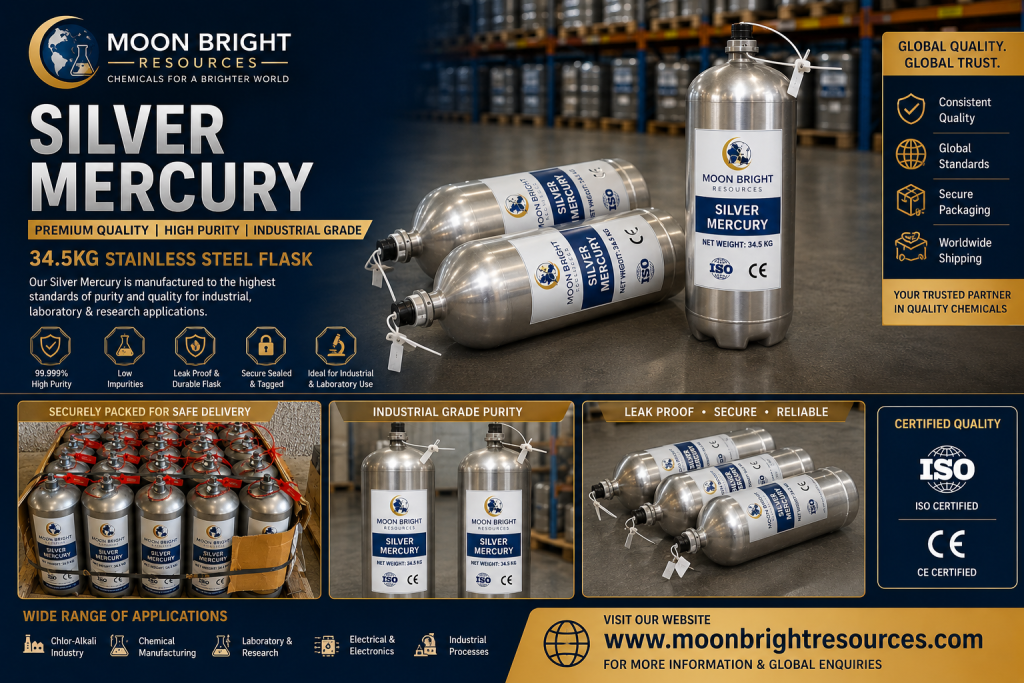
Moon Bright Resources’ Commitment to Quality
At Moon Bright Resources, we understand that industrial and laboratory customers require more than a chemical product—they require reliable information, consistent quality, and responsive technical support.
Our approach focuses on:
- Supplying industrial and laboratory chemicals with clearly defined specifications.
- Supporting customers with product documentation where applicable.
- Maintaining quality-focused sourcing and handling practices.
- Providing educational resources that help customers better understand the materials they work with.
- Continuously expanding our knowledge base through comprehensive technical publications like this guide.
By combining product availability with educational content, Moon Bright Resources aims to help researchers, laboratories, manufacturers, educational institutions, and industrial organizations make informed decisions based on technical information and responsible chemical management.
Choosing the Right Supplier
When evaluating a supplier of industrial chemicals, consider the following questions:
| Evaluation Factor | Why It Matters |
|---|---|
| Product specifications | Ensures suitability for the intended application |
| Quality documentation | Supports verification and compliance |
| Packaging standards | Helps maintain product integrity |
| Technical support | Assists with product selection and documentation |
| Industry experience | Indicates familiarity with customer requirements |
| Regulatory awareness | Supports responsible distribution practices |
A supplier that can provide clear specifications, responsive support, and transparent documentation is often better positioned to meet the needs of industrial and research customers.
Beyond the Product: Building Knowledge
At Moon Bright Resources, we believe informed customers make better decisions. That is why our website includes educational publications covering:
- Chemical properties
- Industrial applications
- Environmental considerations
- Safe handling practices
- Regulatory developments
- Industry insights
- Frequently asked questions
These resources are designed to complement our product offerings by helping customers understand the science and practical considerations behind the chemicals they use.
Frequently Asked Questions
What should buyers consider when evaluating industrial mercury?
Organizations often consider factors such as purity, documentation, quality assurance, packaging, traceability, and compliance with applicable regulations, in addition to the intended technical application.
Why is product documentation important?
Documentation helps verify product specifications, supports quality management systems, and assists organizations in meeting applicable regulatory and operational requirements.
Does product quality affect industrial performance?
For many industrial and laboratory applications, consistent product quality and clearly defined specifications are important for achieving reliable and repeatable results.
Chapter Summary
Selecting a mercury supplier involves more than comparing product availability. Quality assurance, technical documentation, responsible sourcing, and regulatory awareness all contribute to informed procurement decisions. At Moon Bright Resources, we are committed to combining reliable industrial chemical solutions with educational resources that help customers better understand mercury, its applications, and the standards that support responsible chemical management.
: Mercury Market Overview, Pricing Factors, and Industry Trends
Understanding the Global Mercury Market
Mercury has long been a valuable industrial material because of its unique physical and chemical properties. While many traditional applications have declined as industries adopt alternative technologies, mercury continues to play a role in specialized research, laboratory work, analytical instrumentation, and selected industrial processes operating within applicable regulatory frameworks.
As a result, many professionals, researchers, and businesses seek information about mercury prices, market availability, and the factors that influence the value of this specialized material. Unlike widely traded commodities with a single published market rate, mercury pricing varies depending on several technical and commercial considerations.
Quick Answer:
There is no universal global price for mercury. Market values depend on factors such as purity, quantity, packaging, transportation, regional regulations, documentation requirements, and intended industrial or laboratory applications.
How Mercury Prices Are Determined
One of the most common questions asked online is:
“How much does mercury cost?”
The answer depends on multiple variables rather than a fixed international market price.
Key pricing factors include:
- Product purity
- Quantity ordered
- Packaging requirements
- Transportation and logistics
- Import and export regulations
- Market availability
- Industrial demand
- Documentation and certification
For example, laboratory-grade mercury intended for analytical work may have different pricing considerations than mercury supplied for industrial applications, depending on the specifications required.
What Influences Mercury Prices?
Several economic and technical factors can affect market conditions.
Supply and Availability
Global production has changed significantly over recent decades due to evolving environmental regulations, shifts in industrial demand, and restrictions on new mercury mining in many regions.
Consequently, available supply may fluctuate depending on market conditions and regional regulations.
Product Purity
Higher purity grades generally require more extensive refining and quality verification.
Industries that depend on precision laboratory analysis or specialized manufacturing often specify minimum purity requirements as part of their procurement process.
Packaging and Transportation
Mercury requires packaging that complies with applicable transportation and safety regulations.
Shipping costs may vary depending on:
- Destination
- Shipment size
- Packaging specifications
- Regulatory documentation
- Transportation method
These logistical considerations can contribute to the overall cost of supply.
Regulatory Requirements
International agreements and national regulations influence how mercury may be produced, transported, imported, exported, and managed.
Compliance with these requirements can affect operational costs throughout the supply chain.
Frequently Asked Pricing Questions
Is there a standard mercury price per ounce?
No. There is no single worldwide price per ounce because mercury is not traded like many publicly quoted commodities. Pricing depends on supplier specifications, purity, packaging, logistics, regulatory requirements, and market conditions.
Why do mercury prices vary?
Mercury prices may differ because suppliers provide different purity grades, packaging options, documentation, and shipping arrangements. Regional regulations and availability can also influence pricing.
Does quantity affect pricing?
In many industrial markets, larger procurement volumes may have different pricing structures than smaller laboratory quantities, depending on packaging, logistics, and supplier agreements.
Why isn’t mercury traded like gold or silver?
Unlike precious metals that have widely published commodity exchange prices, mercury is a specialized industrial material whose value is influenced by technical specifications and regulatory considerations rather than a single global trading benchmark.
Market Trends
Several long-term trends continue to shape the mercury market.
Increased Environmental Regulation
Many countries have strengthened environmental legislation governing mercury production, transportation, storage, and disposal.
Growing Focus on Recycling
Recycling and recovery initiatives continue to expand, supporting responsible resource management while reducing the need for newly produced mercury.
Technological Innovation
Many industries have replaced historical mercury applications with alternative technologies while maintaining specialized uses where mercury’s unique characteristics remain important.
Continued Scientific Research
Research institutions continue to study mercury’s physical properties, analytical methods, environmental behavior, and applications in materials science and chemistry.
How Moon Bright Resources Supports Industrial Buyers
Understanding the technical requirements of industrial chemicals is just as important as understanding market conditions.
At Moon Bright Resources, we work to provide customers with detailed product information, technical specifications, and educational resources that support informed purchasing decisions. Our approach emphasizes:
- Quality-focused sourcing
- Product consistency
- Technical documentation where applicable
- Responsive customer support
- Educational resources for researchers, laboratories, manufacturers, and industrial users
Rather than focusing solely on market pricing, we encourage customers to evaluate materials based on their intended application, required specifications, regulatory obligations, and quality requirements.
Industry Insight
Experienced procurement teams evaluate more than price alone.
When sourcing specialty chemicals, organizations often consider:
| Evaluation Criteria | Why It Matters |
|---|---|
| Product purity | Determines suitability for specific applications |
| Batch consistency | Supports reliable performance |
| Documentation | Facilitates quality assurance and compliance |
| Packaging | Protects product integrity during transport |
| Supplier expertise | Provides technical support and industry knowledge |
| Regulatory awareness | Helps support responsible procurement |
Selecting the appropriate material involves balancing technical requirements, quality expectations, and lifecycle considerations.
Did You Know?
Mercury is no longer used as broadly as it once was in thermometers, switches, and certain industrial processes. As regulations and technologies have evolved, demand has shifted toward specialized applications, research, analytical laboratories, and carefully controlled industrial environments.
Frequently Asked Questions
Why is there no fixed global price for mercury?
Mercury pricing depends on purity, quantity, logistics, packaging, regulatory requirements, and market availability rather than a centralized commodity exchange.
What factors should industrial buyers evaluate besides price?
In addition to cost, buyers often consider product specifications, quality documentation, packaging, supplier experience, technical support, and regulatory compliance.
Does mercury demand continue today?
Yes. Although many historical uses have declined, mercury continues to be studied and managed in specialized scientific, laboratory, analytical, and industrial settings under applicable regulations.
Chapter 11: Mercury Myths, Misconceptions, and Frequently Asked Questions
Understanding Common Questions About Mercury
Mercury is one of the most recognizable chemical elements in the world, yet it is also one of the most misunderstood. Because of its unusual physical properties, historical uses, and frequent appearance in popular culture, many misconceptions have developed around mercury.
Questions about mercury often range from basic chemistry—such as “What is mercury?”—to market and regulatory questions involving availability, value, and legal requirements.
This chapter addresses common questions about mercury using scientific information and modern industry perspectives.
What Is Mercury?
Mercury is a naturally occurring chemical element with the symbol Hg and atomic number 80.
It is classified as a transition metal and is unique because it remains liquid at standard room temperature.
Key characteristics include:
| Property | Description |
|---|---|
| Chemical Symbol | Hg |
| Atomic Number | 80 |
| Element Category | Transition metal |
| Appearance | Shiny, silver-colored metal |
| Physical State | Liquid under standard conditions |
| Natural Mineral Source | Cinnabar (HgS) |
The name mercury comes from the Latin term hydrargyrum, meaning “liquid silver,” which explains the origin of the chemical symbol Hg.
What Is Red Mercury?
The Scientific Reality Behind Red Mercury
One of the most searched mercury-related topics online is:
“What is red mercury?”
The term “red mercury” has appeared in rumors, internet discussions, and popular media for decades. However, there is no scientifically verified evidence that a unique substance called “red mercury” exists as a special form of elemental mercury with extraordinary properties.
The term has been associated with various claims involving:
- Secret technologies
- Unusual chemical properties
- Military applications
- Extraordinary market values
Scientific investigations have not confirmed these claims.
Why Does the Red Mercury Myth Continue?
Several factors contributed to the popularity of the term:
- Limited public understanding of mercury chemistry
- Sensational media reports
- Online misinformation
- Confusion between mercury compounds and elemental mercury
In chemistry, mercury does form compounds that may have different colors, including red-colored mercury sulfide (HgS), also known as cinnabar.
However, mercury compounds are chemically different substances from elemental mercury.
What Is Mercury Mineral?
Mercury occurs naturally in several minerals, with the most important being:
Cinnabar (Mercury Sulfide — HgS)
Cinnabar is the primary ore associated with naturally occurring mercury deposits.
Characteristics include:
- Bright red to reddish-brown appearance
- Contains mercury and sulfur
- Historically important as a source of mercury
Other mercury-containing minerals exist but are far less common.
What Does Silver Mercury Mean?
The phrase “silver mercury” is often used because elemental mercury has a shiny silver appearance.
However:
- Silver and mercury are different chemical elements.
- Mercury’s chemical symbol is Hg.
- Silver’s chemical symbol is Ag.
They should not be confused.
Silver Mercury Formula
A common question is:
“What is the silver mercury formula?”
Elemental mercury does not have a formula involving silver because mercury itself is an element.
The chemical representation of mercury is:
Hg
The term “silver mercury” is generally a descriptive phrase referring to mercury’s appearance, not a separate chemical compound.
How Much Is Mercury Worth?
Understanding Mercury Value
Searches such as:
- mercury how much
- mercury price
- mercury mineral price
- mercury price per ounce
usually reflect interest in understanding the value of mercury.
Unlike precious metals such as gold or silver, mercury does not have a single globally published commodity price.
Factors affecting mercury market values include:
- Purity
- Quantity
- Documentation
- Regulatory requirements
- Transportation requirements
- Regional availability
- Industrial demand
Is Mercury Legal?
Understanding Mercury Regulations
Another common question is:
“Is it legal to buy mercury?”
The answer depends on:
- The country or region
- Intended application
- Quantity involved
- Applicable environmental regulations
- Import/export restrictions
- Licensing requirements
Many countries regulate mercury because of environmental and occupational safety considerations.
Organizations that work with mercury generally need to understand:
- Chemical management requirements
- Storage rules
- Transportation regulations
- Waste disposal obligations
Always consult applicable local regulations before handling regulated materials.
Why Is Mercury Liquid?
Mercury remains liquid at room temperature because of its unique atomic structure and relatively weak metallic bonding.
Most metals form strong atomic networks that create solid structures. Mercury’s electronic configuration results in weaker interactions between atoms, allowing it to remain fluid under normal conditions.
This property made mercury historically valuable in:
- Scientific instruments
- Pressure measurement devices
- Temperature measurement systems
Why Is Mercury Called Hg?
The symbol Hg comes from the Latinized Greek name:
Hydrargyrum
Meaning:
“Liquid silver”
The name reflects mercury’s shiny appearance and liquid metallic behavior.
Common Mercury Questions
Is mercury naturally occurring?
Yes. Mercury exists naturally in rocks, minerals, soil, water, and the atmosphere.
Where is mercury found?
Mercury is primarily associated with mercury-containing minerals such as cinnabar, which occurs in geological deposits around the world.
Why is mercury important in science?
Mercury’s unique physical and chemical properties have made it important in chemistry, materials science, environmental studies, and the history of scientific measurement.
Does mercury have industrial applications today?
Yes. Although many historical applications have declined, mercury remains relevant in specialized scientific, analytical, research, and regulated industrial contexts.
Why is mercury regulated?
Mercury is regulated because of its environmental persistence, ability to move through ecosystems, and the importance of responsible chemical management.
Mercury Knowledge Checklist
Before working with or studying mercury, important considerations include:
✔ Understand mercury chemistry
✔ Know the difference between elemental mercury and mercury compounds
✔ Understand applicable regulations
✔ Use reliable scientific sources
✔ Follow appropriate safety practices
✔ Maintain accurate documentation
Chapter 12: Mercury Recycling, Recovery, and Waste Management
Understanding the Mercury Lifecycle
Mercury management does not end when a product reaches the end of its useful life. Because mercury is a persistent element that does not break down naturally, responsible lifecycle management is essential for protecting workers, communities, and the environment.
Modern mercury management focuses on a complete lifecycle approach:
Production → Distribution → Use → Collection → Recovery → Recycling → Environmentally Responsible Management
Rather than treating mercury-containing materials as ordinary waste, specialized management systems are designed to recover usable mercury where appropriate, prevent uncontrolled releases, and ensure compliance with environmental regulations.
Quick Answer:
Mercury recycling and recovery involve collecting mercury-containing materials, processing them through approved systems, and managing recovered mercury or mercury-containing waste according to applicable environmental and safety requirements. Mercury element
Why Mercury Recycling Matters
Mercury is an element, meaning it cannot be destroyed through ordinary chemical processes. Instead, responsible management focuses on:
- Recovery
- Containment
- Recycling where permitted
- Safe storage
- Controlled disposal methods
Effective recycling programs help:
- Reduce environmental releases
- Minimize waste
- Support responsible resource management
- Improve compliance with environmental standards
- Reduce the need for new extraction
Sources of Mercury-Containing Materials
Mercury may be encountered in a variety of historical, industrial, scientific, and commercial contexts.
Examples include:
- Legacy scientific instruments
- Certain industrial equipment
- Historical electrical components
- Laboratory materials
- Mercury-containing products
- Industrial process residues
- Environmental remediation materials
The management approach depends on the specific material, mercury concentration, contamination level, and applicable regulations.
How Mercury Recovery Works
Mercury recovery involves specialized processes designed to separate mercury from other materials while maintaining environmental controls.
General recovery stages may include:
Collection and Identification
The first step is identifying mercury-containing materials and determining:
- Material type
- Mercury content
- Condition of the material
- Applicable regulatory requirements
Proper identification helps determine the appropriate management pathway.
Controlled Processing
Specialized facilities may use controlled methods to recover mercury from certain materials.
These processes are designed to:
- Limit environmental releases
- Protect workers
- Capture mercury efficiently
- Support regulatory compliance
The exact recovery method depends on the material being processed.
Purification and Quality Assessment
Recovered mercury may undergo evaluation to determine:
- Chemical composition
- Purity
- Suitability for specific applications
- Appropriate management pathway
Quality assessment ensures recovered material is handled appropriately.
Mercury Waste Management
Mercury-containing waste requires careful management because improper disposal can introduce mercury into soil, water, and air.
Responsible waste management programs generally include:
- Proper identification
- Secure containment
- Documentation
- Approved transportation
- Authorized treatment or disposal
Organizations typically follow applicable hazardous waste regulations when managing mercury-containing materials.
Mercury Storage Before Recycling or Disposal
Temporary storage is often an important part of mercury management.
Good storage practices include:
- Clearly identified containers
- Secure storage locations
- Protection from damage
- Inventory tracking
- Access control
- Regulatory documentation
These practices reduce the possibility of accidental releases while materials await further processing.
Mercury Recycling and the Circular Economy
The concept of a circular economy focuses on keeping valuable materials in productive use while reducing waste.
For mercury management, this approach emphasizes:
- Recovery instead of uncontrolled disposal
- Responsible reuse where permitted
- Improved collection systems
- Better resource tracking
- Reduced environmental impact
Although mercury use has declined in many applications, responsible lifecycle management remains important for existing mercury-containing materials.
Environmental Remediation and Mercury Recovery
Some locations require specialized environmental assessment and remediation because of historical mercury contamination.
Remediation projects may involve:
- Environmental monitoring
- Soil assessment
- Sediment evaluation
- Containment strategies
- Long-term management plans
The appropriate approach depends on site conditions, regulatory requirements, and environmental risk assessments.
Moon Bright Resources and Responsible Chemical Management
At Moon Bright Resources, we recognize that chemical responsibility extends beyond product knowledge and supply. Understanding a material’s complete lifecycle—including storage, handling, environmental considerations, and regulatory requirements—is essential for informed industrial decision-making.
Our educational approach focuses on helping customers and industry professionals better understand:
- Chemical characteristics
- Responsible management practices
- Industry standards
- Environmental considerations
- Regulatory awareness
Through technical resources and educational publications, Moon Bright Resources aims to support better chemical stewardship across research, industrial, and laboratory environments.
Mercury Recycling vs Disposal
| Approach | Purpose |
|---|---|
| Recycling | Recover usable mercury through approved processes |
| Recovery | Separate mercury from materials for controlled management |
| Secure Storage | Maintain containment before final management |
| Disposal | Manage remaining waste through authorized methods |
| Remediation | Address historical environmental contamination |
Frequently Asked Questions
Can mercury be recycled?
Yes. Mercury can be recovered and recycled through specialized systems designed to manage the material safely and in accordance with applicable regulations.
Why can’t mercury simply be thrown away?
Mercury is a persistent element that can move through environmental systems. Improper disposal may result in contamination, which is why mercury-containing waste requires controlled management.
What happens to recovered mercury?
Recovered mercury may be processed, evaluated, stored, recycled where permitted, or managed through approved environmental pathways depending on regulations and material specifications.
Why is mercury waste considered different from ordinary waste?
Mercury-containing waste requires special handling because mercury can persist in the environment and may require specific containment, transportation, and disposal procedures.
Industry Best Practices for Mercury Lifecycle Management
Organizations managing mercury-containing materials often implement:
✔ Chemical inventory systems
✔ Employee training programs
✔ Regulatory reviews
✔ Waste classification procedures
✔ Secure storage protocols
✔ Documentation and recordkeeping
✔ Environmental monitoring programs
These practices support responsible operations and long-term environmental protection.

 English
 French
 Arabic
 Spanish
 Bulgarian