
Quick Answer
Activated Carbon for Water Treatment is one of the most effective adsorption media used to improve water quality in municipal, industrial, commercial, and residential systems. It removes chlorine, unpleasant tastes and odors, volatile organic compounds (VOCs), pesticides, and many dissolved organic contaminants by trapping them within its highly porous structure. Among the available raw materials, Coconut Shell Activated Carbon for Water Treatment is widely recognized for its high hardness, low ash content, excellent microporous structure, and long service life, making it a preferred choice for demanding filtration applications.
Selecting the correct activated carbon depends on several factors, including the contaminants present, system design, flow rate, contact time, and technical specifications. Buyers should review the product’s Technical Data Sheet (TDS), Certificate of Analysis (COA), and application recommendations before selecting a grade for water treatment.
Table of Contents
- Introduction to Activated Carbon for Water Treatment
- Why Activated Carbon is Used in Water Treatment
- How Activated Carbon Removes Contaminants
- Granular vs. Powdered Activated Carbon for Water Treatment
- Common Contaminants Removed by Activated Carbon
- Activated Carbon in Municipal Water Treatment
- Activated Carbon in Industrial Water Treatment
- Activated Carbon for Wastewater Treatment
- How to Select the Right Activated Carbon
- Technical Specifications for Water Treatment Applications
- Understanding the Activated Carbon Water Treatment TDS
- Choosing a Reliable Activated Carbon Supplier
- Frequently Asked Questions
- Conclusion and Procurement Guidance
Chapter 1: Introduction to Activated Carbon for Water Treatment
Water is one of the world’s most valuable industrial resources. From drinking water production and food processing to pharmaceutical manufacturing, mining, chemical production, and power generation, clean water is essential for maintaining product quality, protecting equipment, and meeting increasingly stringent environmental regulations.
As industries continue to face tighter water quality requirements, Activated Carbon for Water Treatment has become one of the most trusted and widely used purification media available. Its unique internal pore structure enables it to adsorb a broad range of contaminants, making it an important component in modern filtration systems around the world.
Unlike mechanical filters that primarily remove suspended particles, activated carbon works through adsorption, a process in which dissolved contaminants adhere to the extensive internal surface of the carbon. This allows activated carbon to reduce chlorine, taste and odor compounds, volatile organic compounds (VOCs), pesticides, and many other dissolved organic substances that cannot be removed effectively through conventional filtration alone.
Among the different raw materials used to manufacture activated carbon, Coconut Shell Activated Carbon for Water Treatment has earned a strong reputation because of its exceptional hardness, low ash content, and highly developed microporous structure. These characteristics make it particularly suitable for applications requiring high adsorption efficiency, long operational life, and consistent performance.
Today, activated carbon plays a critical role in a wide range of water treatment processes, including:
- Municipal drinking water treatment
- Industrial process water purification
- Wastewater treatment and reuse
- Beverage and food manufacturing
- Pharmaceutical production
- Chemical processing
- Electronics manufacturing
- Hospitality and commercial water systems
Each application presents unique challenges. A municipal water treatment plant may focus on reducing chlorine and improving taste, while an industrial manufacturer may require the removal of dissolved organic compounds that could interfere with production. Selecting the correct activated carbon therefore requires a clear understanding of the contaminants, operating conditions, and performance objectives.
This guide has been developed to provide engineers, procurement managers, plant operators, distributors, and industrial buyers with a comprehensive technical resource covering every stage of the selection process. Throughout this publication, we will examine how activated carbon works, compare different product grades, explain technical specifications, interpret Technical Data Sheets (TDS) and Certificates of Analysis (COA), discuss laboratory testing and quality assurance, and provide practical guidance for selecting the most appropriate activated carbon for water treatment applications.
Whether you are designing a new treatment system, upgrading an existing filtration process, or sourcing Bulk Activated Carbon for Water Treatment, understanding the technical principles presented in this guide will help you make more informed procurement decisions, improve system performance, and maximize long-term operational value.
Why This Guide Matters
This living guide is designed to help readers:
- Understand how activated carbon purifies water.
- Compare coconut shell, coal-based, and wood-based activated carbon.
- Learn which contaminants can be removed through adsorption.
- Select the most suitable activated carbon grade for specific applications.
- Interpret Technical Data Sheets (TDS) and Certificates of Analysis (COA).
- Evaluate suppliers based on technical capability and quality assurance.
- Reduce lifecycle costs through informed procurement decisions.
- Build long-term confidence when specifying activated carbon for water treatment systems.
Why Activated Carbon Is Used in Water Treatment
Water treatment systems are designed to remove contaminants that affect water quality, equipment performance, public health, and industrial processes. Depending on the source of the water, these contaminants may include chlorine, dissolved organic compounds, volatile organic compounds (VOCs), pesticides, industrial chemicals, taste and odor compounds, and naturally occurring organic matter.
While conventional filtration technologies are highly effective at removing suspended solids and sediment, they are often unable to eliminate many dissolved contaminants. This is where Activated Carbon for Water Treatment plays a critical role. Through the process of adsorption, activated carbon captures a wide range of dissolved substances that would otherwise remain in the water after mechanical filtration.
Because of its exceptional adsorption capacity and reliable performance, activated carbon has become one of the most widely used treatment media in municipal water systems, industrial process plants, commercial facilities, and specialized manufacturing industries worldwide.
The Role of Activated Carbon in Modern Water Treatment
Unlike filters that physically strain particles from water, activated carbon removes many contaminants by attracting and holding them on its extensive internal surface.
Each particle of activated carbon contains millions of microscopic pores, creating an enormous internal surface area where dissolved contaminants can adhere. This adsorption process allows activated carbon to improve water quality without the addition of chemical treatment agents in many applications.
For this reason, Activated Carbon for Water Treatment is commonly installed after sediment filtration to provide an additional level of purification before the water reaches downstream equipment or the final point of use.
Why Coconut Shell Activated Carbon Is Widely Preferred
Although activated carbon can be manufactured from several raw materials, Coconut Shell Activated Carbon for Water Treatment is frequently selected for demanding applications because of its unique physical and chemical characteristics.
Its advantages include:
- Highly developed microporous structure
- High mechanical hardness
- Low ash content
- Excellent abrasion resistance
- Long operational lifespan
- Consistent adsorption performance
- Good regeneration potential
These characteristics make coconut shell activated carbon particularly effective for removing small dissolved organic molecules while maintaining structural integrity during long-term operation.
Major Benefits of Activated Carbon for Water Treatment
Effective Removal of Dissolved Organic Compounds
Many dissolved organic contaminants are too small to be removed through conventional mechanical filtration.
Activated carbon adsorbs a broad range of these compounds, helping improve overall water quality for industrial and commercial applications.
Chlorine Reduction
Chlorine is widely used for water disinfection, but excess residual chlorine can:
- Affect taste
- Produce unpleasant odors
- Damage certain industrial processes
- Interfere with sensitive manufacturing applications
Activated carbon is commonly used to reduce chlorine before water enters downstream equipment.
Improved Taste and Odor
Water may develop undesirable taste or odor because of dissolved organic compounds, algae by-products, or residual disinfectants.
Activated carbon helps improve the sensory quality of treated water by reducing many of these compounds. Activated Carbon Price per Ton
Protection of Industrial Equipment
Certain contaminants contribute to fouling, corrosion, or reduced efficiency in industrial equipment.
Integrating Activated Carbon for Water Treatment into the treatment train can help protect:
- Reverse osmosis systems
- Ion exchange units
- Boilers
- Cooling towers
- Heat exchangers
- Process equipment
Cleaner feedwater often contributes to improved equipment reliability and lower maintenance requirements.
Support for Regulatory Compliance
Many industries must comply with strict water quality requirements established by local regulations, customer specifications, or internal quality standards.
Activated carbon is frequently incorporated into treatment systems as part of a broader water purification strategy to help facilities consistently achieve required water quality objectives.
Industries That Depend on Activated Carbon
The versatility of activated carbon makes it suitable for numerous industries.
Common users include:
Municipal Water Utilities
Used to improve drinking water quality and reduce undesirable compounds.
Food and Beverage Manufacturing
Supports product quality by improving process water.
Pharmaceutical Manufacturing
Provides high-quality process water for sensitive production environments.
Chemical Processing
Removes contaminants that may interfere with manufacturing processes.
Electronics Manufacturing
Helps produce high-purity water required for precision manufacturing.
Hospitality and Commercial Buildings
Improves water quality for hotels, restaurants, hospitals, and institutional facilities. Activated Carbon for Water Treatment
Activated Carbon as Part of a Multi-Stage Treatment System
Activated carbon rarely functions as the only treatment technology.
Instead, it is commonly integrated into a complete water treatment system alongside other technologies.
A typical treatment process may include:
- Screening
- Sedimentation
- Sand filtration
- Cartridge filtration
- Activated Carbon for Water Treatment
- Reverse osmosis (where required)
- UV disinfection
- Final storage and distribution
Each stage performs a specific function, and activated carbon serves as an important adsorption step within the overall treatment process. Activated Carbon for Water Treatment
Factors That Influence Performance
The effectiveness of activated carbon depends on several operating variables.
These include:
- Type of contaminants
- Concentration of contaminants
- Contact time
- Flow rate
- Temperature
- Particle size
- Bed depth
- Pore structure
- Carbon grade
- Frequency of media replacement
Selecting the correct activated carbon grade is therefore just as important as designing the treatment system itself. Activated Carbon for Water Treatment
Why Technical Documentation Matters
Before purchasing activated carbon, engineers and procurement professionals should review technical documentation to ensure the product matches their operational requirements.
Important documents include:
- Technical Data Sheet (TDS)
- Certificate of Analysis (COA)
- Safety Data Sheet (SDS)
- Product specification sheet
These documents provide information about adsorption characteristics, physical properties, recommended applications, and quality verification.
💡 Expert Insight
Activated carbon is most effective when viewed as one component of a complete treatment strategy rather than a standalone solution. Proper media selection, system design, contact time, and maintenance all influence long-term performance. Choosing the right activated carbon grade for the specific contaminants present often has a greater impact on results than selecting the product with the highest advertised specification.
How Activated Carbon Removes Contaminants from Water
The effectiveness of Activated Carbon for Water Treatment is based on a natural process known as adsorption. Unlike ordinary filtration, which physically traps suspended particles, activated carbon removes many dissolved contaminants by attracting and holding them on the enormous internal surface of its microscopic pore structure. Activated Carbon for Water Treatment
This unique property has made activated carbon one of the most widely used purification media in municipal drinking water systems, industrial process plants, food and beverage manufacturing, pharmaceutical production, chemical processing, and wastewater treatment facilities.
Understanding how adsorption works helps engineers, operators, and procurement professionals select the appropriate activated carbon grade for their specific water treatment application.
Adsorption vs. Absorption
One of the most common misconceptions is confusing adsorption with absorption. Although the terms sound similar, they describe two different processes.
| Adsorption | Absorption |
|---|---|
| Contaminants attach to the surface of activated carbon | Contaminants are absorbed into the internal structure of another material |
| Surface phenomenon | Bulk phenomenon |
| Primary mechanism used in activated carbon | Common in materials like sponges and certain polymers |
| Highly effective for dissolved organic contaminants | Used in different industrial processes |
For Activated Carbon for Water Treatment, adsorption is the primary mechanism responsible for contaminant removal.
The Secret Lies in the Pore Structure
Activated carbon appears to be a simple black granular material, but under a microscope it reveals an extremely complex network of interconnected pores.
These pores dramatically increase the available surface area for adsorption.
A single gram of high-quality Coconut Shell Activated Carbon for Water Treatment can provide an internal surface area exceeding 1,000 m², depending on the product grade and activation process.
This enormous surface area provides countless adsorption sites where contaminants can attach and remain trapped.
The Three Main Types of Pores
The performance of activated carbon depends on the balance of different pore sizes.
Micropores
Diameter: Less than 2 nanometers
Micropores make up the majority of the internal surface area of coconut shell activated carbon.
They are highly effective for adsorbing:
- Chlorine by-products
- Small organic molecules
- Taste compounds
- Odor compounds
- Many volatile organic compounds (VOCs)
Because coconut shell activated carbon has a high concentration of micropores, it is particularly well suited for drinking water and high-purity industrial water applications.
Mesopores
Diameter: 2–50 nanometers
Mesopores provide pathways that allow contaminants to move deeper into the carbon particle.
They improve adsorption of:
- Larger organic molecules
- Color compounds
- Industrial chemicals
- Certain pesticides
Macropores
Diameter: Greater than 50 nanometers
Macropores function primarily as transport channels.
Rather than performing most of the adsorption themselves, they allow water and dissolved contaminants to move efficiently toward the smaller pores where adsorption occurs.
The Adsorption Process Step by Step
The purification process occurs continuously as water passes through an activated carbon bed.
Step 1: Water Enters the Carbon Bed
Raw water flows through a bed of activated carbon at a controlled rate.
Proper flow velocity is essential because it determines how much time contaminants remain in contact with the carbon surface. Activated Carbon for Water Treatment
Step 2: Contaminants Reach the Carbon Surface
As water moves through the filter, dissolved contaminants come into contact with the outer surface of each activated carbon particle.
Attractive molecular forces begin drawing certain contaminants toward the carbon.
Step 3: Diffusion into the Internal Pores
Once contaminants reach the particle surface, they migrate through larger pores toward the highly active microporous structure.
This internal diffusion allows contaminants to access the vast adsorption surface hidden within the carbon particle.
Step 4: Adsorption Occurs
Inside the micropores, dissolved molecules adhere to the carbon surface through intermolecular forces.
Rather than passing through the treatment system, these contaminants remain attached to the activated carbon until the available adsorption sites become saturated.
Step 5: Purified Water Leaves the Filter
After contaminants have been adsorbed, the treated water exits the activated carbon bed with improved quality.
Depending on the application, additional treatment processes such as reverse osmosis, ultraviolet (UV) disinfection, or ion exchange may follow.
What Contaminants Can Activated Carbon Remove?
Activated carbon is effective against many dissolved organic contaminants commonly found in water.
These include:
- Chlorine
- Chloramine (in some applications with appropriate system design)
- Taste and odor compounds
- Volatile Organic Compounds (VOCs)
- Many pesticides
- Herbicides
- Industrial solvents
- Organic chemicals
- Natural organic matter (NOM)
- Some disinfection by-products
The level of removal depends on factors such as contaminant type, concentration, contact time, and the characteristics of the activated carbon.
Factors That Affect Adsorption Performance
Even high-quality Activated Carbon for Water Treatment cannot perform efficiently unless operating conditions are appropriate.
Important factors include:
Contact Time
The longer contaminants remain in contact with activated carbon, the greater the opportunity for adsorption.
Flow Rate
Excessively high flow rates reduce contact time and may lower treatment efficiency.
Proper hydraulic design helps maximize adsorption performance.
Water Temperature
Temperature influences adsorption efficiency.
In many applications, lower water temperatures favor adsorption of certain contaminants.
Contaminant Concentration
Higher contaminant concentrations generally consume available adsorption sites more rapidly, reducing service life.
Carbon Particle Size
Smaller particles provide more external surface area and faster adsorption kinetics but may also increase pressure drop.
The appropriate particle size depends on the treatment system.
Activated Carbon Grade
Different activated carbon grades have different pore structures, iodine numbers, hardness values, and adsorption characteristics.
Selecting the correct grade is essential for achieving optimal performance.
Why Coconut Shell Activated Carbon Performs So Well
Among the various activated carbon raw materials, Coconut Shell Activated Carbon for Water Treatment is particularly valued because it combines:
- High micropore volume
- Excellent mechanical strength
- Low ash content
- High abrasion resistance
- Long service life
- Consistent adsorption performance
These properties make it especially suitable for applications requiring the removal of low-molecular-weight organic compounds from drinking water and industrial process water.
The Importance of Proper System Design
Activated carbon is highly effective, but it is not a universal solution for every contaminant.
Successful water treatment depends on:
- Correct media selection
- Proper bed depth
- Appropriate Empty Bed Contact Time (EBCT)
- Suitable flow rate
- Regular monitoring
- Timely media replacement
- Routine maintenance
When these design factors are properly managed, activated carbon can provide reliable long-term purification performance.
💡 Expert Insight
Activated carbon should be viewed as an engineered adsorption medium rather than a simple filter. Its effectiveness depends on the interaction between pore structure, contaminant chemistry, hydraulic conditions, and system design. Matching the activated carbon grade to the specific water treatment application is one of the most important factors influencing long-term performance and operating costs.
Granular Activated Carbon (GAC) vs. Powdered Activated Carbon (PAC) for Water Treatment
One of the most common questions asked by engineers, procurement managers, and water treatment professionals is whether Granular Activated Carbon (GAC) or Powdered Activated Carbon (PAC) is the better choice for a particular application.
The answer depends on the treatment objectives, system design, contaminant profile, operating conditions, and maintenance strategy. Both materials are manufactured using the same fundamental activation process and possess highly developed pore structures, but they differ significantly in particle size, operating method, service life, and application.
Understanding these differences allows buyers to select the most effective Activated Carbon for Water Treatment, optimize system performance, and reduce long-term operating costs.
What is Granular Activated Carbon (GAC)?
Granular Activated Carbon (GAC) consists of relatively large carbon particles, typically ranging from 0.5 mm to 4 mm, depending on the application and product grade.
Because of its larger particle size, GAC is commonly installed in fixed-bed filtration systems where water flows through a packed bed of activated carbon.
One of the greatest advantages of Granular Activated Carbon for Water Treatment is that it remains inside the filtration vessel for extended periods before replacement or regeneration is required.
Typical GAC Applications
- Municipal drinking water treatment
- Industrial process water
- Groundwater remediation
- Reverse osmosis pre-treatment
- Swimming pool filtration
- Beverage production
- Pharmaceutical water systems
- Food processing plants
Advantages of Granular Activated Carbon
Granular Activated Carbon offers several operational benefits.
Long Service Life
Properly selected GAC can remain in service for extended operating periods before replacement.
Lower Operating Costs
Because the carbon is not continuously consumed, long-term operating costs are often lower than systems using disposable media.
High Mechanical Strength
High-quality Coconut Shell Granular Activated Carbon has excellent hardness, reducing particle breakdown during operation.
Easy Maintenance
GAC vessels can be backwashed and monitored as part of routine maintenance programs.
Regeneration Potential
Many GAC grades can be thermally regenerated, extending media life and reducing waste.
What is Powdered Activated Carbon (PAC)?
Powdered Activated Carbon (PAC) consists of much finer particles, generally smaller than 0.18 mm (80 mesh).
Rather than remaining inside a fixed filter bed, PAC is usually dosed directly into the water stream or treatment basin.
After adsorption occurs, the carbon is removed together with the captured contaminants through sedimentation, clarification, or filtration.
Because PAC is used as a consumable treatment media, fresh material is added as required.
Typical PAC Applications
Powdered Activated Carbon is widely used for:
- Emergency taste and odor control
- Seasonal algae events
- Wastewater treatment
- Industrial process adjustments
- Chemical spill response
- Temporary contaminant removal
- Municipal treatment during peak contamination periods
Its rapid deployment makes PAC particularly valuable when contaminant levels fluctuate unexpectedly.
Advantages of Powdered Activated Carbon
Fast Response
PAC can be introduced quickly into existing treatment systems without major equipment modifications.
Flexible Dosing
Operators can adjust dosage according to changing water quality conditions.
Effective for Seasonal Events
Municipal utilities frequently use PAC to address temporary taste and odor problems caused by algae blooms or natural organic matter.
Lower Initial Equipment Cost
Because PAC is dosed directly into the treatment process, dedicated carbon filter vessels may not be required. Activated Carbon for Water Treatment
GAC vs. PAC Comparison
| Feature | Granular Activated Carbon (GAC) | Powdered Activated Carbon (PAC) |
|---|---|---|
| Particle Size | Larger granules | Fine powder |
| Typical Use | Fixed-bed filtration | Direct dosing |
| Service Life | Long-term | Single-use or short-term |
| Maintenance | Periodic replacement or regeneration | Continuous replenishment |
| Regeneration | Often possible | Generally not regenerated after use |
| Best For | Continuous treatment systems | Temporary or variable contaminant removal |
| Operating Method | Water flows through carbon bed | Carbon is mixed directly into water |
Which Form Removes More Contaminants?
Both GAC and PAC can remove many of the same dissolved organic contaminants, including:
- Chlorine
- Taste compounds
- Odor compounds
- Volatile Organic Compounds (VOCs)
- Certain pesticides
- Herbicides
- Organic chemicals
The difference is not necessarily the types of contaminants removed but how the treatment process is implemented and managed.
Selection should therefore be based on operational requirements rather than assuming one form is universally superior.
Why Coconut Shell GAC is Popular for Water Treatment
Among the various activated carbon raw materials, Coconut Shell Granular Activated Carbon has become a preferred option for many continuous filtration systems.
Its advantages include:
- High hardness
- Excellent abrasion resistance
- Low ash content
- High micropore volume
- Long operating life
- Consistent adsorption performance
These characteristics make it particularly suitable for municipal drinking water plants, industrial process water, and commercial filtration systems where long-term performance is essential.
Factors to Consider Before Choosing GAC or PAC
Before selecting an activated carbon product, buyers should evaluate:
Water Quality
- Type of contaminants
- Contaminant concentration
- Seasonal variation
- Organic loading
System Design
- Existing equipment
- Available space
- Hydraulic conditions
- Contact time
Operational Requirements
- Continuous operation
- Emergency treatment
- Media replacement schedule
- Maintenance capabilities
Economic Considerations
Procurement decisions should evaluate:
- Initial purchase cost
- Media life
- Replacement frequency
- Regeneration options
- Maintenance costs
- Total lifecycle cost
The lowest purchase price does not always provide the lowest long-term operating cost.
Technical Documentation Should Always Be Reviewed
Whether purchasing GAC or PAC, buyers should request:
- Technical Data Sheet (TDS)
- Certificate of Analysis (COA)
- Safety Data Sheet (SDS)
- Product specification sheet
These documents help verify that the selected activated carbon meets the technical requirements of the intended water treatment application. Coconut Shell Activated Carbon Water Treatment
💡 Expert Insight
There is no universal “best” activated carbon. Granular Activated Carbon (GAC) is generally preferred for continuous filtration systems that require long service life and stable performance, while Powdered Activated Carbon (PAC) offers flexibility for temporary treatment challenges and rapidly changing water quality conditions. The most effective solution is the one that matches the treatment objective, system design, and operational requirements.
Common Contaminants Removed by Activated Carbon in Water Treatment
One of the primary reasons Activated Carbon for Water Treatment is used across municipal, industrial, and commercial facilities is its ability to reduce a broad range of dissolved organic contaminants that conventional filtration systems cannot effectively remove.
Unlike sediment filters, which primarily capture suspended particles, activated carbon works through adsorption, attracting and retaining many dissolved substances on its extensive internal pore structure. This makes it an essential component in modern water treatment systems where water quality, equipment protection, regulatory compliance, and product consistency are critical.
It is important to understand, however, that activated carbon is not a universal solution. Its effectiveness depends on the contaminant being treated, the type of activated carbon used, contact time, water chemistry, and overall system design.
Chlorine
Chlorine is one of the most common disinfectants used in municipal water treatment systems worldwide. While it plays an essential role in controlling harmful microorganisms, residual chlorine can create operational challenges in many industrial and commercial applications.
Excess chlorine may:
- Affect the taste of drinking water
- Produce unpleasant odors
- Damage reverse osmosis membranes
- Interfere with food and beverage production
- Impact pharmaceutical manufacturing processes
Activated Carbon for Water Treatment is widely used to reduce free chlorine before water enters sensitive equipment or production processes. Coconut shell activated carbon is particularly effective because of its high surface area and well-developed microporous structure.
Taste and Odor Compounds
Unpleasant tastes and odors are common complaints in both municipal and industrial water supplies.
These issues may result from:
- Algae blooms
- Decaying organic matter
- Residual disinfectants
- Naturally occurring compounds
- Industrial contamination
Activated carbon adsorbs many of the compounds responsible for these sensory problems, helping produce water that is more acceptable for drinking, food processing, beverage production, and commercial applications.
Volatile Organic Compounds (VOCs)
Volatile Organic Compounds (VOCs) are a group of carbon-based chemicals that can enter water through industrial activities, fuel storage, manufacturing processes, agricultural runoff, or accidental spills.
Examples include:
- Benzene
- Toluene
- Xylene
- Ethylbenzene
- Certain industrial solvents
Many activated carbon grades are effective at reducing VOC concentrations when systems are properly designed with sufficient contact time and appropriate media selection.
Pesticides and Herbicides
Agricultural activities can introduce trace amounts of pesticides and herbicides into surface water and groundwater.
Depending on the specific chemical involved, activated carbon may significantly reduce many of these organic contaminants through adsorption.
Because pesticide chemistry varies considerably, treatment performance should always be evaluated through pilot testing or consultation with experienced water treatment professionals.
Natural Organic Matter (NOM)
Natural Organic Matter is present in many rivers, lakes, and reservoirs.
Sources include:
- Decaying vegetation
- Plant material
- Soil runoff
- Organic debris
Although naturally occurring, NOM can contribute to:
- Water discoloration
- Taste and odor issues
- Formation of disinfection by-products
- Reduced treatment efficiency
Activated carbon is frequently used to reduce dissolved organic compounds before final disinfection.
Industrial Organic Chemicals
Industrial facilities often encounter dissolved organic compounds originating from manufacturing operations.
Examples include:
- Process chemicals
- Solvents
- Organic intermediates
- Production residues
Selecting the appropriate Activated Carbon for Water Treatment allows many of these compounds to be effectively reduced before discharge, recycling, or reuse.
Pharmaceutical Residues
Growing attention has been given to the presence of trace pharmaceutical compounds in water supplies.
While removal efficiency depends on the specific compound and treatment conditions, activated carbon is widely incorporated into advanced treatment systems because it can adsorb many organic micropollutants more effectively than conventional filtration alone.
Color-Causing Organic Compounds
Some industrial processes and natural water sources contain dissolved color compounds that affect water appearance.
Activated carbon is frequently used in:
- Food processing
- Beverage production
- Chemical manufacturing
- Sugar refining
- Industrial process water
to reduce color-causing organic substances and improve product quality.
Disinfection By-Products (DBPs)
When chlorine reacts with natural organic matter, it can form disinfection by-products such as trihalomethanes (THMs) and haloacetic acids (HAAs).
Activated carbon can help reduce the organic precursors that contribute to DBP formation and, in some cases, reduce certain existing by-products depending on treatment conditions and carbon characteristics.
Emerging Contaminants
Water treatment professionals are increasingly evaluating methods to address emerging contaminants, including some PFAS (“forever chemicals”). Certain activated carbon grades—particularly high-quality granular activated carbon—can reduce some PFAS compounds under appropriate operating conditions. However, performance varies significantly depending on the specific PFAS compound, media selection, bed design, and contact time. Activated carbon should therefore be selected as part of an engineered treatment strategy rather than viewed as a universal PFAS solution.
What Activated Carbon Does Not Effectively Remove
Although activated carbon is highly versatile, it is not designed to remove every contaminant.
It is generally not the primary treatment method for:
- Dissolved salts
- Most heavy metals (without specialized media or treatment processes)
- Nitrates
- Fluoride
- Most bacteria and viruses
- Suspended sediment (better removed by mechanical filtration)
For these contaminants, activated carbon is typically combined with technologies such as reverse osmosis, ion exchange, membrane filtration, ultraviolet disinfection, or specialized adsorption media.
Choosing the Right Activated Carbon for Specific Contaminants
No single activated carbon grade is ideal for every application.
Selection should consider:
- Target contaminant
- Water chemistry
- Flow rate
- Empty Bed Contact Time (EBCT)
- Particle size
- Micropore and mesopore distribution
- Operating temperature
- Replacement schedule
Reviewing the Technical Data Sheet (TDS) and Certificate of Analysis (COA) helps ensure the selected product is suitable for the intended treatment process.
Contaminant Removal Overview
| Contaminant | Activated Carbon Performance | Typical Applications |
|---|---|---|
| Chlorine | Excellent | Drinking water, RO pre-treatment |
| Taste & Odor Compounds | Excellent | Municipal water, food & beverage |
| VOCs | Very Good | Industrial water, groundwater remediation |
| Pesticides & Herbicides | Good to Excellent (compound-dependent) | Agricultural runoff treatment |
| Natural Organic Matter | Good | Surface water treatment |
| Industrial Organic Chemicals | Good to Excellent (compound-dependent) | Manufacturing processes |
| Color-Causing Organics | Very Good | Food, beverage, sugar refining |
| Some PFAS Compounds | Application-dependent | Advanced treatment systems |
💡 Expert Insight
The performance of activated carbon should always be evaluated in relation to the specific contaminants present and the overall treatment system. A product that performs exceptionally well for chlorine removal may not provide the same efficiency for larger organic molecules or emerging contaminants. Pilot testing, proper system design, and selecting the appropriate activated carbon grade are essential for achieving reliable long-term results.
Activated Carbon in Municipal Water Treatment
Municipal water treatment plants are responsible for supplying millions of people with safe, reliable drinking water every day. As regulations become more stringent and public expectations for water quality continue to increase, treatment facilities are adopting advanced purification technologies that go beyond basic filtration and disinfection.
Among these technologies, Activated Carbon for Water Treatment has become one of the most trusted solutions for improving drinking water quality. It is widely used to reduce chlorine, improve taste and odor, lower concentrations of dissolved organic compounds, and support compliance with drinking water standards.
Whether installed as Granular Activated Carbon (GAC) filter beds or applied as Powdered Activated Carbon (PAC) during seasonal water quality events, activated carbon plays an important role in modern municipal treatment systems.
Why Municipal Water Treatment Plants Use Activated Carbon
The quality of raw water varies considerably depending on its source.
Municipal facilities may draw water from:
- Rivers
- Lakes
- Reservoirs
- Groundwater aquifers
- Surface water catchments
Each source contains different naturally occurring and human-made contaminants. Seasonal rainfall, agricultural runoff, industrial activities, algae blooms, and natural organic matter can all affect treatment requirements.
For these reasons, municipalities often incorporate Activated Carbon for Water Treatment into their treatment process to improve finished water quality and operational flexibility.
Common Municipal Water Quality Challenges
Public water systems face numerous treatment challenges throughout the year.
These include:
Chlorine Taste and Odor
Although chlorine is highly effective as a disinfectant, customers often complain about its taste and smell.
Activated carbon helps reduce excess residual chlorine before water enters the distribution system where appropriate within the treatment process.
Algae Blooms
Seasonal algae growth can introduce compounds that produce earthy or musty tastes and odors.
Activated carbon is commonly used during these periods to reduce algae-related compounds and improve consumer acceptance.
Natural Organic Matter (NOM)
Surface water sources frequently contain dissolved organic matter originating from vegetation, soil, and decaying plant material.
Reducing NOM can improve water quality and help treatment plants optimize downstream processes.
Industrial and Agricultural Contaminants
Depending on the watershed, municipalities may also need to address:
- Organic chemicals
- Certain pesticides
- Herbicides
- Industrial solvents
- Fuel-related compounds
Activated carbon provides an additional adsorption barrier for many dissolved organic contaminants.
Where Activated Carbon Fits in the Treatment Process
Activated carbon is usually one component of a multi-stage municipal treatment system.
A typical process may include:
- Raw water intake
- Screening
- Coagulation
- Flocculation
- Sedimentation
- Sand or multimedia filtration
- Activated Carbon for Water Treatment
- Final disinfection
- Storage
- Distribution
The exact sequence varies depending on plant design and treatment objectives.
Granular Activated Carbon in Municipal Systems
Many municipal facilities install Granular Activated Carbon (GAC) in dedicated filter vessels or gravity filters.
Water passes through the carbon bed where dissolved contaminants are adsorbed before the treated water continues through the remaining treatment process.
Advantages of GAC
- Continuous operation
- Long service life
- Stable treatment performance
- Excellent adsorption efficiency
- Potential for media regeneration
- Lower lifecycle cost for long-term applications
High-quality Coconut Shell Granular Activated Carbon is frequently selected because of its high hardness, low ash content, and resistance to abrasion during continuous filtration.
Powdered Activated Carbon for Seasonal Events
Some municipalities use Powdered Activated Carbon (PAC) as a flexible treatment option during temporary water quality problems.
PAC is commonly applied when utilities experience:
- Algae blooms
- Taste and odor complaints
- Elevated concentrations of dissolved organic compounds
- Short-term contamination events
Because dosing can be adjusted quickly, PAC allows operators to respond rapidly to changing raw water conditions without major equipment modifications.
Benefits of Activated Carbon for Municipal Drinking Water
Properly designed activated carbon systems provide several important advantages.
Improved Consumer Satisfaction
Reducing taste and odor compounds improves the overall drinking water experience for consumers.
Protection of Downstream Equipment
Activated carbon helps protect sensitive treatment processes, including reverse osmosis systems and advanced membrane technologies, by reducing organic fouling potential.
Operational Flexibility
Treatment plants can adjust operating conditions and carbon replacement schedules according to seasonal water quality variations.
Support for Water Quality Objectives
Activated carbon complements other treatment technologies by targeting dissolved organic contaminants that are difficult to remove through conventional filtration alone.
Selecting the Right Activated Carbon for Municipal Use
Choosing the correct activated carbon requires careful evaluation of both water quality and system requirements.
Key considerations include:
- Source water characteristics
- Target contaminants
- Empty Bed Contact Time (EBCT)
- Flow rate
- Hydraulic loading
- Carbon particle size
- Micropore and mesopore distribution
- Mechanical hardness
- Ash content
- Expected media life
Municipal engineers should also review the supplier’s Technical Data Sheet (TDS) and Certificate of Analysis (COA) to verify that the selected media meets project specifications.
Procurement Considerations for Municipal Utilities
Municipal purchasing decisions should extend beyond initial product cost.
Evaluation criteria often include:
- Product quality consistency
- Manufacturing standards
- Batch traceability
- Technical documentation
- Independent laboratory testing
- Packaging options
- Logistics and delivery capability
- Technical support
- Supplier reliability
A dependable supplier helps reduce operational risks and supports long-term treatment performance.
Sustainability in Municipal Water Treatment
Many utilities are also focusing on sustainability when selecting treatment media.
High-quality activated carbon with a long operational life may reduce replacement frequency and transportation requirements. Where technically and economically appropriate, regeneration programs can further extend media life and reduce waste.
Sustainability decisions should always be evaluated alongside treatment performance, lifecycle costs, and local regulatory requirements.
Case Example: Municipal Drinking Water Plant
A municipal utility drawing water from a reservoir experiences seasonal algae blooms that cause earthy tastes and odors. To improve finished water quality, the utility incorporates a granular activated carbon filtration stage after multimedia filtration. During periods of elevated organic loading, operators also optimize contact time and monitor carbon performance to maintain consistent treatment efficiency. The result is improved consumer satisfaction and more stable water quality throughout the year.
💡 Expert Insight
Municipal water treatment is not about relying on a single technology. Activated carbon delivers the greatest value when integrated into a well-designed treatment train that combines coagulation, filtration, disinfection, and continuous monitoring. Proper media selection, routine performance evaluation, and timely replacement help ensure reliable long-term operation.
Activated Carbon in Industrial Water Treatment
Industrial facilities depend on high-quality water for manufacturing, processing, cooling, cleaning, steam generation, and product formulation. Unlike municipal drinking water systems, industrial water treatment is designed not only to improve water quality but also to protect equipment, ensure product consistency, reduce operating costs, and comply with environmental and industry-specific regulations.
Across industries, Activated Carbon for Water Treatment has become one of the most widely used adsorption media because of its ability to remove dissolved organic contaminants, improve process water quality, and protect downstream treatment equipment. Whether the objective is producing ultra-pure water for pharmaceutical manufacturing or reducing organic contaminants before reverse osmosis, activated carbon plays an important role in modern industrial treatment systems.
Why Industrial Water Quality Matters
Poor water quality can have serious consequences for industrial operations.
Common problems include:
- Equipment fouling
- Membrane damage
- Corrosion
- Reduced production efficiency
- Product contamination
- Increased maintenance costs
- Unexpected plant downtime
- Higher operating expenses
Even relatively low concentrations of dissolved organic compounds may interfere with sensitive manufacturing processes. For this reason, many industries install Activated Carbon for Water Treatment as part of a comprehensive purification strategy.
How Activated Carbon Supports Industrial Operations
Industrial facilities use activated carbon to improve water quality before it reaches critical equipment or production processes.
Its primary functions include:
- Reducing dissolved organic contaminants
- Lowering chlorine concentrations
- Improving taste and odor where relevant
- Protecting reverse osmosis membranes
- Reducing organic fouling potential
- Supporting water reuse and recycling programs
- Improving overall process reliability
Because activated carbon works through adsorption rather than simple filtration, it can target contaminants that conventional sediment filters cannot effectively remove.
Key Industrial Applications
Food and Beverage Manufacturing
Water is often one of the primary raw materials used in food and beverage production. Product quality depends heavily on maintaining consistent water characteristics.
Activated carbon is commonly used to:
- Reduce chlorine that may affect flavor
- Improve taste and odor
- Lower dissolved organic compounds
- Protect downstream filtration systems
- Improve consistency across production batches
Applications include:
- Bottled water
- Soft drinks
- Breweries
- Dairy processing
- Juice production
- Food ingredient manufacturing
Pharmaceutical Manufacturing
Pharmaceutical production requires highly controlled water quality to support product safety and regulatory compliance.
Activated carbon is frequently incorporated into pretreatment systems to reduce organic contaminants before advanced purification technologies such as reverse osmosis, deionization, or distillation.
Typical uses include:
- Purified Water systems
- Water for Injection (as part of broader treatment trains)
- Process water pretreatment
- Equipment cleaning systems
Chemical Manufacturing
Chemical plants often require stable water quality for cooling systems, reactors, formulation processes, and equipment cleaning.
Activated carbon may be used to reduce organic contaminants that could interfere with chemical reactions or compromise product quality.
Power Generation
Power plants depend on high-quality water to maintain boilers, cooling systems, and steam generation equipment.
Activated carbon helps reduce organic compounds that contribute to membrane fouling and supports the performance of downstream water treatment technologies.
Electronics Manufacturing
Semiconductor and electronics production require extremely pure process water.
Although activated carbon alone does not produce ultrapure water, it is commonly used as a pretreatment stage to reduce organic compounds before advanced membrane and polishing systems.
Textile Manufacturing
Water quality influences dye consistency, fabric appearance, and production efficiency.
Activated carbon is used in some treatment systems to reduce color-causing organic compounds and support wastewater recycling initiatives.
Mining and Mineral Processing
Mining operations use activated carbon in multiple ways, including water treatment and precious metal recovery.
For process water treatment, activated carbon helps reduce dissolved organic contaminants and supports water reuse programs in facilities where water conservation is a priority.
Protecting Reverse Osmosis Systems
One of the most common industrial applications for Activated Carbon for Water Treatment is protecting reverse osmosis (RO) membranes.
Residual chlorine and certain organic compounds can damage membrane materials, reducing efficiency and shortening membrane life.
Installing activated carbon upstream of the RO system helps improve feedwater quality and contributes to more reliable membrane performance.
Benefits include:
- Reduced membrane degradation
- Lower cleaning frequency
- Longer membrane service life
- Improved operational efficiency
- Lower maintenance costs
Activated Carbon in Water Reuse Programs
As industries seek to reduce freshwater consumption, many facilities are investing in water reuse and recycling systems.
Activated carbon can be incorporated into these systems to reduce dissolved organic contaminants before water is returned to production or subjected to additional treatment.
When integrated with technologies such as membrane filtration, reverse osmosis, and UV disinfection, activated carbon supports sustainable water management strategies.
Selecting the Right Activated Carbon for Industrial Applications
Every industrial process has unique water quality requirements.
When evaluating Activated Carbon for Water Treatment, engineers should consider:
- Type of contaminants
- Organic loading
- Flow rate
- Empty Bed Contact Time (EBCT)
- Operating temperature
- Water chemistry
- Carbon particle size
- Micropore and mesopore distribution
- Mechanical hardness
- Ash content
- Regeneration requirements
The selected carbon should match both the treatment objective and the operating conditions of the facility.
Technical Documentation for Industrial Buyers
Industrial procurement teams should request comprehensive technical documentation before purchasing activated carbon.
Key documents include:
- Technical Data Sheet (TDS)
- Certificate of Analysis (COA)
- Safety Data Sheet (SDS)
- Product specifications
- Packaging information
- Quality assurance documentation
Reviewing these documents helps verify that the activated carbon meets the required technical and operational standards.
Procurement Best Practices
Industrial buyers should evaluate suppliers based on more than price alone.
Important considerations include:
- Consistent product quality
- Manufacturing capability
- Batch traceability
- Technical support
- Export experience
- Packaging options
- Reliable logistics
- Inventory availability
- Quality management systems
Choosing a dependable supplier can reduce procurement risks and improve long-term operational performance.
Case Example: Beverage Manufacturing Plant
A beverage manufacturer uses municipal water as the primary ingredient in its production process. Seasonal fluctuations in chlorine levels and dissolved organic compounds affect product consistency and increase the maintenance requirements of the reverse osmosis system.
To improve feedwater quality, the company installs a Granular Activated Carbon (GAC) filtration stage before the RO unit. The activated carbon reduces chlorine and dissolved organic compounds, resulting in more stable membrane performance, lower maintenance requirements, and consistent water quality for beverage production.
💡 Expert Insight
In industrial environments, activated carbon should be selected based on process requirements rather than generic specifications. A carbon grade that performs well in a municipal drinking water plant may not be the best choice for pharmaceutical manufacturing or chemical processing. Understanding contaminant profiles, hydraulic conditions, and equipment requirements is essential for maximizing adsorption performance and lifecycle value.
Activated Carbon for Wastewater Treatment
As industries expand and environmental regulations continue to evolve, wastewater treatment has become an essential part of responsible industrial operations. Manufacturing facilities, municipal wastewater plants, mining operations, food processors, pharmaceutical companies, and chemical manufacturers all generate wastewater that must be treated before discharge, reuse, or recycling.
While conventional treatment technologies effectively remove suspended solids and many biodegradable pollutants, dissolved organic contaminants often require additional treatment. This is where Activated Carbon for Wastewater Treatment provides significant value.
Because of its exceptional adsorption capacity, activated carbon is widely used as a polishing treatment to reduce dissolved organic compounds, improve effluent quality, and support water reuse initiatives.
Why Activated Carbon Is Used in Wastewater Treatment
Wastewater contains a complex mixture of contaminants that varies depending on the industry and production process.
Typical pollutants include:
- Dissolved organic compounds
- Residual process chemicals
- Color-causing compounds
- Odor-producing substances
- Industrial solvents
- Pesticide residues
- Phenolic compounds
- Trace pharmaceutical residues
- Surfactants
Many of these contaminants are difficult to remove through sedimentation or conventional biological treatment alone.
Activated Carbon for Water Treatment provides an additional adsorption stage that helps improve the quality of treated wastewater before discharge or reuse.
Where Activated Carbon Fits in Wastewater Treatment
Activated carbon is rarely the first stage of wastewater treatment.
Instead, it is generally installed after primary and secondary treatment processes to remove remaining dissolved contaminants.
A typical industrial wastewater treatment process may include:
- Screening
- Equalization
- Primary clarification
- Biological treatment
- Secondary clarification
- Sand or multimedia filtration
- Activated Carbon Filtration
- Advanced polishing (if required)
- Final discharge or water reuse
This sequence allows activated carbon to focus on contaminants that remain after earlier treatment stages.
Common Wastewater Applications
Food and Beverage Industry
Food production facilities generate wastewater containing sugars, oils, flavor compounds, and organic residues.
Activated carbon is often used to:
- Improve final effluent quality
- Reduce dissolved organic compounds
- Remove taste and odor compounds before water reuse
- Support compliance with discharge requirements
Pharmaceutical Manufacturing
Pharmaceutical wastewater may contain complex organic compounds that require advanced treatment.
Activated carbon is frequently incorporated into polishing systems to reduce trace organic contaminants before final discharge or recycling.
Chemical Processing Plants
Chemical manufacturing can generate wastewater containing:
- Organic intermediates
- Solvents
- Process residues
- Specialty chemicals
Activated carbon helps reduce many of these dissolved organic compounds as part of an integrated treatment strategy.
Textile Industry
Textile wastewater often contains:
- Dye residues
- Organic color compounds
- Finishing chemicals
- Surfactants
Activated carbon is widely used to improve water clarity and reduce color-causing organic compounds before discharge or reuse.
Mining Operations
Mining facilities increasingly recycle water to reduce freshwater consumption.
Activated carbon may be used as part of polishing systems that improve water quality before reuse in mineral processing operations.
Activated Carbon and Water Reuse
Water scarcity has encouraged many industries to implement water recycling programs.
Rather than discharging treated wastewater, facilities increasingly recover and reuse water for:
- Cooling systems
- Equipment washing
- Process water
- Irrigation (where permitted)
- Utility applications
Activated carbon supports these programs by reducing dissolved organic contaminants that could interfere with downstream treatment technologies or production processes.
Granular Activated Carbon vs. Powdered Activated Carbon in Wastewater
Both Granular Activated Carbon (GAC) and Powdered Activated Carbon (PAC) are used in wastewater treatment, but each serves different operational needs.
Granular Activated Carbon (GAC)
Best suited for:
- Continuous polishing systems
- Long-term operation
- Fixed-bed filters
- Water reuse facilities
- Industrial treatment plants
Advantages include:
- Long service life
- Potential for regeneration
- Stable adsorption performance
- Lower lifecycle costs
Powdered Activated Carbon (PAC)
Typically selected for:
- Temporary contaminant events
- Variable wastewater composition
- Emergency treatment
- Batch processing systems
Advantages include:
- Flexible dosing
- Rapid implementation
- Adjustable treatment rates
Factors Affecting Performance
The effectiveness of activated carbon in wastewater treatment depends on several variables.
Organic Loading
Higher concentrations of dissolved organic compounds consume adsorption sites more quickly and reduce media life.
Contact Time
Adequate Empty Bed Contact Time (EBCT) allows contaminants sufficient time to diffuse into the activated carbon pore structure.
Water Chemistry
Parameters such as pH, temperature, and the presence of competing organic compounds can influence adsorption performance.
Carbon Characteristics
Performance varies depending on:
- Surface area
- Micropore volume
- Mesopore distribution
- Particle size
- Hardness
- Ash content
Selecting the appropriate activated carbon grade is essential for achieving consistent treatment results.
Selecting Activated Carbon for Wastewater Treatment
Before purchasing activated carbon, engineers should evaluate:
- Wastewater composition
- Target contaminants
- Flow rate
- Hydraulic loading
- Desired effluent quality
- Regulatory requirements
- Regeneration strategy
- Operating budget
The selected media should align with both treatment objectives and long-term operating requirements.
Environmental and Economic Benefits
Properly designed activated carbon systems can provide multiple benefits:
Improved Effluent Quality
Adsorption helps reduce dissolved organic contaminants that remain after biological treatment.
Water Conservation
Higher-quality treated water supports recycling and reuse programs, reducing demand for freshwater.
Equipment Protection
Cleaner water can reduce fouling in downstream membranes and polishing systems.
Long-Term Cost Savings
Although activated carbon represents an investment, improved operational efficiency, reduced water consumption, and lower maintenance requirements often contribute to favorable lifecycle economics.
Technical Documentation Matters
Industrial buyers should always request:
- Technical Data Sheet (TDS)
- Certificate of Analysis (COA)
- Safety Data Sheet (SDS)
- Product specifications
- Recommended operating conditions
These documents help verify that the activated carbon meets the requirements of the intended wastewater treatment application.
Case Example: Textile Manufacturing Facility
A textile plant generates wastewater containing residual dyes and dissolved organic compounds. After biological treatment and clarification, the facility installs a Granular Activated Carbon (GAC) polishing system to reduce color-causing organics before discharge. The additional adsorption stage improves effluent quality and supports compliance with local environmental discharge requirements while enhancing opportunities for internal water reuse. Activated Carbon for Water Treatment
💡 Expert Insight
Activated carbon is most effective in wastewater treatment when used as a polishing technology rather than a replacement for primary or biological treatment. Combining adsorption with conventional treatment processes enables facilities to achieve higher effluent quality, improve water reuse potential, and optimize overall treatment performance.
How to Select the Right Activated Carbon for Water Treatment
Selecting the right Activated Carbon for Water Treatment is one of the most important decisions in designing or operating an efficient water purification system. Although many activated carbon products may appear similar, significant differences in raw materials, pore structure, activation methods, particle size, hardness, and adsorption characteristics can greatly influence performance. Activated Carbon for Water Treatment
Choosing an activated carbon based solely on price often leads to reduced adsorption efficiency, shorter media life, increased replacement frequency, and higher operating costs. A well-informed selection process should instead consider technical performance, water quality objectives, system design, and supplier reliability.
Whether you are purchasing Bulk Activated Carbon for Water Treatment for a municipal utility or specifying filtration media for an industrial manufacturing plant, understanding the following selection criteria will help ensure reliable long-term performance. Activated Carbon for Water Treatment
Step 1: Identify the Water Quality Objectives
The first step is to clearly define what the activated carbon is expected to remove.
Typical treatment objectives include:
- Chlorine reduction
- Taste and odor improvement
- Removal of volatile organic compounds (VOCs)
- Reduction of dissolved organic matter
- Color removal
- Protection of reverse osmosis membranes
- Water reuse and recycling
- Process water purification
Different contaminants interact differently with activated carbon, so identifying the treatment goal is essential before selecting a product. Activated Carbon for Water Treatment
Step 2: Analyze the Water Source
The quality of the incoming water directly influences carbon selection.
Common water sources include:
Surface Water
Usually contains:
- Natural organic matter
- Algae by-products
- Seasonal contamination
- Agricultural runoff
Groundwater
May contain:
- Dissolved organic compounds
- Industrial contamination
- Naturally occurring minerals
- Variable chlorine requirements after treatment
Industrial Process Water
Characteristics vary depending on the manufacturing process and may include:
- Organic solvents
- Process chemicals
- Color compounds
- Specialty contaminants
A comprehensive water analysis provides valuable information for selecting the most suitable activated carbon grade. Activated Carbon for Water Treatment
Step 3: Choose the Appropriate Raw Material
Activated carbon can be manufactured from several raw materials, each with different adsorption characteristics.
Coconut Shell Activated Carbon
Best suited for:
- Drinking water
- Industrial process water
- Reverse osmosis pretreatment
- Low molecular weight organic compounds
Advantages include:
- High hardness
- Low ash content
- Excellent micropore volume
- Long service life
Coal-Based Activated Carbon
Typically offers:
- Balanced micropore and mesopore distribution
- Good performance for a broad range of organic contaminants
- Suitable for many municipal and industrial applications
Wood-Based Activated Carbon
Generally provides:
- Higher mesopore volume
- Good performance for larger organic molecules
- Applications involving color removal and certain specialty processes
Selecting the raw material should be based on treatment requirements rather than assuming one source is universally superior. Activated Carbon for Water Treatment
Step 4: Select the Correct Particle Size
Particle size affects both adsorption performance and hydraulic characteristics.
Granular Activated Carbon (GAC)
Ideal for:
- Fixed-bed filtration
- Continuous operation
- Long-term installations
- Municipal treatment plants
- Industrial filtration systems
Powdered Activated Carbon (PAC)
Typically used for:
- Direct dosing
- Temporary contamination events
- Seasonal water quality challenges
- Emergency treatment
Particle size influences:
- Pressure drop
- Contact efficiency
- Maintenance requirements
- Media replacement frequency
Step 5: Review Key Technical Specifications
The Technical Data Sheet (TDS) provides essential information for comparing activated carbon products.
Important specifications include:
Iodine Number
An indicator commonly used to estimate the adsorption capacity for certain small organic molecules.
Surface Area
Measured in square meters per gram (m²/g), surface area provides an indication of the available adsorption sites.
Hardness Number
Higher hardness generally indicates better resistance to abrasion and particle breakdown during operation. Activated Carbon for Water Treatment
Ash Content
Lower ash content is often preferred because excessive ash may reduce available adsorption capacity and influence treated water quality.
Moisture Content
Moisture affects shipping weight and usable carbon content.
Buyers should understand whether quoted weights are on a wet or dry basis.
Particle Size Distribution
Consistent particle size helps promote uniform flow and predictable treatment performance.
Step 6: Consider Empty Bed Contact Time (EBCT)
One of the most important design parameters is Empty Bed Contact Time (EBCT).
EBCT represents the average time water remains in contact with the activated carbon bed.
Adequate contact time allows dissolved contaminants to diffuse into the pore structure where adsorption occurs.
Selecting activated carbon without considering EBCT may significantly reduce treatment efficiency. Activated Carbon for Water Treatment
Step 7: Evaluate Regeneration and Service Life
Some activated carbon grades can be regenerated after saturation.
When evaluating lifecycle costs, consider:
- Expected media life
- Replacement frequency
- Regeneration options
- Disposal requirements
- Downtime during media replacement
A slightly higher-quality activated carbon often provides better long-term value through extended service life and reduced maintenance. Activated Carbon for Water Treatment
Step 8: Assess Supplier Capabilities
Selecting the right supplier is just as important as selecting the right product.
A reliable Activated Carbon Supplier should provide:
- Consistent manufacturing quality
- Technical Data Sheets (TDS)
- Certificates of Analysis (COA)
- Safety Data Sheets (SDS)
- Batch traceability
- Quality assurance documentation
- Technical support
- Export experience
- Reliable logistics
- Responsive customer service
Long-term partnerships with dependable suppliers help reduce procurement risk and ensure consistent product performance.
Common Mistakes to Avoid
When purchasing activated carbon, avoid these common errors:
- Choosing based only on the lowest price
- Ignoring the Technical Data Sheet
- Overlooking hardness and ash content
- Selecting an inappropriate particle size
- Failing to analyze source water
- Ignoring Empty Bed Contact Time (EBCT)
- Not requesting a Certificate of Analysis
- Assuming all activated carbon products perform the same
Avoiding these mistakes can improve treatment efficiency and lower total operating costs. Activated Carbon for Water Treatment
Procurement Checklist
Before placing an order, confirm the following:
✅ Water quality analysis completed
✅ Target contaminants identified
✅ Correct activated carbon grade selected
✅ Technical Data Sheet reviewed
✅ Certificate of Analysis verified
✅ Particle size confirmed
✅ Packaging requirements agreed
✅ Delivery schedule established
✅ Supplier quality documentation received
✅ Technical support available if required
Case Example: Industrial Water Treatment Upgrade
A manufacturing company plans to expand production and upgrade its water treatment system. Rather than selecting activated carbon based solely on price, the engineering team reviews water quality data, evaluates EBCT requirements, compares TDS and COA documents from several suppliers, and selects a high-hardness coconut shell granular activated carbon designed for continuous operation. Although the initial purchase cost is slightly higher, the longer service life and improved adsorption performance reduce replacement frequency and lower total lifecycle costs. Activated Carbon for Water Treatment
💡 Expert Insight
The most effective activated carbon is not necessarily the product with the highest advertised specification—it is the product that best matches the water chemistry, treatment objective, hydraulic conditions, and operational requirements of the system. A disciplined evaluation process that includes technical documentation, pilot testing where appropriate, and supplier assessment often delivers better long-term performance than focusing on purchase price alone.
Chapter Summary
- Successful selection of Activated Carbon for Water Treatment requires evaluating water quality, treatment objectives, carbon type, particle size, technical specifications, and supplier capabilities.
- Coconut Shell Activated Carbon is widely preferred for many drinking water and industrial applications because of its high hardness, low ash content, and excellent microporous structure.
- Reviewing the TDS, COA, and EBCT requirements helps ensure reliable treatment performance.
- Procurement decisions should focus on lifecycle value, technical suitability, and supplier reliability rather than initial purchase cost alone. Activated Carbon for Water Treatment
Technical Specifications for Activated Carbon in Water Treatment
Technical specifications are the foundation of every successful activated carbon procurement decision. While product descriptions may highlight general performance claims, the Technical Data Sheet (TDS) provides measurable characteristics that allow engineers, procurement professionals, and water treatment specialists to compare products objectively.
Understanding these specifications helps buyers determine whether an activated carbon grade is appropriate for a specific application, estimate service life, evaluate quality, and compare suppliers using standardized performance indicators.
For Activated Carbon for Water Treatment, technical specifications should always be reviewed alongside water quality data, system design, and treatment objectives.
Why Technical Specifications Matter
Activated carbon products may appear visually similar, yet their performance can vary significantly depending on:
- Raw material
- Activation process
- Internal pore structure
- Surface area
- Mechanical strength
- Particle size
- Ash content
- Moisture content
Without reviewing technical specifications, it is difficult to determine whether a product is suitable for municipal water treatment, industrial process water, wastewater polishing, or specialized purification systems. Activated Carbon for Water Treatment
Key Technical Specifications Explained
1. Iodine Number
The Iodine Number is one of the most widely recognized quality indicators for activated carbon.
It measures the adsorption capacity of activated carbon for small molecules under standardized laboratory conditions.
Generally:
- Higher iodine numbers indicate greater micropore development.
- Higher values often correspond to increased adsorption capacity for certain low-molecular-weight organic compounds.
However, the iodine number should not be used as the sole criterion for product selection because actual field performance depends on many additional factors.
Typical applications where iodine number is considered include:
- Drinking water treatment
- Industrial process water
- Municipal filtration
- Reverse osmosis pretreatment
2. Surface Area
Activated carbon possesses an extremely large internal surface area created by millions of microscopic pores.
Surface area is typically measured in:
Square meters per gram (m²/g)
High-quality Coconut Shell Activated Carbon for Water Treatment commonly exhibits a very large internal surface area, providing extensive adsorption sites for dissolved organic contaminants.
Although higher surface area often supports improved adsorption, pore size distribution is equally important.
3. Pore Structure
The pore structure determines which contaminants can be effectively adsorbed.
Activated carbon contains three primary pore categories:
Micropores
Ideal for:
- Small organic molecules
- Chlorine by-products
- Taste and odor compounds
- Many VOCs
Mesopores
More suitable for:
- Larger dissolved organic molecules
- Color compounds
- Industrial organics
Macropores
Function primarily as transport channels that allow contaminants to reach the internal adsorption sites.
An effective activated carbon product contains a balanced pore structure appropriate for its intended application.
4. Hardness Number
Hardness indicates the carbon’s resistance to abrasion and particle breakdown.
Higher hardness generally provides:
- Longer service life
- Reduced media loss
- Lower dust generation
- Improved hydraulic performance
For continuous filtration systems, high hardness is especially important because the media is subjected to repeated backwashing and long-term operation.
Coconut shell activated carbon is widely recognized for its excellent mechanical strength.
5. Ash Content
Ash represents the inorganic mineral residue remaining after carbon production.
Lower ash content is generally preferred because excessive ash may:
- Occupy adsorption sites
- Influence treated water quality
- Reduce effective adsorption capacity
For many water treatment applications, selecting activated carbon with controlled ash content contributes to more consistent performance.
6. Moisture Content
Activated carbon naturally retains moisture during storage and transportation.
Moisture content affects:
- Shipping weight
- Usable carbon quantity
- Storage conditions
Buyers should verify whether quoted product weights are provided on a wet basis or dry basis to ensure accurate comparisons between suppliers.
7. Particle Size Distribution
Particle size influences both adsorption performance and hydraulic behavior.
A consistent particle size distribution helps achieve:
- Uniform flow
- Stable pressure drop
- Predictable adsorption performance
- Efficient backwashing
For Granular Activated Carbon (GAC) systems, maintaining appropriate particle size is essential for long-term filtration efficiency.
8. Apparent Density
Apparent density refers to the mass of activated carbon per unit volume.
This property influences:
- Filter vessel loading
- Shipping calculations
- Inventory planning
- Carbon replacement requirements
It also assists engineers when sizing treatment systems and estimating media requirements.
9. Abrasion Resistance
Abrasion resistance measures how well activated carbon withstands mechanical stress during transportation, installation, and operation.
High abrasion resistance contributes to:
- Reduced fines generation
- Lower maintenance requirements
- Longer media life
- Improved operational stability
This characteristic is particularly important in continuously operating industrial and municipal filtration systems.
10. pH of Water Extract
Some Technical Data Sheets include the pH of a water extract prepared from the activated carbon.
This parameter provides an indication of the carbon’s surface chemistry and may be relevant for applications where water chemistry is tightly controlled.
Typical Technical Specification Table
| Specification | Why It Matters |
|---|---|
| Iodine Number | Indicates adsorption capacity for certain small organic molecules |
| Surface Area | Represents available adsorption surface |
| Pore Structure | Determines which contaminants are most effectively adsorbed |
| Hardness | Influences media durability and service life |
| Ash Content | Affects available adsorption capacity and product quality |
| Moisture Content | Influences shipping weight and usable carbon quantity |
| Particle Size | Impacts flow characteristics and adsorption performance |
| Apparent Density | Important for vessel sizing and media loading |
| Abrasion Resistance | Indicates mechanical durability |
| pH of Water Extract | May influence compatibility with certain applications |
Why a TDS Should Never Be Viewed in Isolation
Although the Technical Data Sheet is an essential evaluation tool, it should not be interpreted alone.
Buyers should also review:
- Certificate of Analysis (COA)
- Safety Data Sheet (SDS)
- Independent laboratory testing (where available)
- Product certifications
- Quality assurance documentation
Together, these documents provide a more complete understanding of product quality and consistency.
Questions Buyers Should Ask Suppliers
Before placing an order, consider asking:
- Which raw material is used?
- What activation process was employed?
- What is the intended application for this grade?
- Can recent COAs be provided?
- Is batch-to-batch consistency monitored?
- Are independent laboratory test results available?
- Is the media suitable for regeneration?
- What packaging options are available?
- What technical support is provided after purchase?
These questions help verify that the product aligns with operational and procurement requirements.
Case Example: Comparing Two Activated Carbon Grades
A municipal utility receives quotations from two suppliers. Both products advertise high adsorption performance, but a review of the Technical Data Sheets reveals differences in hardness, ash content, particle size distribution, and apparent density. By evaluating these specifications alongside the utility’s operating conditions, the engineering team selects the carbon grade expected to provide greater durability and longer service life, resulting in lower lifecycle costs despite a slightly higher purchase price.
💡 Expert Insight
Technical specifications should be viewed as a complete performance profile rather than a checklist of isolated numbers. An activated carbon with a higher iodine number is not automatically the best choice if its hardness, pore distribution, or particle size does not suit the intended application. Successful selection depends on evaluating the specifications in the context of the treatment system, water chemistry, and operational objectives.
Choosing a Reliable Activated Carbon Supplier
Selecting the right Activated Carbon Supplier is just as important as selecting the right activated carbon grade. Even a technically excellent product can fail to deliver consistent performance if it is supplied with poor quality control, inconsistent specifications, inadequate documentation, or unreliable logistics.
For municipal utilities, industrial manufacturers, engineering contractors, and distributors, supplier evaluation should extend beyond price. Long-term operational reliability depends on partnering with a supplier capable of consistently delivering high-quality activated carbon backed by technical support and dependable service.
Whether purchasing a single container or establishing a long-term supply agreement, buyers should evaluate suppliers using both technical and commercial criteria.
Why Supplier Selection Matters
Activated carbon is used in critical water treatment applications where inconsistent product quality can lead to:
- Reduced adsorption performance
- Premature media replacement
- Increased operating costs
- Equipment fouling
- Process interruptions
- Product quality issues
- Customer complaints
- Delayed project completion
Working with an experienced supplier reduces these risks and helps ensure stable treatment performance over the lifetime of the filtration system.
Key Qualities of a Reliable Activated Carbon Supplier
Consistent Product Quality
One of the most important characteristics of a reliable supplier is batch-to-batch consistency.
Each shipment should maintain predictable values for key specifications such as:
- Iodine number
- Particle size distribution
- Hardness
- Ash content
- Moisture content
- Apparent density
Consistent quality allows engineers to operate treatment systems with greater confidence and reduces unexpected performance variations.
Complete Technical Documentation
Professional suppliers should provide comprehensive documentation with every product.
Typical documents include:
- Technical Data Sheet (TDS)
- Certificate of Analysis (COA)
- Safety Data Sheet (SDS)
- Product specifications
- Packaging details
- Storage recommendations
These documents support procurement reviews, quality assurance programs, and regulatory compliance.
Manufacturing Standards
Although production methods vary among manufacturers, buyers should look for suppliers with well-controlled manufacturing processes and documented quality management systems.
Important indicators include:
- Traceable production batches
- Quality inspection procedures
- Laboratory testing
- Consistent raw material sourcing
- Process control throughout production
Technical Support
A knowledgeable supplier should be able to assist customers with:
- Product selection
- Media sizing
- Application guidance
- Interpretation of technical specifications
- Operational recommendations
- Troubleshooting support
This technical expertise is particularly valuable for complex industrial and municipal water treatment projects.
Questions to Ask Before Purchasing
Before selecting an Activated Carbon Supplier, procurement teams should ask:
- Which raw material is used (coconut shell, coal, or wood)?
- Which activation process is used?
- Is the product intended for drinking water, industrial water, or wastewater treatment?
- Can recent COAs be provided?
- Are laboratory test reports available?
- Is the product suitable for regeneration?
- What packaging options are available?
- What is the standard production lead time?
- What export documentation is supplied?
- Is ongoing technical support available?
These questions help buyers compare suppliers using objective criteria rather than marketing claims.
Evaluating Supply Chain Reliability
Reliable delivery is essential for maintaining continuous operations.
Important considerations include:
Inventory Availability
Can the supplier maintain sufficient stock to support repeat orders?
Production Capacity
Can the manufacturer meet increasing demand as your operations expand?
Export Experience
International buyers should verify experience with:
- Ocean freight
- Container loading
- Export documentation
- Customs procedures
- International shipping requirements
Packaging Options
Activated carbon is commonly supplied in:
- 25 kg bags
- 500 kg jumbo bags
- 1,000 kg bulk bags
- Customized industrial packaging
Packaging should be appropriate for transportation, storage, and handling conditions.
Quality Assurance During Procurement
A structured procurement process should include verification of:
- Technical specifications
- Product certifications
- Batch identification
- Packaging integrity
- Delivery documentation
- Quantity confirmation
- Visual inspection upon arrival
For large projects, some buyers also conduct independent laboratory testing before approving shipment acceptance.
Total Cost of Ownership vs. Purchase Price
Selecting the lowest-priced activated carbon does not always produce the lowest overall operating cost.
Procurement teams should evaluate:
- Expected service life
- Adsorption performance
- Replacement frequency
- Maintenance requirements
- Downtime costs
- Regeneration potential
- Transportation costs
A premium-quality activated carbon with longer operating life may reduce lifecycle costs even if its initial purchase price is higher.
Long-Term Supplier Partnerships
Many industrial facilities establish long-term relationships with trusted activated carbon suppliers.
Benefits include:
- Stable product quality
- Predictable pricing
- Improved inventory planning
- Priority production scheduling
- Faster technical support
- Better communication
- Reduced procurement risk
Strong supplier partnerships often contribute to more reliable water treatment operations over many years.
Why Buyers Choose Moon Bright Resources
For organizations seeking a dependable Activated Carbon Supplier, Moon Bright Resources focuses on supplying high-quality activated carbon for municipal, industrial, and commercial water treatment applications.
Our approach emphasizes:
- High-quality activated carbon products
- Consistent product specifications
- Comprehensive technical documentation (TDS, COA, SDS)
- Export-ready packaging
- Bulk supply capabilities
- Responsive customer support
- International shipping experience
- Reliable supply chain management
Whether you require Coconut Shell Activated Carbon, Granular Activated Carbon (GAC), or activated carbon for specialized water treatment projects, our team works with customers to identify the most suitable product for their application.
Procurement Checklist
Before confirming your supplier, verify that they can provide:
✅ Technical Data Sheet (TDS)
✅ Certificate of Analysis (COA)
✅ Safety Data Sheet (SDS)
✅ Batch traceability
✅ Product specifications
✅ Appropriate packaging
✅ Export documentation (if applicable)
✅ Reliable delivery schedule
✅ Technical assistance
✅ After-sales support
Case Example: Selecting a Supplier for a Municipal Project
A municipal engineering contractor requests quotations from several activated carbon suppliers for a new drinking water treatment facility. Rather than comparing prices alone, the evaluation team reviews technical documentation, quality assurance procedures, manufacturing consistency, export capabilities, and customer support. By selecting a supplier with proven product consistency and strong technical support, the project reduces procurement risk and improves long-term operational reliability.
💡 Expert Insight
An activated carbon supplier should be viewed as a long-term technical partner rather than simply a product vendor. Consistent quality, dependable logistics, transparent documentation, and responsive support often have a greater impact on project success than achieving the lowest purchase price.
Activated Carbon Price Guide – What Determines the Cost?
For procurement managers, engineers, distributors, and industrial buyers, price is naturally one of the most important considerations when purchasing Activated Carbon for Water Treatment. However, comparing products based solely on the price per kilogram or price per metric ton can be misleading.
Activated carbon is a performance-based material. Two products with similar prices may deliver very different adsorption capacities, service lives, and operating costs. Likewise, a higher-priced activated carbon may provide lower lifecycle costs by lasting longer and reducing replacement frequency.
Understanding the factors that influence activated carbon pricing helps buyers make informed procurement decisions and evaluate the total value of a product rather than focusing only on the initial purchase price.
Why Activated Carbon Prices Vary
The price of activated carbon depends on multiple technical and commercial factors.
Major influences include:
- Raw material
- Activation process
- Product quality
- Technical specifications
- Particle size
- Packaging
- Order quantity
- Transportation costs
- International market conditions
Because these variables change over time, buyers should always request a current quotation for accurate pricing.
Raw Material
The source material used to manufacture activated carbon has a significant impact on cost and performance.
Common raw materials include:
Coconut Shell Activated Carbon
Typically selected for:
- Drinking water treatment
- Industrial process water
- Reverse osmosis pretreatment
- High-purity applications
Its high hardness and well-developed microporous structure often make it a premium option for water treatment systems. Coconut Shell Activated Carbon Water Treatment
Coal-Based Activated Carbon
Often used for:
- Municipal water treatment
- Industrial applications
- Wastewater polishing
Pricing varies depending on coal type, activation process, and technical specifications.
Wood-Based Activated Carbon
Commonly selected for applications requiring greater mesopore volume, including certain decolorization and specialty purification processes.
Activation Process
Activated carbon is generally produced using:
- Steam activation
- Chemical activation
The manufacturing process influences:
- Surface area
- Pore structure
- Adsorption characteristics
- Production cost
Different activation methods are appropriate for different applications, so pricing should always be evaluated alongside performance. Coconut Shell Activated Carbon Water Treatment
Technical Specifications Affect Price
Products with enhanced technical characteristics often command higher prices.
Examples include:
- Higher hardness
- Lower ash content
- Better abrasion resistance
- Controlled particle size distribution
- Consistent quality
- Specialized pore structure
These features may increase initial purchase cost while reducing long-term operating expenses.
Particle Size
Product form also affects pricing.
Granular Activated Carbon (GAC)
Generally supplied for:
- Continuous filtration systems
- Municipal treatment
- Industrial process water
Powdered Activated Carbon (PAC)
Commonly used for:
- Direct dosing
- Temporary treatment
- Seasonal water quality events
Pricing may differ due to manufacturing, packaging, and handling requirements.
Packaging Requirements
Packaging influences both logistics and overall procurement cost.
Typical options include:
- 25 kg bags
- 500 kg jumbo bags
- 1,000 kg bulk bags
- Customized export packaging
Selecting packaging appropriate for storage, transportation, and handling can reduce product losses and improve operational efficiency.
Order Volume
Bulk purchasing often provides better overall value.
Larger orders may offer advantages such as:
- Lower unit cost
- Improved shipping efficiency
- Simplified inventory planning
- Reduced administrative costs
Procurement teams should balance inventory requirements with storage capacity and expected consumption.
International Freight and Logistics
For imported activated carbon, delivered cost depends on:
- Ocean freight
- Container availability
- Port charges
- Customs duties
- Inland transportation
- Insurance
- Exchange rate fluctuations
These logistics costs can significantly influence the final landed price.
Total Cost of Ownership
Experienced buyers evaluate activated carbon using Total Cost of Ownership (TCO) rather than purchase price alone.
Factors to consider include:
- Expected service life
- Adsorption performance
- Media replacement frequency
- Maintenance costs
- Downtime during replacement
- Regeneration opportunities
- Disposal costs
- Labor requirements
A carbon grade with a higher purchase price may ultimately reduce operating expenses over the life of the system.
Questions to Ask When Comparing Quotations
When reviewing supplier quotations, buyers should verify:
- Which raw material is used?
- Are the technical specifications equivalent?
- Is pricing based on wet or dry weight?
- What packaging is included?
- Does the quotation include freight?
- Are laboratory documents provided?
- What is the production lead time?
- Is technical support available?
- Are there minimum order quantities?
Comparing quotations using standardized criteria leads to more informed purchasing decisions.
Why Request a Custom Quotation?
Because activated carbon pricing changes with raw material availability, production costs, logistics, and market conditions, published prices can quickly become outdated.
Requesting a customized quotation allows suppliers to provide pricing based on:
- Required product grade
- Order quantity
- Packaging preference
- Delivery location
- Technical requirements
- Current market conditions
This approach provides more accurate budgeting and procurement planning.
How Moon Bright Resources Supports Buyers
At Moon Bright Resources, we understand that every water treatment project has unique technical and commercial requirements.
Our team works with customers to provide:
- Product selection guidance
- Technical documentation (TDS, COA, SDS)
- Bulk supply options
- Flexible packaging
- Export-ready logistics
- Competitive quotations
- Responsive technical support
Rather than offering a one-size-fits-all product, we help customers identify the activated carbon grade best suited to their treatment objectives and operational requirements.
Case Example: Comparing Lifecycle Costs
An industrial water treatment facility receives two quotations for granular activated carbon. Supplier A offers a lower purchase price, while Supplier B provides a higher-hardness coconut shell carbon with longer expected service life. After evaluating replacement frequency, maintenance costs, and production downtime, the engineering team determines that Supplier B’s product delivers a lower total cost of ownership over a five-year operating period, despite the higher initial investment.
💡 Expert Insight
The lowest purchase price is not always the best value. Activated carbon should be evaluated based on adsorption performance, expected service life, technical specifications, logistics, and supplier support. Considering lifecycle costs rather than unit price alone often results in better operational and financial outcomes.
Certifications, Quality Assurance, and Documentation for Activated Carbon
For municipal utilities, industrial manufacturers, engineering firms, and international distributors, purchasing Activated Carbon for Water Treatment involves more than selecting the correct product grade. Buyers also need confidence that every shipment is supported by accurate technical documentation, consistent quality control, and appropriate manufacturing standards.
Reliable documentation helps verify product performance, supports procurement audits, simplifies project approvals, and provides traceability throughout the supply chain. For many organizations, these documents are mandatory before activated carbon can be accepted into inventory or installed in a treatment system.
Whether sourcing Coconut Shell Activated Carbon, Granular Activated Carbon (GAC), or Powdered Activated Carbon (PAC), buyers should request complete quality documentation before placing an order.
Why Quality Documentation Matters
Technical documentation serves several important purposes:
- Verifies that product specifications match project requirements
- Supports quality assurance procedures
- Assists engineering reviews
- Simplifies procurement approval
- Provides batch traceability
- Improves supplier accountability
- Reduces procurement risk
- Facilitates long-term record keeping
Organizations with formal quality management systems often require documentation before products can be approved for use.
Essential Documents Buyers Should Request
Technical Data Sheet (TDS)
The Technical Data Sheet (TDS) provides the product’s standard technical characteristics.
Typical information includes:
- Product description
- Raw material
- Activation method
- Particle size
- Iodine number
- Hardness
- Ash content
- Moisture content
- Apparent density
- Recommended applications
The TDS helps engineers compare products during the specification stage.
Certificate of Analysis (COA)
Unlike the TDS, which describes standard product specifications, the Certificate of Analysis (COA) reports the measured values for a specific production batch.
A COA may include:
- Batch identification
- Production date
- Test results
- Measured technical values
- Quality verification
Reviewing the COA helps buyers confirm that delivered products meet agreed specifications.
Safety Data Sheet (SDS)
The Safety Data Sheet (SDS) provides guidance on:
- Safe handling
- Storage
- Transportation
- Personal protective equipment (PPE)
- Fire response
- Spill procedures
- Disposal considerations
The SDS supports workplace safety programs and helps organizations comply with occupational safety requirements.
Product Specification Sheet
Some suppliers also provide a dedicated specification sheet that summarizes:
- Product grade
- Intended applications
- Packaging options
- Recommended operating conditions
- Storage recommendations
This document is useful during procurement and engineering reviews.
Batch Traceability
Traceability allows organizations to identify the origin of every shipment received.
Effective traceability systems typically include:
- Batch numbers
- Production dates
- Manufacturing records
- Laboratory test reports
- Shipment identification
Traceability becomes particularly important for long-term industrial supply agreements and regulated manufacturing environments.
Laboratory Testing
Many activated carbon manufacturers conduct laboratory testing throughout the production process.
Common evaluations may include:
- Iodine number
- Moisture content
- Ash content
- Particle size distribution
- Hardness
- Apparent density
For critical projects, buyers may also arrange independent third-party laboratory testing before shipment acceptance.
Quality Assurance Programs
Reliable suppliers generally implement quality assurance procedures designed to maintain product consistency.
Typical quality control activities include:
- Raw material inspection
- Process monitoring
- Production sampling
- Laboratory analysis
- Batch approval
- Packaging inspection
- Shipment verification
Well-controlled production processes help reduce variation between shipments and improve long-term product reliability.
Packaging and Storage Requirements
Maintaining activated carbon quality extends beyond manufacturing.
Proper packaging should protect the product from:
- Excess moisture
- Physical damage
- Contamination
- UV exposure during prolonged outdoor storage
After delivery, activated carbon should be stored in a clean, dry environment following the supplier’s recommendations. Activated Carbon Price per Ton
Documentation for International Shipments
For export orders, buyers may also require commercial documentation such as:
- Commercial Invoice
- Packing List
- Bill of Lading or Air Waybill
- Certificate of Origin (when applicable)
- Export declaration documents
The exact documentation depends on the destination country, contract terms, and shipping method.
Questions to Ask Your Supplier
Before approving a purchase, procurement teams should ask:
- Can you provide a recent TDS?
- Is a batch-specific COA supplied with every shipment?
- Is an SDS available?
- Are products traceable by batch number?
- What quality control procedures are used?
- Are laboratory tests performed internally or by independent laboratories?
- What packaging is recommended for long-distance transportation?
- Can export documentation be supplied when required?
These questions help buyers evaluate supplier transparency and quality management practices.
How Moon Bright Resources Supports Quality Assurance
At Moon Bright Resources, we understand that technical documentation is an essential part of professional procurement.
For activated carbon products, we strive to provide customers with the documentation needed to support purchasing, engineering review, and quality verification, including:
- Technical Data Sheets (TDS)
- Certificates of Analysis (COA)
- Safety Data Sheets (SDS)
- Product specifications
- Batch identification (where applicable)
- Export documentation for international shipments
Our goal is to help customers make informed purchasing decisions based on verified technical information rather than marketing claims.
Case Example: Procurement Documentation Review
An engineering contractor sourcing activated carbon for an industrial water treatment project requires complete technical documentation before approving a supplier. During the evaluation process, the procurement team reviews the Technical Data Sheet, Certificate of Analysis, Safety Data Sheet, and batch identification records. The availability of clear documentation streamlines the approval process and provides confidence that the activated carbon supplied aligns with the project’s technical requirements.
💡 Expert Insight
High-quality activated carbon should always be supported by high-quality documentation. Technical specifications, batch verification, safety information, and traceability provide buyers with the confidence needed to evaluate products objectively, reduce procurement risk, and maintain consistent treatment performance over time.
How to Buy Activated Carbon for Water Treatment – Procurement Guide
Purchasing Activated Carbon for Water Treatment involves more than selecting a product from a catalog. Engineers, procurement managers, distributors, and project developers must ensure that the selected activated carbon matches the technical requirements of the application, complies with project specifications, and can be supplied consistently throughout the life of the project.
Whether purchasing for a municipal drinking water facility, an industrial manufacturing plant, or a wastewater treatment system, following a structured procurement process helps reduce risk, improve operational performance, and achieve better long-term value.
This chapter provides a practical procurement framework that buyers can use when sourcing activated carbon from domestic or international suppliers.
Step 1: Define the Application
The first step is to clearly identify how the activated carbon will be used.
Common applications include:
- Municipal drinking water treatment
- Industrial process water
- Wastewater polishing
- Reverse osmosis pretreatment
- Food and beverage processing
- Pharmaceutical manufacturing
- Chemical processing
- Water reuse systems
Each application may require a different activated carbon grade, particle size, and adsorption profile.
Step 2: Identify the Target Contaminants
Understanding the contaminants present in the water is essential before selecting a product.
Examples include:
- Chlorine
- Taste and odor compounds
- Volatile Organic Compounds (VOCs)
- Natural Organic Matter (NOM)
- Color-causing compounds
- Industrial organics
- Pesticides
- Trace pharmaceutical residues
Whenever possible, decisions should be based on recent water quality analysis rather than assumptions.
Step 3: Select the Appropriate Activated Carbon Grade
After defining treatment objectives, buyers should determine the most suitable product.
Factors to evaluate include:
- Raw material
- Particle size
- Surface area
- Hardness
- Ash content
- Moisture content
- Pore structure
- Regeneration potential
Selecting the appropriate grade improves adsorption performance and helps reduce operating costs.
Step 4: Review Technical Documentation
Before requesting pricing, verify that the supplier can provide:
- Technical Data Sheet (TDS)
- Certificate of Analysis (COA)
- Safety Data Sheet (SDS)
- Product specifications
- Packaging information
These documents allow engineering and procurement teams to evaluate technical suitability before purchase.
Step 5: Request a Detailed Quotation
A complete quotation should include more than product pricing.
Request information such as:
- Product grade
- Unit price
- Currency
- Minimum Order Quantity (MOQ)
- Packaging options
- Lead time
- Shipping terms (FOB, CFR, CIF, etc.)
- Payment terms
- Product availability
- Validity period of the quotation
Providing clear project requirements allows suppliers to prepare more accurate quotations.
Step 6: Compare Suppliers Objectively
Instead of comparing only price, evaluate suppliers based on:
| Evaluation Criteria | Why It Matters |
|---|---|
| Product Quality | Consistent treatment performance |
| Technical Documentation | Easier engineering approval |
| Manufacturing Consistency | Predictable batch quality |
| Export Experience | Reliable international delivery |
| Packaging Quality | Reduced transport damage |
| Technical Support | Better application guidance |
| Lead Time | Improved project scheduling |
| Customer Service | Faster issue resolution |
A structured comparison helps identify the supplier offering the best overall value.
Step 7: Consider Logistics and Delivery
For international shipments, confirm:
- Shipping method
- Container quantity
- Port of loading
- Estimated transit time
- Export documentation
- Customs requirements
- Insurance (if applicable)
Planning logistics early helps prevent costly project delays.
Step 8: Inspect the Shipment Upon Arrival
Once the activated carbon is delivered, buyers should verify:
- Packaging condition
- Product labeling
- Batch numbers
- Quantity received
- Documentation
- Visual condition of the media
For critical applications, some organizations also conduct incoming quality inspections or laboratory verification before installation.
Common Procurement Mistakes
Avoid these common purchasing errors:
- Buying based only on the lowest price
- Ignoring technical documentation
- Not reviewing the COA
- Failing to verify particle size
- Choosing an unsuitable carbon grade
- Ordering insufficient quantities
- Overlooking freight costs
- Not confirming lead times
- Skipping incoming inspections
A structured procurement process helps reduce these risks.
Information to Include in Your RFQ
Providing detailed information allows suppliers to recommend the most suitable product and prepare an accurate quotation.
A well-prepared RFQ should include:
- Application
- Industry
- Water source
- Target contaminants
- Required product type (GAC or PAC)
- Estimated annual consumption
- Packaging preference
- Delivery destination
- Required delivery date
- Any special technical requirements
The more complete the RFQ, the more accurate and useful the supplier’s response will be.
Why Work With Moon Bright Resources?
Moon Bright Resources supports customers throughout the procurement process by providing:
- Technical product recommendations
- High-quality activated carbon for water treatment
- Bulk supply capabilities
- Technical documentation (TDS, COA, SDS)
- Flexible packaging options
- International shipping support
- Responsive customer service
- Assistance with product selection for different applications
Our objective is to help customers choose the activated carbon that best matches their technical requirements, operational goals, and procurement needs. Coconut Shell Activated Carbon Supplier
Procurement Checklist
Before placing your order, confirm that you have:
✅ Identified the application
✅ Reviewed recent water quality data
✅ Selected the appropriate activated carbon grade
✅ Received the TDS, COA, and SDS
✅ Compared multiple supplier quotations
✅ Confirmed packaging requirements
✅ Verified lead times
✅ Reviewed shipping terms
✅ Planned incoming inspection procedures
✅ Established ongoing supply requirements
Case Example: Preparing an International RFQ
A water treatment contractor preparing a tender for a municipal filtration project requires 40 metric tons of coconut shell granular activated carbon. The procurement team includes application details, target contaminants, preferred particle size, packaging requirements, delivery schedule, and destination port in the RFQ. By providing complete technical information, the supplier is able to recommend an appropriate grade and issue a comprehensive quotation with accurate pricing and logistics details, reducing clarification delays during the purchasing process. Coconut Shell Activated Carbon Water Treatment
💡 Expert Insight
Successful activated carbon procurement begins long before the purchase order is issued. Clearly defining treatment objectives, reviewing technical documentation, and communicating complete project requirements enable suppliers to recommend the most appropriate product and reduce the risk of specification mismatches, delivery delays, or unexpected operational costs.
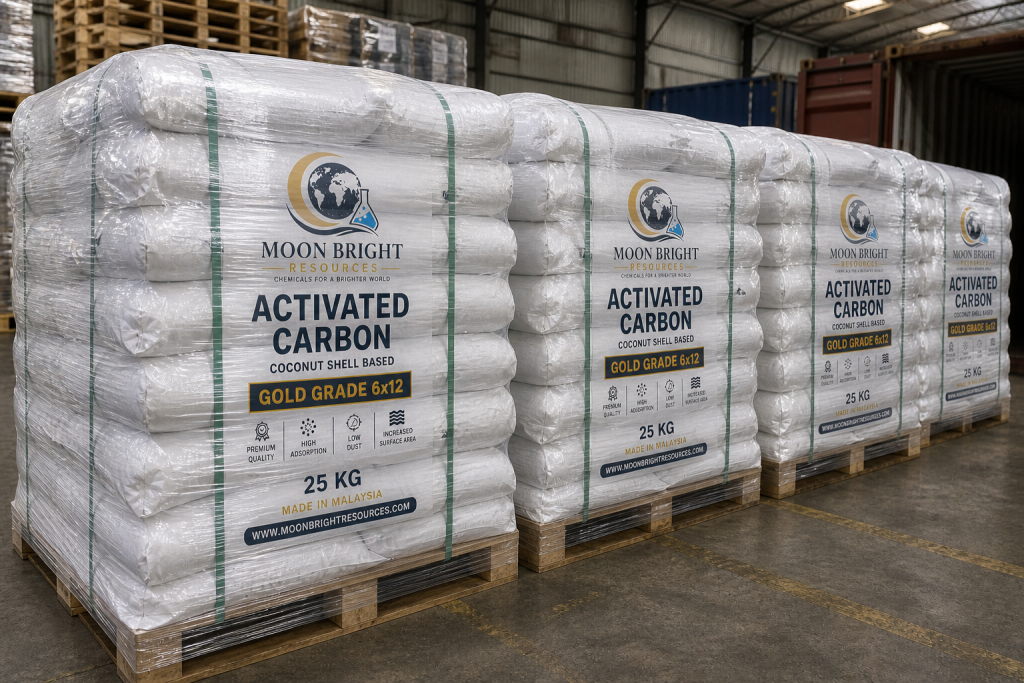
Frequently Asked Questions (FAQ)
1. What is activated carbon for water treatment?
Activated carbon for water treatment is a highly porous adsorbent material used to remove chlorine, taste and odor compounds, volatile organic compounds (VOCs), dissolved organic matter, and other contaminants from water. It is widely used in municipal drinking water systems, industrial water treatment, wastewater treatment, and residential filtration.
2. How does activated carbon remove contaminants from water?
Activated carbon removes contaminants through adsorption, a process in which dissolved molecules attach to the extensive internal surface of the carbon’s microscopic pores. This differs from absorption, where substances penetrate into the bulk of another material.
3. What contaminants can activated carbon remove?
Activated carbon is commonly used to reduce:
- Chlorine
- Chloramine (in some systems, often with catalytic carbon)
- Taste and odor compounds
- Volatile Organic Compounds (VOCs)
- Natural Organic Matter (NOM)
- Certain pesticides
- Some herbicides
- Industrial organic chemicals
- Color-causing compounds
Its effectiveness depends on the contaminant, contact time, and the selected carbon grade.
4. Can activated carbon remove bacteria or viruses?
Activated carbon is not intended to disinfect water. While microorganisms may become trapped within a filter, activated carbon should not be relied upon to remove or inactivate bacteria, viruses, or other pathogens. Disinfection methods such as chlorination, UV treatment, ozone, or membrane filtration are commonly used for microbial control.
5. What is the difference between activated carbon and charcoal?
Although both contain carbon, activated carbon undergoes a controlled activation process that creates millions of microscopic pores and dramatically increases its surface area. This makes activated carbon far more effective for adsorption than ordinary charcoal.
6. What is Granular Activated Carbon (GAC)?
Granular Activated Carbon (GAC) consists of relatively large particles used in fixed-bed filters for continuous water treatment. GAC is widely used in municipal drinking water plants, industrial process water systems, and wastewater polishing applications.
7. What is Powdered Activated Carbon (PAC)?
Powdered Activated Carbon (PAC) is a finely divided activated carbon that is typically dosed directly into water during treatment. It is often used for temporary treatment needs, seasonal taste and odor events, or emergency contaminant control.
8. What is Coconut Shell Activated Carbon?
Coconut Shell Activated Carbon is manufactured from coconut shells and is known for its high hardness, low ash content, and well-developed microporous structure. It is commonly used in drinking water treatment, reverse osmosis pretreatment, and industrial water purification.
9. Which type of activated carbon is best for water treatment?
The most suitable activated carbon depends on the application, target contaminants, water chemistry, operating conditions, and system design. Coconut shell, coal-based, and wood-based activated carbons each have strengths for different treatment objectives.
10. How long does activated carbon last?
Service life varies depending on:
- Water quality
- Contaminant concentration
- Flow rate
- Contact time
- Carbon quality
- System maintenance
Instead of replacing media on a fixed schedule, operators should monitor performance using appropriate water quality testing.
11. Can activated carbon be regenerated?
Some activated carbon grades can be regenerated using specialized thermal or chemical processes. Whether regeneration is practical depends on the application, contamination level, and economic considerations.
12. Does activated carbon remove chlorine?
Yes. Activated carbon is widely used to reduce chlorine in drinking water and industrial process water, improving taste, odor, and compatibility with downstream treatment equipment such as reverse osmosis membranes.
13. Does activated carbon remove heavy metals?
Activated carbon is generally designed to adsorb organic compounds rather than dissolved heavy metals. Some modified or impregnated activated carbons may be used for specific metals, but performance depends on the metal species and water chemistry. Other treatment technologies are often more suitable for dissolved metal removal.
14. What is the iodine number of activated carbon?
The iodine number is a laboratory measurement commonly used as an indicator of adsorption capacity for certain small organic molecules. It is one of several technical specifications considered when comparing activated carbon products.
15. Why is hardness important?
Higher hardness improves resistance to abrasion during backwashing and continuous operation, reducing media loss and extending service life in many applications.
16. What is the purpose of a Technical Data Sheet (TDS)?
A Technical Data Sheet summarizes the standard technical characteristics of an activated carbon product, including properties such as particle size, iodine number, hardness, moisture content, and recommended applications.
17. What is a Certificate of Analysis (COA)?
A Certificate of Analysis reports the measured values for a specific production batch, allowing buyers to verify that the delivered product meets agreed technical specifications.
18. What industries use activated carbon for water treatment?
Activated carbon is widely used in:
- Municipal water treatment
- Food and beverage manufacturing
- Pharmaceutical production
- Chemical processing
- Mining
- Power generation
- Electronics manufacturing
- Textile production
- Wastewater treatment
19. How should activated carbon be stored?
Activated carbon should be stored in a clean, dry location in its original packaging until use. Proper storage helps protect the media from moisture, contamination, and physical damage.
20. How do I choose an activated carbon supplier?
When evaluating suppliers, consider:
- Product consistency
- Technical documentation
- Quality assurance procedures
- Batch traceability
- Export capability
- Technical support
- Packaging options
- Delivery reliability
Selecting a supplier based on overall value rather than price alone often leads to better long-term performance.
Glossary of Activated Carbon & Water Treatment Terms
Understanding technical terminology is essential when evaluating activated carbon products, comparing suppliers, or designing water treatment systems. The following glossary explains many of the most common terms used throughout this guide.
Abrasion Resistance
The ability of activated carbon particles to resist physical wear and breakage during handling, transportation, backwashing, and continuous operation. High abrasion resistance helps reduce dust generation and extends media life.
Activated Carbon
A highly porous carbon material produced through an activation process that creates an extensive internal surface area. Activated carbon is widely used to adsorb contaminants from water, air, and industrial process streams.
Adsorption
A physical process in which molecules attach to the surface of activated carbon rather than being absorbed into its internal structure. Adsorption is the primary mechanism by which activated carbon removes many dissolved contaminants from water.
Ash Content
The percentage of inorganic mineral residue remaining after activated carbon production. Lower ash content is generally preferred because it leaves more surface area available for adsorption.
Apparent Density
The mass of activated carbon per unit volume, usually expressed in kilograms per cubic meter (kg/m³) or grams per cubic centimeter (g/cm³). Apparent density assists engineers in sizing filter vessels and estimating media requirements.
Batch Number
A unique identification code assigned to a production batch. Batch numbers support traceability, quality assurance, and product verification.
Certificate of Analysis (COA)
A document that reports the measured technical properties of a specific production batch, allowing buyers to verify that the delivered product meets agreed specifications.
Chlorine Removal
One of the most common applications of activated carbon. Adsorption reduces free chlorine in water, improving taste, odor, and compatibility with downstream equipment such as reverse osmosis membranes.
Coconut Shell Activated Carbon
Activated carbon manufactured from coconut shells. It is valued for its high hardness, low ash content, and well-developed microporous structure, making it suitable for many drinking water and industrial applications.
Contact Time
The amount of time water remains in contact with activated carbon. Longer contact time generally allows greater adsorption of contaminants.
Empty Bed Contact Time (EBCT)
A design parameter representing the theoretical time that water spends passing through an empty filter bed volume. EBCT is widely used when designing activated carbon filtration systems.
Granular Activated Carbon (GAC)
Activated carbon supplied as granules and commonly used in fixed-bed filtration systems for continuous water treatment.
Hardness Number
A measurement of activated carbon’s resistance to abrasion and particle breakdown during handling and operation. Higher hardness generally indicates greater durability.
Iodine Number
A laboratory measurement commonly used as an indicator of the adsorption capacity of activated carbon for certain small organic molecules. It is one of several specifications used to compare products.
Macropores
The largest pores within activated carbon. Their primary function is to transport contaminants into the smaller adsorption pores.
Mesopores
Medium-sized pores that facilitate adsorption of larger organic molecules and improve contaminant transport throughout the carbon structure.
Micropores
Very small pores responsible for much of activated carbon’s adsorption capacity. They are particularly effective for adsorbing small organic molecules.
Moisture Content
The percentage of water contained within activated carbon during storage or shipment. Moisture content affects shipping weight and usable carbon quantity.
Natural Organic Matter (NOM)
Organic compounds naturally present in water from decaying vegetation, soil, and biological activity. Activated carbon is commonly used to reduce NOM in drinking water treatment.
Particle Size Distribution
The range and proportion of particle sizes within an activated carbon product. Consistent particle size contributes to predictable hydraulic performance and adsorption efficiency.
Powdered Activated Carbon (PAC)
Finely ground activated carbon typically added directly into water during treatment processes. PAC is often used for temporary treatment needs or variable contaminant conditions.
Pore Structure
The arrangement and distribution of micropores, mesopores, and macropores within activated carbon. Pore structure strongly influences adsorption performance.
Reverse Osmosis (RO)
A membrane filtration process used to remove dissolved salts and impurities from water. Activated carbon is commonly installed upstream of RO systems to reduce chlorine and dissolved organic compounds that may damage membranes. Activated Carbon Water Treatment Price
Surface Area
The total internal surface available for adsorption, commonly measured in square meters per gram (m²/g). Activated carbon has an exceptionally large internal surface area due to its porous structure.
Technical Data Sheet (TDS)
A document describing the standard technical characteristics of an activated carbon product, including particle size, iodine number, hardness, moisture content, and recommended applications.
Total Cost of Ownership (TCO)
The complete cost associated with purchasing and operating activated carbon over its service life, including replacement, maintenance, downtime, logistics, and disposal—not just the initial purchase price.
Traceability
The ability to identify the origin, production history, and quality records associated with a specific batch of activated carbon.
Volatile Organic Compounds (VOCs)
Organic chemicals that can be present in water from industrial activities, fuel handling, or solvent use. Activated carbon is commonly applied to reduce many VOCs, although effectiveness depends on the specific compound and operating conditions. Activated Carbon Water Treatment Price
Water Polishing
A final treatment stage used to improve water quality after primary and secondary treatment processes. Activated carbon is frequently used for polishing to reduce residual dissolved organic contaminants.
Water Reuse
The treatment and recycling of wastewater for beneficial applications such as cooling systems, process water, irrigation (where permitted), or industrial operations. Activated Carbon Water Treatment Price
Water Treatment Media
Materials used in filtration and purification systems to improve water quality. Activated carbon is one example of water treatment media, alongside sand, anthracite, ion exchange resins, and membrane technologies.
Working Capacity
The practical adsorption capacity of activated carbon under actual operating conditions. Working capacity is influenced by water chemistry, contaminant type, flow rate, and contact time, and may differ from laboratory performance indicators. Activated Carbon Water Treatment Price
Glossary Summary
The terminology used in activated carbon and water treatment can appear highly technical, but understanding these concepts helps buyers, engineers, and operators make better decisions when selecting products, interpreting technical documentation, comparing suppliers, and designing treatment systems. Familiarity with these terms also simplifies communication during procurement, installation, and long-term operation.
Activated Carbon RFQ
Activated Carbon,
Activated Carbon for Water Treatment,
Coconut Shell Activated Carbon,
Granular Activated Carbon (GAC),
Powdered Activated Carbon (PAC),
Activated Carbon TDS,
Activated Carbon COA,
Activated Carbon Specifications,
Water Treatment Media,
Activated Carbon Supplier,

 English
  French
  Arabic
  Spanish
  Bulgarian