
Última actualización: junio de 2026
Respuesta rápida
La logística del cianuro de sodio requiere un manejo estricto, cumplimiento normativo y procedimientos especializados de transporte de mercancías peligrosas. Los compradores deben garantizar un embalaje adecuado, documentación certificada y una coordinación de transporte con experiencia para evitar retrasos o riesgos de seguridad. Moon Bright Resources ofrece soporte logístico integral de cianuro de sodio, que incluye documentación de exportación, coordinación de envasado y gestión de envíos internacionales para clientes industriales calificados.
Puntos clave
- El cianuro de sodio se clasifica como un producto químico industrial peligroso que requiere transporte regulado
- El embalaje y el etiquetado adecuados son obligatorios para el envío internacional
- Los errores de documentación son una causa importante de los retrasos aduaneros
- Los agentes de carga deben tener experiencia en el manejo de mercancías peligrosas
- Moon Bright Resources coordina el soporte logístico completo para envíos a granel
Índice
- Por qué la logística del cianuro de sodio requiere un manejo especial
- Regulaciones de envío internacional
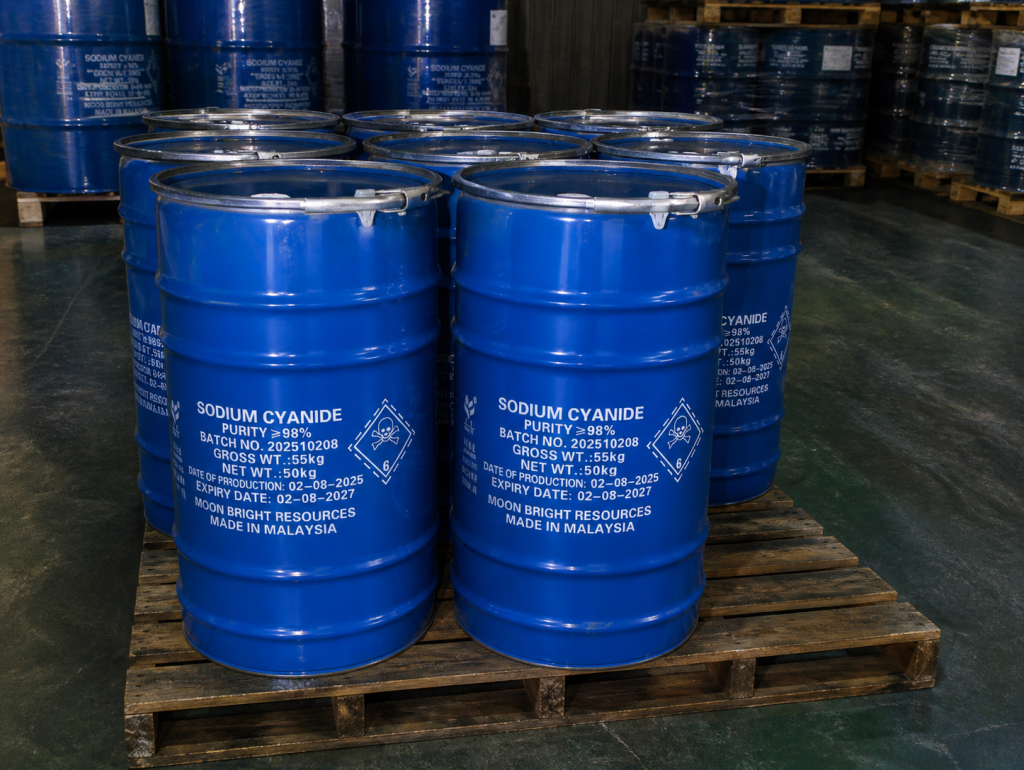
- Normas de envasado para el cianuro de sodio
- Modos de transporte (Marítimo, Aéreo, Terrestre)
- Documentación de exportación requerida
- Desafíos de despacho de aduanas
- Gestión de riesgos en la logística química
- Papel de un proveedor confiable en el éxito de los envíos
- Por qué los compradores eligen Moon Bright Resources
- Preguntas frecuentes
- Conclusión
Por qué la logística del cianuro de sodio requiere un manejo especial
El cianuro de sodio se utiliza ampliamente en minería de oro y procesamiento químico industrial, pero también está clasificada como una sustancia peligrosa altamente regulada. Esto significa que el transporte y la logística deben cumplir con estrictas normas internacionales de seguridad.
El manejo inadecuado puede provocar:
- Retrasos en los envíos
- Rechazo de aduanas
- Sanciones regulatorias
- Riesgos de seguridad durante el transporte
- Pérdidas financieras para los compradores
Debido a estos riesgos, las empresas deben trabajar con proveedores y socios logísticos experimentados que comprendan las normativas sobre mercancías peligrosas.
Regulaciones de envío internacional
El transporte de cianuro de sodio se rige por múltiples marcos internacionales según el destino y las rutas de tránsito.
Los principales organismos reguladores incluyen:
- Código Marítimo Internacional de Mercancías Peligrosas (IMDG)
- Reglamentación sobre Mercancías Peligrosas de la Asociación de Transporte Aéreo Internacional (IATA)
- Normativa local de importación y exportación de productos químicos
- Autoridades aduaneras de los países de destino
Estas regulaciones definen:
- Requisitos de embalaje
- Normas de etiquetado
- Restricciones de transporte
- Requisitos de documentación
- Procedimientos de manejo de emergencias
El cumplimiento normativo no es opcional; es obligatorio para todos los envíos internacionales.
Normas de envasado para el cianuro de sodio
El embalaje adecuado es fundamental para garantizar la seguridad y el cumplimiento normativo.
Tipos de envasado comunes
- Tambores de acero (estándar industrial)
- Contenedores a granel sellados
- Embalaje de exportación reforzado
- Contenedores con etiquetas de clase de peligro
Requisitos de embalaje
Todo el embalaje debe garantizar:
- Contención a prueba de fugas
- Resistencia química
- Etiquetado de peligro adecuado
- Cierre seguro para la estabilidad en el transporte
El empaque incorrecto es una de las razones más comunes para el rechazo o retraso de envíos en los puestos de control aduanero. Envío de cianuro de sodio
Modos de transporte para el cianuro de sodio
Transporte marítimo (más común)
El transporte marítimo es el método más utilizado para los envíos a granel de cianuro de sodio debido a su rentabilidad y capacidad.
Ventajas:
- Apto para grandes volúmenes
- Reducir el coste de transporte
- Cobertura de envíos globales
Carga aérea (uso limitado)
El transporte Aéreo está muy restringido debido a la clasificación de mercancías peligrosas.
Solo se usa cuando:
- Se requiere suministro de emergencia
- Se envían pequeñas cantidades controladas
- Se conceden las aprobaciones reglamentarias
Transporte terrestre
Utilizado para la distribución regional y las entregas transfronterizas donde esté permitido.
Documentación de exportación requerida
Disponer de la documentación adecuada es fundamental para que el despacho de aduana se realice sin problemas.
Los documentos estándar incluyen:
- Certificado de Análisis
- Ficha de Datos de Seguridad (FDS)
- Factura comercial
- Lista de equipaje
- Licencia de exportación (si es necesaria)
- Declaración de mercancías peligrosas
- Certificado de Origen
La documentación faltante o incorrecta puede provocar retrasos en los envíos o su rechazo.
Desafíos de despacho de aduanas
Envío de cianuro de sodio a menudo se enfrentan a inspecciones aduaneras más estrictas debido a su clasificación como producto químico peligroso.
Los problemas comunes incluyen:
- Códigos HS incorrectos
- Declaraciones de mercancías peligrosas faltantes
- Etiquetado incorrecto
- Documentación incompleta
- Retrasos en la aprobación regulatoria
Trabajar con un proveedor experimentado reduce significativamente estos riesgos.
Gestión de riesgos en la logística química
La planificación logística eficaz reduce los riesgos operativos.
Las mejores prácticas incluyen:
- Revisión de la documentación previa al envío
- Embalaje certificado para mercancías peligrosas
- Transitarios con experiencia
- Cobertura de seguro para envíos de productos químicos
- Verificación de cumplimiento antes del envío
Incoterms en la logística de cianuro de sodio (FOB, CIF, EXW)
Comprender los Incoterms es fundamental al organizar envíos internacionales de cianuro de sodio, ya que definen quién es responsable de los costos de envío, el seguro y el riesgo.
FOB (Franco a bordo)
Bajo los términos FOB:
- El vendedor es responsable hasta que las mercancías se carguen a bordo del buque
- El comprador se encarga del flete, el seguro y los costos de destino
Esto se usa comúnmente en exportaciones de productos químicos a granel.
CIF (Costo, Seguro y Flete)
Bajo los términos CIF:
- El vendedor cubre el costo de la mercancía, el flete y el seguro
- El comprador se encarga del despacho de importación y la entrega local
Esto suele ser preferido por los importadores primerizos.
EXW (En fábrica)
Bajo los términos EXW:
- El comprador es responsable de toda la logística desde las instalaciones del proveedor en adelante.
- Máxima responsabilidad por parte del comprador
Esta opción suele ser utilizada por equipos de compras experimentados.
Estructura de costos logísticos
El costo total de Logística de cianuro de sodio incluye múltiples componentes más allá del precio del producto.
Factores clave de coste
- Gastos de transporte marítimo o aéreo
- Tarifas de embalaje y manejo
- Costos de seguro
- Tasas portuarias y de terminal
- Tasas de despacho de aduana
- Transporte terrestre
Comprender estos costos ayuda a los compradores a evaluar coste de aterrizaje real de la adquisición de cianuro de sodio.
Errores comunes de envío que cometen los compradores
Muchos retrasos en las adquisiciones son causados por errores evitables.
1. Documentación incompleta
La falta de SDS, COA o declaraciones de mercancías peligrosas puede retrasar el despacho.
2. Embalaje incorrecto
Un embalaje inadecuado puede infringir las normativas del IMDG o de la IATA.
3. Elección de transitarios no especializados
No todos los proveedores de logística están calificados para manipular productos químicos peligrosos.
4. Ignorar las normas de importación
Cada país tiene requisitos específicos de importación de productos químicos que deben verificarse de antemano.
5. Centrarse Solo en el Precio
Las opciones de logística de bajo costo a menudo resultan en un mayor riesgo a largo plazo.
Por qué la logística importa en Adquisición de cianuro de sodio
Una logística eficiente garantiza:
- Entrega a tiempo
- Cumplimiento normativo
- Manipulación segura durante el tránsito
- Riesgo operacional reducido
- Suministro continuo de producción
En industrias tales como minería de oro, los retrasos en la entrega de cianuro de sodio pueden afectar directamente el volumen de producción y los ingresos.
Por qué los compradores eligen a Moon Bright Resources para la logística
Moon Bright Resources ofrece una coordinación logística completa para la adquisición de cianuro de sodio, garantizando una entrega internacional segura y conforme a las normativas.
Soporte logístico de extremo a extremo
Gestionamos:
- Preparación de la documentación de exportación
- Coordinación de transporte de carga
- Verificación de embalaje
- Soporte de cumplimiento aduanero
- Programación de entregas
Experiencia en mercancías peligrosas
Nuestro proceso logístico está diseñado específicamente para el transporte de productos químicos regulados, garantizando el cumplimiento de:
- Código IMDG (transporte marítimo)
- Normas de la IATA (transporte aéreo de carga cuando corresponda)
- Normas nacionales de importación
Riesgo de adquisiciones reducido
Al trabajar con socios logísticos experimentados, los compradores se benefician de:
- Menos retrasos en los envíos
- Reducir el riesgo de cumplimiento
- Mayor estabilidad en la cadena de suministro
- Plazos de entrega previsibles
Preguntas frecuentes
¿Es difícil enviar cianuro de sodio internacionalmente?
Sí. Es un producto químico peligroso regulado que requiere estrictos procedimientos de documentación, envasado y cumplimiento.
¿Cuál es el método de envío más seguro?
El transporte marítimo es el método más común y seguro para envíos a granel cuando se maneja adecuadamente bajo las normas del código IMDG.
¿Se puede enviar cianuro de sodio por aire?
Solo en casos limitados y regulados debido a las estrictas restricciones de la IATA.
¿Quién se encarga del despacho de aduanas?
Esto depende de los Incoterms. Bajo CIF o FOB, las responsabilidades se comparten o se definen entre el comprador y el vendedor.
¿Por qué se retrasan los envíos?
Las razones comunes incluyen documentación faltante, embalaje incorrecto o requisitos de inspección aduanera.
Conclusión
La logística del cianuro de sodio requiere un cumplimiento estricto, un embalaje especializado y una coordinación de carga experimentada. Los compradores que ignoran la complejidad logística a menudo se enfrentan a retrasos, costos adicionales o problemas regulatorios.
Un enfoque logístico estructurado garantiza la entrega segura, eficiente y conforme a las normativas de cianuro de sodio en los mercados internacionales.
Moon Bright Resources ofrece soporte logístico integral, ayudando a los compradores industriales a gestionar la documentación, la coordinación de fletes y los requisitos de cumplimiento para una entrega global segura y confiable.

 English
  French
  Arabic
  Spanish
  Bulgarian