
Last Updated: June 2026
Quick Answer
Sodium Cyanide logistics requires strict handling, regulatory compliance, and specialized hazardous goods shipping procedures. Buyers must ensure proper packaging, certified documentation, and experienced freight coordination to avoid delays or safety risks. Moon Bright Resources provides end-to-end Sodium Cyanide logistics support, including export documentation, packaging coordination, and international shipping management for qualified industrial customers.
Key Takeaways
- Sodium Cyanide is classified as a hazardous industrial chemical requiring regulated transport
- Proper packaging and labeling are mandatory for international shipping
- Documentation errors are a major cause of customs delays
- Freight forwarders must be experienced in dangerous goods handling
- Moon Bright Resources coordinates full logistics support for bulk shipments
Table of Contents
- Why Sodium Cyanide Logistics Requires Special Handling
- International Shipping Regulations
- Packaging Standards for Sodium Cyanide
- Transportation Modes (Sea, Air, Land)
- Required Export Documentation
- Customs Clearance Challenges
- Risk Management in Chemical Logistics
- Role of a Reliable Supplier in Shipping Success
- Why Buyers Choose Moon Bright Resources
- Frequently Asked Questions
- Conclusion
Why Sodium Cyanide Logistics Requires Special Handling
Sodium Cyanide is widely used in gold mining and industrial chemical processing, but it is also classified as a highly regulated hazardous substance. This means that transportation and logistics must follow strict international safety standards.
Improper handling can lead to:
- Shipment delays
- Customs rejection
- Regulatory penalties
- Safety risks during transport
- Financial losses for buyers
Because of these risks, companies must work with experienced suppliers and logistics providers who understand dangerous goods regulations.
International Shipping Regulations
Sodium Cyanide transport is governed by multiple international frameworks depending on destination and transit routes.
Key regulatory bodies include:
- International Maritime Dangerous Goods (IMDG) Code
- International Air Transport Association (IATA) Dangerous Goods Regulations
- Local import/export chemical regulations
- Customs authorities of destination countries
These regulations define:
- Packaging requirements
- Labeling standards
- Transport restrictions
- Documentation requirements
- Emergency handling procedures
Compliance is not optional—it is mandatory for all international shipments.
Packaging Standards for Sodium Cyanide
Proper packaging is critical to ensure safety and regulatory compliance.
Common Packaging Types
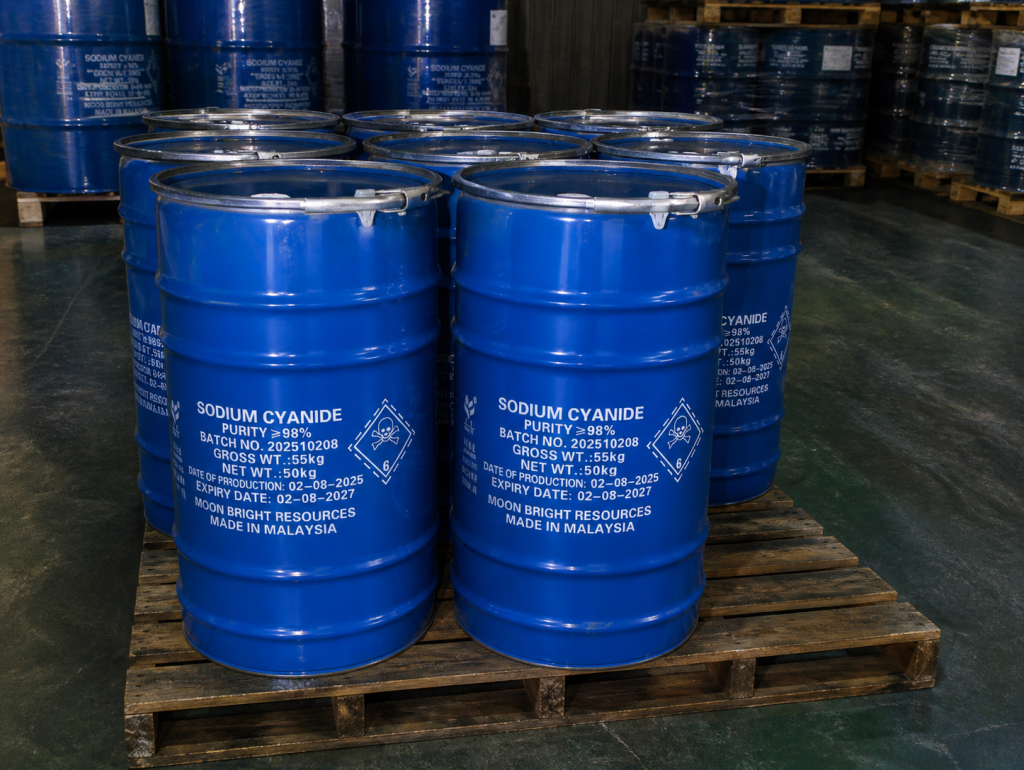
- Steel drums (industrial standard)
- Sealed bulk containers
- Reinforced export packaging
- Hazard-class labeled containers
Packaging Requirements
All packaging must ensure:
- Leak-proof containment
- Chemical resistance
- Proper hazard labeling
- Secure sealing for transport stability
Incorrect packaging is one of the most common reasons for shipment rejection or delay at customs checkpoints. Sodium Cyanide shipping
Transportation Modes for Sodium Cyanide
Sea Freight (Most Common)
Sea freight is the most widely used method for bulk Sodium Cyanide shipments due to cost efficiency and capacity.
Advantages:
- Suitable for large volumes
- Lower transportation cost
- Global shipping coverage
Air Freight (Limited Use)
Air transport is highly restricted due to hazardous classification.
Used only when:
- Emergency supply is required
- Small controlled quantities are shipped
- Regulatory approvals are granted
Land Transport
Used for regional distribution and cross-border deliveries where permitted.
Required Export Documentation
Proper documentation is essential for smooth customs clearance.
Standard Documents Include:
- Certificate of Analysis (COA)
- Safety Data Sheet (SDS)
- Commercial Invoice
- Packing List
- Export License (if required)
- Dangerous Goods Declaration
- Certificate of Origin
Missing or incorrect documentation can result in shipment delays or rejection.
Customs Clearance Challenges
Sodium Cyanide shipments often face stricter customs inspection due to its classification as a hazardous chemical.
Common issues include:
- Incorrect HS codes
- Missing dangerous goods declarations
- Improper labeling
- Incomplete documentation
- Regulatory approval delays
Working with an experienced supplier significantly reduces these risks.
Risk Management in Chemical Logistics
Effective logistics planning reduces operational risks.
Best practices include:
- Pre-shipment documentation review
- Certified hazardous goods packaging
- Experienced freight forwarders
- Insurance coverage for chemical shipments
- Compliance verification before dispatch
Incoterms in Sodium Cyanide Logistics (FOB, CIF, EXW)
Understanding Incoterms is essential when arranging international Sodium Cyanide shipments, as they define who is responsible for shipping costs, insurance, and risk.
FOB (Free on Board)
Under FOB terms:
- Seller is responsible until goods are loaded onto the vessel
- Buyer handles freight, insurance, and destination costs
This is commonly used in bulk chemical exports.
CIF (Cost, Insurance, Freight)
Under CIF terms:
- Seller covers cost of goods, freight, and insurance
- Buyer handles import clearance and local delivery
This is often preferred by first-time importers.
EXW (Ex Works)
Under EXW terms:
- Buyer is responsible for all logistics from supplier facility onward
- Maximum responsibility on buyer side
This option is typically used by experienced procurement teams.
Logistics Cost Structure
The total cost of Sodium Cyanide logistics includes multiple components beyond product price.
Key Cost Factors
- Ocean or air freight charges
- Packaging and handling fees
- Insurance costs
- Port and terminal charges
- Customs clearance fees
- Inland transportation
Understanding these costs helps buyers evaluate the true landed cost of Sodium Cyanide procurement.
Common Shipping Mistakes Buyers Make
Many procurement delays are caused by avoidable errors.
1. Incomplete Documentation
Missing SDS, COA, or dangerous goods declarations can delay clearance.
2. Incorrect Packaging
Improper packaging may violate IMDG or IATA regulations.
3. Choosing Non-Specialized Freight Forwarders
Not all logistics providers are qualified to handle hazardous chemicals.
4. Ignoring Import Regulations
Each country has specific chemical import requirements that must be verified in advance.
5. Focusing Only on Price
Low-cost logistics options often result in higher long-term risk.
Why Logistics Matters in Sodium Cyanide Procurement
Efficient logistics ensures:
- On-time delivery
- Regulatory compliance
- Safe handling during transit
- Reduced operational risk
- Continuous production supply
In industries such as gold mining, delays in Sodium Cyanide delivery can directly impact production output and revenue.
Why Buyers Choose Moon Bright Resources for Logistics
Moon Bright Resources provides complete logistics coordination for Sodium Cyanide procurement, ensuring safe and compliant international delivery.
End-to-End Logistics Support
We manage:
- Export documentation preparation
- Freight forwarding coordination
- Packaging verification
- Customs compliance support
- Delivery scheduling
Hazardous Goods Expertise
Our logistics process is designed specifically for regulated chemical transport, ensuring compliance with:
- IMDG Code (sea freight)
- IATA regulations (air freight where applicable)
- National import regulations
Reduced Procurement Risk
By working with experienced logistics partners, buyers benefit from:
- Fewer shipment delays
- Lower compliance risk
- Improved supply chain stability
- Predictable delivery timelines
Frequently Asked Questions
Is Sodium Cyanide difficult to ship internationally?
Yes. It is a regulated hazardous chemical requiring strict documentation, packaging, and compliance procedures.
What is the safest shipping method?
Sea freight is the most common and safest method for bulk shipments when properly handled under IMDG regulations.
Can Sodium Cyanide be shipped by air?
Only in limited, regulated cases due to strict IATA restrictions.
Who handles customs clearance?
This depends on Incoterms. Under CIF or FOB, responsibilities are shared or defined between buyer and seller.
Why do shipments get delayed?
Common reasons include missing documentation, incorrect packaging, or customs inspection requirements.
Conclusion
Sodium Cyanide logistics requires strict compliance, specialized packaging, and experienced freight coordination. Buyers who ignore logistics complexity often face delays, added costs, or regulatory issues.
A structured logistics approach ensures safe, efficient, and compliant delivery of Sodium Cyanide across international markets.
Moon Bright Resources provides end-to-end logistics support, helping industrial buyers manage documentation, freight coordination, and compliance requirements for safe and reliable global delivery.

 English
  French
  Arabic
  Spanish
  Bulgarian