
What Is Coconut Shell Activated Carbon TDS ?
Quick Answer
Coconut shell activated carbon TDS is a premium-grade adsorbent produced by carbonizing and activating carefully selected coconut shells under controlled high-temperature conditions. Renowned for its high surface area, exceptional hardness, low ash content, and well-developed microporous structure, it is widely used in drinking water treatment, wastewater purification, gold recovery (CIP/CIL), air and gas purification, food and beverage processing, pharmaceutical manufacturing, and numerous industrial filtration applications.
Compared with many other activated carbon materials, coconut shell activated carbon offers excellent adsorption efficiency, superior mechanical strength, and a longer operational lifespan, making it a preferred choice for industries seeking reliable purification performance and cost-effective long-term operation.
Table of Contents
- What Is Coconut Shell Activated Carbon?
- Why Coconut Shell Activated Carbon Is Preferred Worldwide
- How Coconut Shell Activated Carbon Is Manufactured
- Physical and Chemical Properties
- Technical Specifications and Quality Parameters
- Types and Grades of Coconut Shell Activated Carbon
- Laboratory Testing and Quality Assurance
- Industrial Applications
- Advantages Compared with Other Activated Carbon Types
- Packaging, Storage, and Transportation
- How to Select the Right Coconut Shell Activated Carbon
- How to Evaluate a Coconut Shell Activated Carbon Supplier
- Frequently Asked Questions
- Conclusion
Introduction
As industries place greater emphasis on water quality, environmental protection, process efficiency, and regulatory compliance, the demand for high-performance filtration media continues to grow. Among the many adsorbent materials available today, coconut shell activated carbon has earned a reputation as one of the most effective and durable solutions for removing impurities from liquids and gases.
Manufactured from renewable coconut shells, this specialized form of activated carbon combines a highly developed pore structure with outstanding mechanical strength. Its ability to adsorb a wide range of contaminants makes it suitable for applications ranging from municipal drinking water treatment and industrial wastewater purification to gold recovery, pharmaceutical manufacturing, food processing, and air purification systems.
For procurement professionals, plant engineers, water treatment specialists, and industrial buyers, selecting the appropriate activated carbon requires a clear understanding of its technical characteristics, manufacturing process, quality standards, and application-specific performance. Factors such as iodine number, BET surface area, hardness, particle size distribution, ash content, and moisture levels all influence how the material performs under real operating conditions.
This Living Publication provides a comprehensive technical and commercial reference designed to help buyers make informed procurement decisions. Whether you are sourcing activated carbon for a new treatment system, evaluating suppliers, comparing product grades, or seeking to optimize an existing process, this guide explains the essential specifications, testing methods, quality requirements, and best practices associated with coconut shell activated carbon.
In addition to exploring the science behind adsorption and pore development, the publication also examines international quality standards, laboratory testing procedures, packaging and storage recommendations, supplier evaluation criteria, and practical procurement guidance. Throughout the guide, readers will find actionable insights that support both technical understanding and purchasing confidence.
Why This Guide Matters
Selecting activated carbon based solely on price or a single specification can result in reduced adsorption performance, shorter service life, increased operating costs, and unnecessary process interruptions.
This guide has been developed to help readers:
- Understand how coconut shell activated carbon is manufactured.
- Learn the technical properties that determine adsorption performance.
- Compare different grades and specifications.
- Interpret laboratory test results and Certificates of Analysis (COAs).
- Evaluate suppliers using objective technical criteria.
- Select the most suitable activated carbon for water treatment, gold recovery, air purification, food processing, pharmaceuticals, and other industrial applications.
- Improve procurement decisions through a structured evaluation process.
Whether you are purchasing a few bags for laboratory use or sourcing full container loads for large-scale industrial operations, understanding the technical foundations of coconut shell activated carbon can reduce procurement risks and improve long-term performance.
Key Topics Covered Coconut Activated Carbon
Throughout this guide, you will learn about:
- Coconut shell activated carbon manufacturing
- Physical and chemical properties
- Technical specifications
- Iodine number and BET surface area
- Hardness, ash content, and moisture
- Particle size distribution
- Laboratory testing methods
- Quality standards and certifications
- Water treatment applications
- Gold recovery (CIP/CIL)
- Air and gas purification
- Food and pharmaceutical applications
- Packaging and storage
- Supplier evaluation
- Procurement best practices
💡 Expert Insight
Not all coconut shell activated carbon is produced to the same standard. Differences in raw material selection, activation process, pore structure, quality control, and laboratory verification can significantly influence product performance. Evaluating a supplier based on complete technical documentation and application-specific expertise—not simply on price—helps ensure that the selected carbon delivers reliable results throughout its service life.
Why Coconut Shell Activated Carbon Is Preferred Worldwide
Activated carbon can be manufactured from a variety of carbon-rich raw materials, including coconut shells, coal, wood, peat, lignite, bamboo, and various agricultural by-products. While each material offers unique characteristics, coconut shell activated carbon has become the preferred choice for many industrial applications because of its exceptional adsorption performance, mechanical durability, and sustainable origin.
The unique cellular structure of coconut shells allows manufacturers to produce activated carbon with a highly developed microporous network, making it particularly effective for adsorbing small organic molecules, dissolved contaminants, and trace impurities. Combined with its high hardness and low ash content, these characteristics have made coconut shell activated carbon the benchmark for demanding applications such as drinking water treatment, gold recovery, pharmaceutical manufacturing, food processing, and industrial purification.
The Advantages of Coconut Shell as a Raw Material
Unlike softer organic materials, coconut shells possess a naturally dense and hard structure.
During activation, this dense structure develops millions of microscopic pores while maintaining excellent mechanical strength.
As a result, coconut shell activated carbon typically offers:
- High adsorption capacity
- Excellent micropore development
- Superior hardness
- Low dust generation
- Low ash content
- Long operational life
- Good regeneration potential
- Consistent product quality
These properties contribute to reliable performance across a wide range of industrial treatment systems.
Highly Developed Microporous Structure
One of the defining characteristics of coconut shell activated carbon is its extensive microporous network.
Micropores are extremely small pores that provide a large internal surface area where adsorption takes place.
This pore structure makes coconut shell activated carbon particularly effective for removing:
- Chlorine
- Volatile organic compounds (VOCs)
- Taste and odour compounds
- Pesticides
- Herbicides
- Dissolved organic molecules
- Trace industrial contaminants
The combination of high surface area and optimized micropore volume enables efficient adsorption while maximizing the use of the available carbon structure.
Exceptional Mechanical Hardness
Mechanical hardness is an important quality parameter because activated carbon is frequently subjected to repeated handling, backwashing, hydraulic movement, and continuous flow.
Coconut shell activated carbon generally demonstrates higher abrasion resistance than many alternative raw materials.
Higher hardness provides several operational advantages:
- Reduced particle breakdown
- Lower dust formation
- Longer service life
- Improved regeneration performance
- Reduced media replacement frequency
- More stable filtration performance
These characteristics are particularly valuable in fixed-bed filtration systems and gold recovery operations where activated carbon is continuously circulated.
Low Ash Content
Ash represents the inorganic mineral residue remaining after complete combustion of activated carbon.
Because coconut shells naturally contain relatively low mineral content, coconut shell activated carbon typically exhibits lower ash levels than many other activated carbon types.
Lower ash content can provide several benefits:
- Higher product purity
- Improved adsorption efficiency
- Reduced interference with treated products
- Better suitability for food, beverage, and pharmaceutical applications
Low ash content is often an important purchasing criterion for industries requiring high-purity filtration media.
Excellent Regeneration Performance
Many industrial users regenerate activated carbon to reduce operating costs and extend product life.
The excellent structural integrity of coconut shell activated carbon allows many grades to tolerate regeneration more effectively than softer carbon materials.
Potential benefits include:
- Lower lifecycle costs
- Reduced waste generation
- Improved sustainability
- Better long-term operating economics
- Consistent adsorption performance over multiple service cycles
Actual regeneration performance depends on the application, contaminant type, and operating conditions.
Sustainable and Renewable Resource
Unlike coal-based activated carbon, coconut shell activated carbon is manufactured from a renewable agricultural by-product.
Coconut shells are generated during food production and would otherwise have limited economic value.
Using this renewable raw material supports:
- Resource efficiency
- Waste reduction
- Circular economy initiatives
- Sustainable manufacturing practices
- Reduced dependence on non-renewable resources
For many organizations, sustainability has become an important consideration alongside technical performance and procurement cost.
Consistent Product Performance
High-quality coconut shell activated carbon is produced under carefully controlled manufacturing conditions to ensure consistent quality.
Reliable manufacturers maintain:
- Controlled raw material selection
- Standardized activation processes
- Continuous laboratory testing
- Batch traceability
- Comprehensive quality documentation
This consistency helps industrial users achieve predictable treatment performance and simplifies long-term process optimization.
Why Industries Choose Coconut Shell Activated Carbon TDS
Many industries prefer coconut shell activated carbon because it offers a balanced combination of adsorption efficiency, durability, and operational reliability.
Typical industries include:
- Drinking water treatment
- Municipal water utilities
- Industrial wastewater treatment
- Gold mining (CIP/CIL)
- Food and beverage processing
- Pharmaceutical manufacturing
- Chemical production
- Air purification
- Gas treatment
- Laboratory and research facilities
Although product selection should always be based on application requirements, coconut shell activated carbon has become the preferred choice for many demanding purification processes.
Comparing Coconut Shell Activated Carbon with Other Raw Materials
| Feature | Coconut Shell | Coal | Wood |
|---|---|---|---|
| Renewable Raw Material | ✅ Yes | ❌ No | ✅ Yes |
| Mechanical Hardness | ★★★★★ | ★★★★☆ | ★★★☆☆ |
| Micropore Development | ★★★★★ | ★★★★☆ | ★★★☆☆ |
| Mesopore Volume | ★★★☆☆ | ★★★★☆ | ★★★★★ |
| Ash Content | Low | Moderate | Low to Moderate |
| Dust Generation | Low | Moderate | Higher |
| Typical Service Life | Long | Medium to Long | Medium |
| Preferred Applications | Water, Gold Recovery, Food, Pharma | General Industry | Decolorization, Large Molecules |
This comparison illustrates why coconut shell activated carbon is frequently selected for applications requiring high adsorption efficiency, durability, and low impurity levels.
💡 Expert Insight
The best activated carbon is not necessarily the one with the highest advertised specification—it is the one whose pore structure matches the contaminants being removed. Coconut shell activated carbon excels in applications involving small organic molecules because of its highly developed microporous structure, while other raw materials may be more suitable for certain large-molecule adsorption processes.
Understanding these differences enables buyers to make technically sound procurement decisions rather than relying solely on marketing claims.
How Coconut Shell Activated Carbon Is Manufactured
The performance of coconut shell activated carbon is determined long before it reaches a filtration system or industrial process. Every stage of manufacturing—from raw material selection to final quality inspection—plays an important role in developing the pore structure, adsorption capacity, mechanical strength, and consistency required for demanding industrial applications.
Although manufacturing methods vary among producers, premium coconut shell activated carbon is generally produced through a carefully controlled sequence of preparation, carbonization, activation, processing, and quality assurance. Maintaining precise control over temperature, residence time, and raw material quality helps ensure that the finished product meets technical specifications and performs consistently across different applications.
Step 1: Raw Material Selection
The manufacturing process begins with the careful selection of mature coconut shells.
High-quality coconut shells are preferred because they naturally possess:
- High carbon content
- Dense cellular structure
- Excellent mechanical strength
- Low mineral impurities
- Uniform composition
Before processing, shells are cleaned to remove soil, fibres, and other foreign materials. Consistent raw material quality provides the foundation for producing activated carbon with predictable adsorption characteristics.
Step 2: Carbonization
The cleaned coconut shells are then carbonized under controlled conditions in an oxygen-limited environment.
During carbonization:
- Moisture is removed.
- Volatile compounds are driven off.
- Organic material is converted into a carbon-rich structure.
- The basic pore framework begins to form.
The result is char, a carbon-rich material that serves as the precursor for activated carbon.
At this stage, adsorption capacity is still relatively limited because many pores remain undeveloped.
Step 3: Activation
Activation is the most critical stage in the manufacturing process because it creates the extensive internal pore network responsible for adsorption.
During activation, the carbonized material is exposed to carefully controlled high temperatures together with activating agents, commonly steam or carbon dioxide. These conditions gradually enlarge and connect microscopic pores throughout the carbon structure.
The activation process influences important characteristics such as:
- Surface area
- Micropore volume
- Pore size distribution
- Adsorption capacity
- Mechanical strength
Even small changes in activation conditions can significantly affect the final product, making process control essential for consistent quality.
Step 4: Crushing and Sizing
After activation, the material is processed into the particle sizes required for different industrial applications.
Typical forms include:
- Granular Activated Carbon (GAC)
- Powdered Activated Carbon (PAC)
- Pelletized Activated Carbon
- Extruded Activated Carbon
Particle sizing is carefully controlled because it affects:
- Hydraulic performance
- Pressure drop
- Contact time
- Filtration efficiency
- Ease of handling
Uniform particle size distribution contributes to consistent system performance and predictable adsorption behavior.
Step 5: Washing and Drying (Where Applicable)
Depending on the intended application and manufacturing process, activated carbon may undergo washing to remove residual mineral matter or fine particles.
Controlled drying then reduces moisture content to the specified level before packaging.
This stage helps improve:
- Product cleanliness
- Storage stability
- Batch consistency
- Compliance with customer specifications
For high-purity applications such as food processing, pharmaceuticals, or drinking water treatment, washing procedures may be particularly important.
Step 6: Laboratory Testing and Quality Verification
Before packaging, each production batch is typically evaluated to confirm that it meets established quality requirements.
Common laboratory tests include:
- Iodine Number
- BET Surface Area
- Moisture Content
- Ash Content
- Hardness
- Bulk Density
- Particle Size Distribution
- pH
- Abrasion Resistance
Batch testing provides objective verification that the activated carbon conforms to the manufacturer’s technical specifications.
Step 7: Packaging and Batch Identification
Once testing has been completed, activated carbon is packaged for storage and distribution.
Industrial packaging options commonly include:
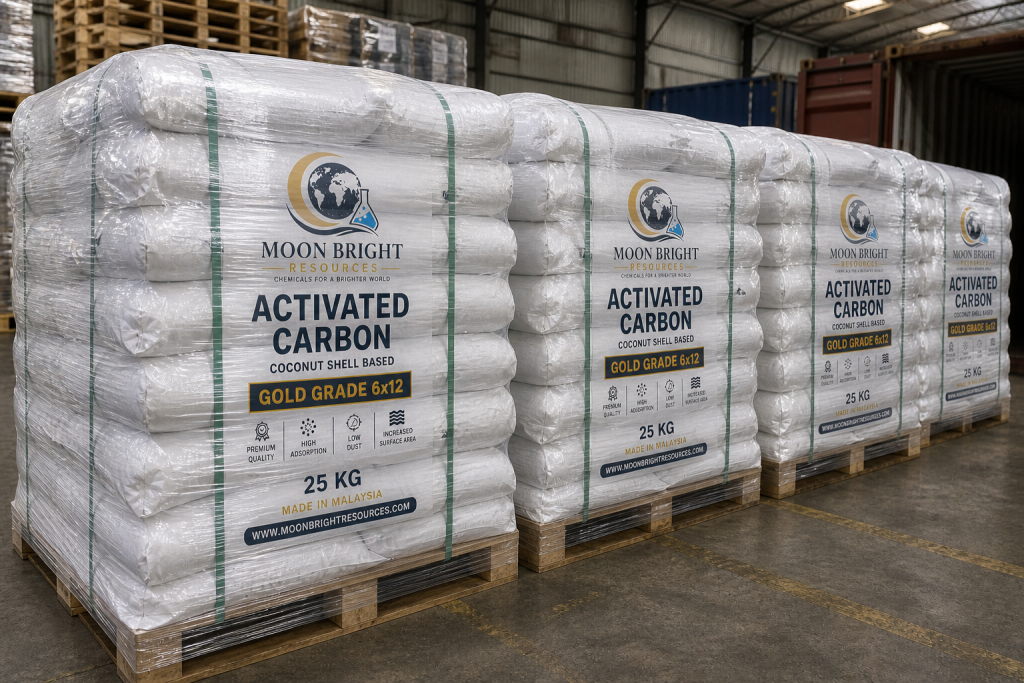
- 25 kg multi-wall bags
- Polywoven bags with inner liners
- Jumbo bags (FIBCs)
- Bulk shipments
- Custom packaging for OEM or export customers
Each package is typically identified with information such as:
- Product name
- Grade
- Batch number
- Net weight
- Manufacturing date (where applicable)
- Storage recommendations
Clear identification supports inventory management and product traceability throughout the supply chain.
Quality Control Throughout Production
Rather than relying solely on final inspection, reputable manufacturers implement quality control throughout the production process.
Typical quality control measures include:
- Inspection of incoming raw materials
- Monitoring of carbonization conditions
- Continuous control of activation parameters
- Routine laboratory testing
- Equipment calibration
- Batch traceability
- Documentation review before shipment
These practices help ensure that customers receive activated carbon with consistent technical characteristics from batch to batch.
Factors That Influence Product Quality
The final quality of coconut shell activated carbon depends on multiple variables working together.
Key factors include:
| Manufacturing Factor | Influence on Product |
|---|---|
| Coconut shell quality | Carbon purity and structural integrity |
| Carbonization conditions | Initial carbon structure |
| Activation temperature | Surface area and pore development |
| Activation time | Adsorption capacity and pore distribution |
| Particle sizing | Flow characteristics and pressure drop |
| Washing process | Ash content and product cleanliness |
| Quality control | Batch consistency and reliability |
Understanding these variables helps buyers appreciate why products with similar specifications may perform differently in real-world applications.
Why Manufacturing Expertise Matters
Modern activated carbon production combines material science, process engineering, and quality management.
Experienced manufacturers invest in:
- Controlled production systems
- Skilled technical personnel
- Laboratory verification
- Continuous process improvement
- International quality standards
- Traceability systems
This expertise contributes to consistent product performance and gives buyers greater confidence in long-term supply reliability.
💡 Expert Insight
Two activated carbon products may display similar iodine numbers yet perform differently in service. The reason often lies in differences in pore size distribution, activation control, raw material quality, and manufacturing consistency. Buyers should therefore evaluate the complete technical profile of a product rather than relying on a single specification.
Physical and Chemical Properties of Coconut Shell Activated Carbon
The effectiveness of coconut shell activated carbon is determined by a combination of physical and chemical properties that influence how efficiently it adsorbs contaminants from liquids and gases. These characteristics are carefully controlled during manufacturing and verified through laboratory testing to ensure consistent performance across industrial applications.
For procurement professionals and engineers, understanding these properties is essential when comparing suppliers, interpreting Certificates of Analysis (COAs), and selecting the most suitable activated carbon grade for a specific process.
Rather than relying on a single value such as iodine number, buyers should evaluate the complete technical profile to ensure the product matches operational requirements.
Physical Properties
Physical properties describe the measurable characteristics of activated carbon, including its structure, density, particle size, and mechanical durability. These parameters influence filtration efficiency, hydraulic performance, handling, and service life.
Appearance
Coconut shell activated carbon is typically supplied as black granules, pellets, or powder depending on the intended application.
A quality product should exhibit:
- Uniform colour
- Consistent particle size
- Minimal dust
- No visible foreign matter
- Clean and dry appearance
Visual inspection is often the first step in quality verification before laboratory testing begins.
Surface Area
One of the defining characteristics of activated carbon is its enormous internal surface area.
Although the particles appear relatively small externally, millions of microscopic pores create a vast adsorption surface inside each granule.
Typical premium coconut shell activated carbon may exhibit:
- BET Surface Area: approximately 900–1,500 m²/g, depending on the grade and intended application.
Higher surface area generally provides more adsorption sites, although performance also depends on pore size distribution and contaminant characteristics.
Pore Structure
The internal pore network largely determines adsorption performance.
Coconut shell activated carbon is known for its highly developed microporous structure, making it especially effective for removing small organic molecules and dissolved contaminants.
The pore system generally includes:
| Pore Type | Typical Function |
|---|---|
| Micropores (<2 nm) | Adsorption of small molecules, chlorine, VOCs, dissolved organics |
| Mesopores (2–50 nm) | Transport pathways and adsorption of medium-sized molecules |
| Macropores (>50 nm) | Facilitate fluid movement into the internal pore structure |
A balanced pore distribution improves both adsorption efficiency and mass transfer.
Particle Size Distribution
Particle size affects several operational characteristics, including:
- Contact time
- Pressure drop
- Flow rate
- Filtration efficiency
- Hydraulic performance
Common commercial particle sizes include:
- 4×8 mesh
- 4×10 mesh
- 6×12 mesh
- 8×16 mesh
- 8×30 mesh
- 12×40 mesh
The optimum size depends on the application and system design.
Bulk Density
Bulk density measures the mass of activated carbon contained within a given volume.
Typical coconut shell activated carbon exhibits:
- Bulk Density: approximately 0.45–0.60 g/cm³ (grade dependent)
Bulk density influences:
- Equipment sizing
- Shipping weight
- Bed volume calculations
- Carbon consumption estimates
Procurement teams often use this parameter when estimating operating costs.
Hardness
Mechanical hardness reflects the material’s resistance to abrasion and particle breakdown.
Premium coconut shell activated carbon typically demonstrates hardness values exceeding 95%, although exact values vary by product grade and test method.
Higher hardness offers several operational advantages:
- Reduced dust formation
- Longer service life
- Improved regeneration performance
- Lower replacement frequency
- Better resistance to hydraulic stress
Hardness is particularly important in applications involving continuous movement, such as gold recovery circuits.
Moisture Content
Activated carbon naturally absorbs moisture from the surrounding environment.
Manufacturers generally control moisture content before packaging to ensure product consistency.
Typical moisture levels are maintained according to product specifications, helping to:
- Preserve adsorption capacity
- Improve storage stability
- Simplify inventory calculations
- Support accurate purchasing by weight
Proper storage helps prevent unnecessary moisture uptake after delivery.
Chemical Properties
Chemical properties influence the interaction between activated carbon and contaminants during adsorption.
These characteristics help determine product suitability for different industrial applications.
Ash Content
Ash consists of inorganic mineral residues remaining after complete combustion.
Premium coconut shell activated carbon is generally characterized by relatively low ash content.
Lower ash levels may contribute to:
- Higher adsorption efficiency
- Improved product purity
- Reduced interference in sensitive applications
- Better suitability for food, beverage, and pharmaceutical industries
pH
The pH of activated carbon may influence compatibility with certain treatment systems.
Manufacturers typically provide a representative pH range within the product specification.
Buyers should confirm that the product is appropriate for the intended process conditions.
Surface Chemistry
Although adsorption is primarily a physical process, the chemical characteristics of the carbon surface also influence performance.
Surface functional groups can affect:
- Adsorption selectivity
- Interaction with dissolved compounds
- Wettability
- Catalytic behaviour in specialized applications
Surface chemistry is particularly important in advanced purification and environmental treatment processes.
Why These Properties Matter
No single specification defines activated carbon performance.
For example:
- A high surface area alone does not guarantee superior adsorption.
- A high iodine number does not automatically indicate better treatment efficiency.
- Excellent hardness may not compensate for an unsuitable pore structure.
Successful product selection requires evaluating multiple physical and chemical properties together.
Understanding how these characteristics interact helps engineers and procurement professionals choose activated carbon that aligns with the specific contaminants, operating conditions, and treatment objectives of their application.
Typical Physical and Chemical Property Summary
| Property | Typical Premium Range* | Importance |
|---|---|---|
| BET Surface Area | 900–1,500 m²/g | Adsorption capacity |
| Hardness | >95% | Durability and regeneration |
| Bulk Density | 0.45–0.60 g/cm³ | Bed design and logistics |
| Moisture Content | Product specification dependent | Storage stability |
| Ash Content | Low | Product purity |
| Pore Structure | Micropore dominant | Small-molecule adsorption |
| Particle Size | Multiple mesh options | Hydraulic performance |
| Appearance | Uniform black granules or powder | Quality consistency |
*Representative values vary depending on grade, activation process, and manufacturer.
💡 Expert Insight
Experienced buyers evaluate activated carbon as a complete technical system rather than comparing one or two headline specifications. Reviewing pore structure, hardness, surface area, ash content, and particle size together provides a more accurate prediction of long-term performance than relying on iodine number alone.
Chapter Summary
- Coconut shell activated carbon combines high surface area with a highly developed microporous structure.
- Physical properties such as hardness, particle size, and bulk density influence operational performance and service life.
- Chemical properties including ash content, pH, and surface chemistry affect adsorption behaviour and application suitability.
- Product evaluation should consider the complete technical profile rather than a single specification.
- Understanding these properties supports better procurement decisions and more efficient industrial operations.
Coconut Shell Activated Carbon Technical Specifications and Quality Parameters
Technical specifications provide a standardized method for evaluating the quality, consistency, and suitability of coconut shell activated carbon. They enable engineers, procurement teams, and quality assurance professionals to compare products objectively and determine whether a particular grade is appropriate for a specific application.
A specification sheet should be viewed as more than a list of laboratory values. Each parameter contributes to the overall performance of the activated carbon and should be interpreted within the context of the intended process. For example, a grade designed for drinking water treatment may prioritize low ash content and high microporosity, while a grade intended for gold recovery may emphasize hardness and abrasion resistance.
Understanding how these parameters work together helps buyers make informed purchasing decisions and reduces the risk of selecting an unsuitable product.
Why Technical Specifications Matter
Industrial treatment systems often operate continuously under demanding conditions. Small variations in activated carbon quality can affect adsorption efficiency, pressure drop, service life, and operating costs.
A comprehensive technical specification helps buyers:
- Compare products from different suppliers.
- Verify consistency between production batches.
- Support equipment design and process optimization.
- Meet regulatory and quality requirements.
- Simplify supplier qualification.
- Reduce procurement risks.
Rather than focusing on one value, buyers should evaluate the complete specification profile.
Common Technical Specification Parameters
The following parameters are commonly included in technical data sheets and Certificates of Analysis (COAs) for premium coconut shell activated carbon.
Iodine Number
The iodine number is one of the most widely recognized indicators of activated carbon performance.
It measures the carbon’s ability to adsorb iodine under standardized laboratory conditions and is commonly used as an indicator of micropore development.
In general:
- Higher iodine numbers indicate greater microporous surface development.
- The iodine number should be evaluated alongside other performance parameters.
- It is not a direct measure of performance for every application.
Although frequently used during product selection, the iodine number should never be the sole criterion for comparing activated carbon grades.
BET Surface Area
BET surface area measures the total internal surface available for adsorption.
Premium coconut shell activated carbon often exhibits:
- Approximately 900–1,500 m²/g, depending on the product grade.
A larger surface area generally provides more adsorption sites, but adsorption performance also depends on pore size distribution and contaminant characteristics.
Hardness (Abrasion Resistance)
Hardness indicates the material’s ability to resist particle breakdown during handling and operation.
High hardness contributes to:
- Longer service life.
- Reduced dust generation.
- Better regeneration performance.
- Lower media replacement frequency.
- Improved hydraulic stability.
This parameter is especially important in applications involving continuous movement, such as gold recovery and large-scale water treatment systems.
Ash Content
Ash represents the inorganic residue remaining after combustion.
Low ash content is generally associated with:
- Higher product purity.
- Reduced interference with adsorption.
- Improved suitability for food, beverage, and pharmaceutical applications.
Because coconut shells naturally contain relatively low mineral content, premium coconut shell activated carbon often exhibits lower ash values than many alternative raw materials.
Moisture Content
Moisture content indicates the amount of water present in the activated carbon at the time of testing.
Controlling moisture levels helps:
- Preserve adsorption capacity.
- Improve storage stability.
- Support accurate weight-based purchasing.
- Maintain consistent product quality.
Products should be stored in sealed packaging to minimize moisture uptake before use.
Particle Size Distribution
Particle size affects:
- Hydraulic performance.
- Pressure drop.
- Contact time.
- Bed expansion during backwashing.
- Filtration efficiency.
Manufacturers supply activated carbon in multiple mesh sizes to suit different industrial systems and equipment designs.
Bulk Density
Bulk density represents the relationship between mass and occupied volume.
It influences:
- Equipment sizing.
- Carbon loading calculations.
- Shipping costs.
- Inventory planning.
Procurement teams frequently use this parameter when estimating operating expenses and replacement schedules.
pH
The pH value provides information about the chemical characteristics of the activated carbon.
Although the appropriate pH range varies by application, this parameter can be important when compatibility with sensitive treatment systems is required.
Typical Technical Specification Table
The table below illustrates representative quality parameters for premium coconut shell activated carbon. Actual values vary according to the grade, activation process, and intended application.
| Parameter | Typical Premium Range* | Why It Matters |
|---|---|---|
| Iodine Number | Product-grade dependent | Indicates micropore development |
| BET Surface Area | 900–1,500 m²/g | Available adsorption surface |
| Hardness | >95% | Durability and service life |
| Ash Content | Low | Product purity |
| Moisture Content | Controlled | Storage stability |
| Bulk Density | 0.45–0.60 g/cm³ | Bed design and logistics |
| Particle Size | Multiple mesh options | Flow and filtration performance |
| Appearance | Uniform black granules or powder | Visual quality and consistency |
*Representative values only. Product specifications differ by manufacturer and application.
Reading a Technical Data Sheet (TDS)
A Technical Data Sheet (TDS) summarizes the physical and chemical characteristics of an activated carbon grade.
A well-prepared TDS typically includes:
- Product description.
- Intended applications.
- Physical properties.
- Chemical properties.
- Particle size information.
- Packaging options.
- Storage recommendations.
- Handling guidance.
- Technical limitations where applicable.
Reviewing the TDS helps buyers determine whether the product aligns with operational requirements before requesting quotations.
Understanding the Certificate of Analysis (COA)
While a TDS provides general product information, a Certificate of Analysis (COA) verifies the measured properties of a specific production batch.
A COA commonly includes:
- Batch number.
- Test date.
- Measured laboratory values.
- Test methods.
- Product identification.
- Quality approval.
Procurement professionals should compare the COA against the product specification to confirm that each shipment meets agreed quality requirements.
Evaluating Specifications as a Complete System
Technical specifications should always be interpreted collectively.
For example:
- A high iodine number without adequate hardness may reduce service life.
- Excellent hardness cannot compensate for an unsuitable pore structure.
- Low ash content alone does not guarantee superior adsorption performance.
The most reliable purchasing decisions are based on the complete technical profile rather than individual headline values.
💡 Expert Insight
Specification sheets are most valuable when supported by transparent laboratory testing and batch-specific Certificates of Analysis. Buyers should request both a Technical Data Sheet (TDS) and a recent COA when evaluating suppliers, as these documents provide complementary information about expected performance and verified product quality.
Chapter Summary
- Technical specifications provide an objective framework for comparing coconut shell activated carbon products.
- Key quality parameters include iodine number, BET surface area, hardness, ash content, moisture, particle size, and bulk density.
- A Technical Data Sheet describes the general characteristics of a product grade, while a Certificate of Analysis verifies the properties of a specific batch.
- Procurement decisions should consider the complete specification profile rather than relying on a single parameter.
- Understanding technical documentation helps buyers reduce procurement risks and improve long-term operational performance.
Types and Grades of Coconut Shell Activated Carbon
Coconut shell activated carbon is not a single standardized product. It is manufactured in a variety of physical forms, particle sizes, and performance grades to meet the requirements of different industrial processes. Selecting the appropriate grade is essential because adsorption efficiency depends not only on the quality of the activated carbon but also on how well its characteristics match the operating conditions and contaminants being treated.
For procurement professionals and process engineers, understanding the differences between activated carbon grades helps improve equipment performance, extend service life, reduce operating costs, and support more efficient purchasing decisions.
Although manufacturers may use different product names or grade codes, most coconut shell activated carbon can be categorized according to its physical form, intended application, and technical characteristics.
Granular Activated Carbon (GAC)
Granular Activated Carbon (GAC) consists of relatively large carbon particles that are commonly used in fixed-bed filtration systems.
Its larger particle size allows liquids and gases to pass through the carbon bed while maintaining an effective contact time for adsorption.
Typical Characteristics
- Excellent hydraulic performance
- High mechanical strength
- Low pressure drop
- Long operational lifespan
- Suitable for regeneration in many applications
Common Applications
- Drinking water treatment
- Municipal water purification
- Industrial wastewater treatment
- Swimming pool filtration
- Beverage production
- Chemical processing
- Air and gas purification
GAC is one of the most widely used forms of coconut shell activated carbon because it combines high adsorption efficiency with excellent durability.
Powdered Activated Carbon (PAC)
Powdered Activated Carbon (PAC) consists of finely divided particles with a significantly smaller size than granular grades.
Because of its large external surface area and rapid adsorption characteristics, PAC is often added directly into treatment systems and later removed through filtration or sedimentation.
Typical Characteristics
- Fine particle size
- Rapid adsorption kinetics
- Flexible dosing
- Short contact time applications
- High treatment efficiency
Common Applications
- Municipal water treatment
- Emergency contamination response
- Food processing
- Pharmaceutical manufacturing
- Chemical production
- Wastewater treatment
PAC is particularly useful where rapid contaminant removal is required.
Pelletized Activated Carbon
Pelletized activated carbon is manufactured by forming activated carbon into cylindrical pellets with consistent dimensions.
This physical form offers:
- High mechanical strength
- Low dust generation
- Excellent gas flow characteristics
- Uniform pressure distribution
Typical Applications
- Air purification
- Solvent recovery
- Industrial exhaust treatment
- VOC removal
- Odour control systems
Pelletized grades are commonly selected for gas-phase applications where airflow and pressure drop are critical considerations.
Extruded Activated Carbon
Extruded activated carbon combines many of the advantages of granular and pelletized products while providing uniform particle geometry.
Typical applications include:
- Industrial gas treatment
- Catalyst support
- Air purification
- Specialized adsorption systems
Availability depends on the manufacturer’s production capabilities and intended markets.
Application-Specific Grades
Many manufacturers produce specialized grades that have been optimized for particular industries.
Rather than changing the raw material, these grades are typically developed by adjusting activation conditions, particle size, hardness, pore structure, and quality parameters.
Examples include:
Drinking Water Grade
Designed to provide:
- High adsorption efficiency
- Low ash content
- Excellent hardness
- Consistent quality
- Compliance with applicable drinking water standards
Gold Recovery Grade (CIP/CIL)
Gold recovery operations require activated carbon capable of withstanding repeated mechanical movement while maintaining adsorption performance.
Typical characteristics include:
- High hardness
- Excellent abrasion resistance
- Optimized particle size
- High gold adsorption efficiency
- Long operational life
These properties help reduce carbon losses during carbon-in-pulp (CIP) and carbon-in-leach (CIL) processes.
Food and Beverage Grade
Food and beverage manufacturers often require activated carbon with:
- High purity
- Low extractable impurities
- Consistent adsorption characteristics
- Reliable batch quality
- Comprehensive technical documentation
Applications include sugar refining, edible oil purification, beverage processing, and ingredient production.
Pharmaceutical Grade
Pharmaceutical applications demand strict quality control and product consistency.
These grades may emphasize:
- High purity
- Controlled manufacturing conditions
- Batch traceability
- Comprehensive laboratory verification
- Regulatory documentation
Selection should always be based on the requirements of the specific pharmaceutical process.
Air Purification Grade
Gas-phase adsorption systems often require activated carbon optimized for:
- VOC removal
- Odour control
- Solvent recovery
- Industrial emissions treatment
These products are designed to provide efficient adsorption while maintaining stable airflow through the treatment system.
Selecting the Right Grade
No activated carbon grade is universally suitable for every application.
Selection should consider:
- Type of contaminants
- Liquid or gas phase
- Operating temperature
- Flow rate
- Contact time
- Pressure drop limitations
- Regeneration requirements
- Regulatory expectations
Matching the product to the application is often more important than choosing the product with the highest advertised specification.
Comparing Common Coconut Shell Activated Carbon Grades
| Grade | Primary Form | Typical Applications | Key Advantages |
|---|---|---|---|
| Granular Activated Carbon (GAC) | Granules | Water treatment, filtration | Long service life, low pressure drop |
| Powdered Activated Carbon (PAC) | Fine powder | Wastewater, food processing | Rapid adsorption, flexible dosing |
| Pelletized Activated Carbon | Cylindrical pellets | Air purification, VOC control | High strength, low dust |
| Extruded Activated Carbon | Uniform cylinders | Industrial gas treatment | Consistent airflow, durable structure |
| Gold Recovery Grade | Granular | CIP/CIL mining operations | High hardness, abrasion resistance |
| Drinking Water Grade | Granular | Potable water treatment | Low ash, high purity |
| Food & Beverage Grade | Granular/Powder | Sugar, edible oils, beverages | High purity, consistent quality |
| Pharmaceutical Grade | Granular/Powder | Pharmaceutical processing | Strict quality control and traceability |
Choosing the Appropriate Grade
When requesting quotations, buyers should provide suppliers with:
- Intended application
- Contaminants to be removed
- Required particle size
- Desired adsorption performance
- Equipment type
- Flow rate
- Operating conditions
- Packaging preference
- Annual consumption estimate
Providing this information enables suppliers to recommend the most suitable activated carbon grade and reduces the likelihood of specification mismatches.
💡 Expert Insight
Many procurement decisions focus on comparing specification sheets, but successful product selection begins with understanding the application. Two activated carbon grades with similar laboratory values may perform very differently if they were designed for different treatment objectives. Selecting the appropriate grade for the process is often the most important factor in achieving reliable adsorption performance.
Chapter Summary
- Coconut shell activated carbon is available in multiple forms, including GAC, PAC, pelletized, and extruded products.
- Specialized grades are designed for applications such as drinking water treatment, gold recovery, food processing, pharmaceuticals, and air purification.
- Product selection should be based on application requirements rather than a single technical specification.
- Providing detailed process information during procurement helps suppliers recommend the most appropriate activated carbon grade.
- Understanding the differences between grades improves treatment efficiency, extends service life, and supports better purchasing decisions.
Laboratory Testing and Quality Assurance
The performance of coconut shell activated carbon depends not only on the manufacturing process but also on rigorous laboratory testing and quality assurance procedures. Every production batch should be evaluated against established technical specifications to verify consistency, identify deviations, and ensure the product is suitable for its intended industrial application.
For procurement professionals, laboratory reports provide objective evidence that the activated carbon supplied matches the agreed specification. Rather than relying on marketing claims, buyers should request documented test results that demonstrate compliance with the product’s technical requirements.
A comprehensive quality assurance program combines raw material inspection, process monitoring, laboratory analysis, and batch traceability to provide confidence in both product quality and supply consistency.
Why Laboratory Testing Is Important
Activated carbon is expected to perform consistently throughout its service life. Even small variations in pore structure, hardness, moisture content, or particle size can influence adsorption efficiency and operational performance.
Routine laboratory testing helps manufacturers:
- Verify product specifications.
- Maintain batch-to-batch consistency.
- Detect production variations.
- Support quality management systems.
- Meet customer requirements.
- Provide technical documentation for procurement and regulatory purposes.
For industrial users, laboratory testing reduces uncertainty and supports more informed purchasing decisions.
Raw Material Inspection
Quality assurance begins before production starts.
Incoming coconut shells are typically evaluated for characteristics such as:
- Cleanliness
- Moisture content
- Density
- Carbon content
- Presence of foreign materials
- Uniformity
Consistent raw materials provide the foundation for producing activated carbon with predictable technical properties.
In-Process Quality Control
During manufacturing, critical process parameters are continuously monitored to maintain product consistency.
Examples include:
- Carbonization temperature
- Activation temperature
- Residence time
- Steam or carbon dioxide flow (depending on the activation method)
- Particle sizing accuracy
- Moisture control during drying
Monitoring these variables helps ensure that the desired pore structure and adsorption characteristics are achieved.
Final Product Testing
Before packaging, representative samples from each production batch are typically analyzed in the laboratory.
Common quality parameters include:
- Iodine Number
- BET Surface Area
- Hardness (Abrasion Resistance)
- Moisture Content
- Ash Content
- Bulk Density
- Particle Size Distribution
- pH
- Apparent Density
- CTC Activity (where applicable)
- Methylene Blue Value (for selected applications)
These tests provide measurable data that can be compared against established product specifications.
Common Laboratory Test Methods
Different analytical methods are used depending on the property being evaluated.
| Test Parameter | Purpose |
|---|---|
| Iodine Number | Indicates micropore development |
| BET Surface Area | Measures total internal adsorption surface |
| Hardness Test | Evaluates resistance to abrasion |
| Ash Determination | Measures inorganic mineral residue |
| Moisture Analysis | Determines water content |
| Sieve Analysis | Verifies particle size distribution |
| Bulk Density Test | Determines packing characteristics |
| pH Measurement | Evaluates chemical characteristics |
| CTC Activity | Measures adsorption of larger organic molecules (where applicable) |
| Methylene Blue Test | Evaluates adsorption of larger dye molecules in selected applications |
Each test contributes different information about product quality and should be interpreted collectively rather than individually.
Understanding the Certificate of Analysis (COA)
A Certificate of Analysis is one of the most important quality documents supplied with activated carbon shipments.
A typical COA includes:
- Product identification
- Batch number
- Production date
- Laboratory test results
- Test methods used
- Specification limits
- Approval by quality personnel
Because a COA reflects the measured characteristics of a specific production batch, it provides greater confidence than a general product brochure or marketing document.
Procurement teams should compare the reported values with both the agreed specification and the Technical Data Sheet before accepting delivery.
Technical Data Sheet (TDS) vs Certificate of Analysis (COA)
Although these documents are often requested together, they serve different purposes.
| Technical Data Sheet (TDS) | Certificate of Analysis (COA) |
|---|---|
| Describes the standard product grade | Verifies an individual production batch |
| General technical information | Actual laboratory measurements |
| Used during product selection | Used during shipment verification |
| Product specifications | Batch-specific test results |
| Applies to the product line | Applies only to the supplied batch |
Reviewing both documents provides a more complete understanding of product quality.
Batch Traceability
Traceability allows manufacturers and customers to identify the production history of every shipment.
Effective traceability systems typically record:
- Raw material source
- Production date
- Manufacturing batch
- Laboratory results
- Packaging records
- Shipment information
Batch traceability supports quality investigations, regulatory compliance, and long-term supplier accountability.
Quality Management Systems
Many activated carbon manufacturers operate within formal quality management systems that establish documented procedures for production, testing, and continuous improvement.
Quality systems commonly include:
- Standard operating procedures (SOPs)
- Equipment calibration schedules
- Laboratory verification protocols
- Internal audits
- Corrective and preventive actions (CAPA)
- Document control
- Employee training
Well-managed quality systems help improve consistency and reduce the risk of production variability.
Questions Buyers Should Ask
Before purchasing activated carbon, procurement professionals should ask suppliers:
- Can you provide a recent COA for this product?
- Which laboratory methods are used for testing?
- Are laboratory instruments regularly calibrated?
- How is batch traceability maintained?
- What quality management procedures are followed?
- How frequently is product testing performed?
- Are specifications verified before shipment?
Transparent answers to these questions help build confidence in supplier reliability.
💡 Expert Insight
Laboratory values are meaningful only when they are supported by consistent testing procedures and robust quality management. Buyers should evaluate not only the reported specifications but also the manufacturer’s ability to demonstrate repeatable testing, batch traceability, and documented quality assurance processes.
Chapter Summary
- Laboratory testing verifies that coconut shell activated carbon meets established technical specifications.
- Quality assurance begins with raw material inspection and continues throughout manufacturing.
- Common laboratory tests include iodine number, BET surface area, hardness, ash content, moisture, particle size, and bulk density.
- A Technical Data Sheet describes the standard product grade, while a Certificate of Analysis verifies a specific production batch.
- Batch traceability and documented quality systems contribute to consistent product performance and procurement confidence.
Industrial Applications of Coconut Shell Activated Carbon
Coconut shell activated carbon has become one of the most widely used adsorption materials across modern industry because of its high surface area, excellent mechanical strength, low ash content, and highly developed microporous structure. These characteristics enable it to remove a broad range of contaminants from liquids and gases while maintaining reliable performance under demanding operating conditions.
Today, coconut shell activated carbon is used in municipal water treatment plants, mining operations, food and beverage production, pharmaceutical manufacturing, air purification systems, chemical processing, and environmental remediation projects around the world.
Selecting the appropriate grade for each application is essential. The adsorption performance of activated carbon depends on matching its pore structure and physical properties to the contaminants being removed and the operating conditions of the treatment system.
Drinking Water Treatment
One of the largest applications for coconut shell activated carbon is the purification of drinking water.
Its highly developed microporous structure enables efficient adsorption of many dissolved organic compounds while improving the aesthetic quality of treated water.
Typical objectives include:
- Chlorine reduction
- Taste improvement
- Odour reduction
- Removal of dissolved organic compounds
- Reduction of certain synthetic chemicals
- Improvement of overall water quality
Water treatment facilities often select coconut shell activated carbon because of its high hardness, long service life, and low ash content.
Municipal and Industrial Wastewater Treatment
Industrial wastewater frequently contains dissolved organic contaminants that require treatment before discharge or reuse.
Coconut shell activated carbon is commonly incorporated into advanced treatment systems to improve water quality after primary and secondary treatment processes.
Typical industries include:
- Textile manufacturing
- Chemical processing
- Food production
- Pharmaceutical manufacturing
- Electronics manufacturing
- Petrochemical facilities
Depending on the wastewater composition, activated carbon may be used as a polishing step to reduce residual contaminants and support environmental compliance. Coconut Shell Activated Carbon TDS
Gold Recovery (CIP/CIL)
One of the most technically demanding applications for coconut shell activated carbon is gold extraction using Carbon-in-Pulp (CIP) and Carbon-in-Leach (CIL) processes.
In these systems, activated carbon adsorbs dissolved gold complexes from cyanide solutions before the precious metal is recovered through downstream processing.
Activated carbon used in gold recovery generally requires:
- High mechanical hardness
- Excellent abrasion resistance
- Optimized particle size
- Consistent pore structure
- Long operational life
High-quality coconut shell activated carbon helps minimize carbon losses while supporting efficient gold adsorption and recovery.
Food and Beverage Processing
The food and beverage industry relies on activated carbon for purification and decolorization processes where product quality and consistency are essential.
Typical applications include:
- Sugar refining
- Beverage purification
- Edible oil processing
- Ingredient purification
- Flavour improvement
- Colour adjustment
Products intended for food applications should be selected with consideration for applicable regulatory requirements and the manufacturer’s quality documentation.
Pharmaceutical Manufacturing
Pharmaceutical production requires strict process control and high-purity raw materials.
Coconut shell activated carbon may be used in selected purification and manufacturing processes to remove unwanted organic compounds, improve solution quality, or support ingredient processing.
Procurement teams in this sector often prioritize:
- Consistent product quality
- Comprehensive technical documentation
- Batch traceability
- Reliable laboratory verification
The specific grade selected should always align with the requirements of the pharmaceutical process and applicable regulations. Coconut Shell Activated Carbon TDS
Air and Gas Purification
Coconut shell activated carbon is widely used for treating air streams and industrial gases because of its ability to adsorb many volatile organic compounds (VOCs), odorous substances, and other gaseous contaminants.
Typical applications include:
- Industrial ventilation systems
- Solvent recovery
- VOC control
- Odour management
- Indoor air treatment
- Compressed air purification
Pelletized and specialized gas-phase grades are often selected where low pressure drop and consistent airflow are important.
Chemical Processing
Chemical manufacturers frequently incorporate activated carbon into purification processes to improve product quality and process efficiency.
Applications may include:
- Removal of organic impurities
- Intermediate purification
- Process stream polishing
- Catalyst support in selected systems
- Product colour improvement
The most appropriate activated carbon grade depends on the chemistry of the process and the contaminants being removed.
Environmental Remediation
Environmental remediation projects often use activated carbon to reduce contaminant concentrations in water, groundwater, and industrial process streams.
Applications include:
- Groundwater treatment
- Contaminated site remediation
- Industrial spill response
- Process water polishing
- Environmental restoration projects
The adsorption characteristics of coconut shell activated carbon make it a valuable component of many remediation strategies.
Laboratory and Research Applications
Universities, research institutions, and industrial laboratories use coconut shell activated carbon in analytical studies, pilot-scale testing, and process development.
Researchers may evaluate activated carbon for:
- Adsorption studies
- Water treatment research
- Air purification testing
- Catalyst development
- Environmental science projects
Laboratory applications often require detailed technical documentation and consistent batch quality.
Matching the Grade to the Application
Different applications place different demands on activated carbon.
The table below summarizes common selection criteria.
| Application | Important Characteristics |
|---|---|
| Drinking Water | High microporosity, low ash, high purity |
| Wastewater Treatment | Balanced pore structure, chemical compatibility |
| Gold Recovery (CIP/CIL) | High hardness, abrasion resistance, optimized particle size |
| Food Processing | High purity, low extractable impurities, batch consistency |
| Pharmaceutical Manufacturing | Traceability, strict quality control, comprehensive documentation |
| Air Purification | Gas-phase adsorption efficiency, low pressure drop |
| Chemical Processing | Application-specific adsorption characteristics |
| Environmental Remediation | High adsorption capacity, reliable long-term performance |
Selecting a grade designed for the intended application improves operational efficiency and reduces the likelihood of premature carbon replacement.
Procurement Considerations
Before selecting coconut shell activated carbon, buyers should evaluate:
- Target contaminants
- Required adsorption performance
- Operating temperature
- Flow rate
- Contact time
- Equipment design
- Regeneration requirements
- Documentation needs
- Supply reliability
- Long-term operating costs
Providing this information to suppliers allows more accurate product recommendations and supports successful implementation.
💡 Expert Insight
The best activated carbon for one application may not be the best for another. A grade optimized for gold recovery may differ significantly from one designed for drinking water or food processing, even if both originate from coconut shells. Successful procurement depends on selecting the grade that best matches the treatment objective rather than simply choosing the highest advertised specification.
Chapter Summary
- Coconut shell activated carbon is used across a wide range of industrial sectors, including water treatment, mining, food processing, pharmaceuticals, air purification, chemical manufacturing, and environmental remediation.
- Each application requires a grade with technical characteristics suited to its operating conditions and contaminants.
- Selecting the appropriate activated carbon improves treatment efficiency, operational reliability, and lifecycle value.
- Procurement decisions should consider both technical specifications and application-specific requirements.
- Working with experienced suppliers helps ensure that the selected product aligns with performance objectives and regulatory expectations. Coconut Shell Activated Carbon TDS
Coconut Shell Activated Carbon vs. Coal and Wood Activated Carbon
Activated carbon can be produced from several carbon-rich raw materials, each with unique physical and chemical characteristics. The three most common commercial sources are coconut shells, coal, and wood. While all three can produce effective adsorbents, their performance differs because each develops a different pore structure during activation.
For engineers, procurement professionals, and industrial buyers, understanding these differences is essential. Selecting the correct activated carbon depends on the contaminants being removed, operating conditions, regulatory requirements, and long-term operating objectives—not simply on the raw material from which the carbon is produced.
Understanding the Different Raw Materials
The raw material used during manufacturing largely determines:
- Pore size distribution
- Surface area
- Mechanical strength
- Ash content
- Bulk density
- Regeneration performance
- Adsorption behaviour
These characteristics influence how effectively activated carbon performs in different industrial processes.
Coconut Shell Activated Carbon
Coconut shell activated carbon is produced from the hard shell of mature coconuts. Because the raw material is naturally dense and has a high carbon content, it develops an extensive microporous structure during activation.
Typical Characteristics
- High mechanical hardness
- Low ash content
- Excellent micropore development
- High abrasion resistance
- Long operational life
- Renewable raw material
- Strong regeneration potential
Typical Applications
- Drinking water treatment
- Gold recovery (CIP/CIL)
- Beverage production
- Pharmaceutical manufacturing
- Air purification
- Industrial filtration
Its balance of durability, purity, and adsorption efficiency makes it one of the most widely specified activated carbons for demanding industrial applications.
Coal-Based Activated Carbon
Coal-based activated carbon is manufactured from selected grades of bituminous, lignite, or anthracite coal.
Its pore structure generally includes a broader distribution of micropores and mesopores, making it suitable for a variety of industrial adsorption processes.
Typical Characteristics
- High mechanical strength
- Balanced pore distribution
- Good adsorption of medium-sized molecules
- Suitable for many industrial processes
- Available in multiple grades
Typical Applications
- Industrial wastewater treatment
- Chemical processing
- Flue gas treatment
- Solvent recovery
- General industrial filtration
Coal-based activated carbon remains a widely used option for applications requiring versatile adsorption performance.
Wood-Based Activated Carbon
Wood-based activated carbon is manufactured from selected hardwoods or softwoods.
Compared with coconut shell carbon, wood-based products generally contain a greater proportion of mesopores and macropores.
Typical Characteristics
- Well-developed mesoporous structure
- Lower bulk density
- Suitable for larger organic molecules
- Effective decolorization performance
Typical Applications
- Sugar refining
- Food processing
- Dye removal
- Pharmaceutical processing
- Chemical purification
Wood-based activated carbon is frequently selected where adsorption of larger molecular compounds is required.
Comparison of Key Technical Characteristics
| Property | Coconut Shell | Coal-Based | Wood-Based |
|---|---|---|---|
| Raw Material | Renewable coconut shells | Coal | Wood |
| Dominant Pore Structure | Micropores | Mixed micro/mesopores | Mesopores & macropores |
| Mechanical Hardness | Excellent | Very Good | Good |
| Ash Content | Low | Moderate | Low to Moderate |
| Abrasion Resistance | Excellent | Very Good | Moderate |
| Bulk Density | Moderate | Moderate to High | Lower |
| Typical Service Life | Long | Medium to Long | Medium |
| Regeneration Potential | Excellent | Good | Application dependent |
This comparison highlights why the raw material influences both adsorption performance and operational characteristics.
Choosing the Right Activated Carbon
The most appropriate activated carbon depends on the application rather than the raw material alone.
Coconut Shell Activated Carbon
Often preferred when the process requires:
- High adsorption efficiency for small organic molecules
- Long service life
- Low ash content
- Excellent mechanical durability
- Reliable regeneration performance
Coal-Based Activated Carbon
Frequently selected for:
- General industrial filtration
- Mixed contaminant streams
- Broad adsorption requirements
- Large industrial treatment systems
Wood-Based Activated Carbon
Often used where:
- Larger organic molecules must be removed
- Decolorization is important
- High mesopore volume is beneficial
- Specialized food or chemical processing applications require enhanced adsorption of larger compounds
Each material offers strengths that make it suitable for different industrial objectives. Coconut Shell Activated Carbon TDS
Sustainability Considerations
Environmental responsibility has become an increasingly important factor in procurement decisions.
Coconut shell activated carbon offers several sustainability advantages because it is manufactured from an agricultural by-product that would otherwise have limited commercial use.
Potential sustainability benefits include:
- Renewable raw material source
- Productive use of agricultural waste
- Support for circular economy practices
- Reduced dependence on fossil-based raw materials
However, buyers should also evaluate factors such as manufacturing efficiency, transportation, regeneration potential, and overall lifecycle performance when assessing environmental impact.
Procurement Considerations
When comparing activated carbon products, procurement professionals should evaluate:
- Target contaminants
- Pore structure
- Surface area
- Mechanical hardness
- Ash content
- Regeneration capability
- Expected service life
- Product documentation
- Supplier technical support
- Total lifecycle cost
Choosing the correct product requires balancing technical performance, operating costs, and long-term reliability.
Common Misconceptions
“Higher surface area always means better performance.”
Not necessarily. Adsorption efficiency depends on whether the pore structure matches the contaminants being removed.
“All activated carbon products are interchangeable.”
Different raw materials produce different pore structures and performance characteristics, making some products better suited to specific applications than others.
“The lowest purchase price provides the best value.”
Lifecycle cost—including service life, regeneration, replacement frequency, and process efficiency—is often a more meaningful measure of value than initial purchase price alone.
💡 Expert Insight
There is no universally “best” activated carbon. The most effective product is the one whose pore structure, physical properties, and technical characteristics align with the requirements of the specific treatment process. Coconut shell activated carbon has become the preferred choice for many water treatment, gold recovery, and high-purity applications because of its combination of durability, microporosity, and low ash content, while coal- and wood-based products continue to serve important roles in other industrial processes.
How to Choose the Right Coconut Shell Activated Carbon
Selecting the appropriate coconut shell activated carbon is one of the most important decisions in any purification or filtration project. Even high-quality activated carbon may perform poorly if it is not matched to the contaminants being removed, the operating conditions, and the design of the treatment system.
Successful selection requires more than comparing prices or choosing the product with the highest iodine number. Engineers and procurement professionals should evaluate the complete technical profile of the activated carbon together with the operational requirements of the application.
A structured evaluation process helps improve adsorption efficiency, extend media life, reduce operating costs, and minimize the risk of premature replacement.
Step 1: Define the Treatment Objective
The first step is to clearly identify what the activated carbon is expected to accomplish.
Questions to consider include:
- Which contaminants need to be removed?
- Is the process treating liquids or gases?
- What level of purification is required?
- Are there regulatory standards that must be met?
- Is the objective contaminant removal, decolorization, odour control, or product purification?
Clearly defining the treatment objective allows suppliers to recommend the most appropriate activated carbon grade.
Step 2: Identify the Contaminants
Different contaminants interact differently with activated carbon.
Typical contaminants include:
- Chlorine
- Organic compounds
- Volatile Organic Compounds (VOCs)
- Colour compounds
- Taste and odour compounds
- Cyanide-gold complexes (gold recovery)
- Industrial solvents
- Process impurities
The contaminant type influences the required pore structure, particle size, and adsorption characteristics.
Step 3: Evaluate Technical Specifications
Rather than focusing on a single laboratory value, buyers should review the complete specification sheet.
Important parameters include:
- Iodine Number
- BET Surface Area
- Hardness
- Ash Content
- Moisture Content
- Bulk Density
- Particle Size Distribution
- pH
- Abrasion Resistance
Together, these characteristics provide a more complete picture of expected performance.
Step 4: Select the Appropriate Physical Form
The physical form of activated carbon should match the treatment system.
| Carbon Form | Typical Applications |
|---|---|
| Granular Activated Carbon (GAC) | Water treatment, fixed-bed filters, gold recovery |
| Powdered Activated Carbon (PAC) | Batch treatment, wastewater treatment, food processing |
| Pelletized Activated Carbon | Air purification, gas treatment, VOC removal |
| Extruded Activated Carbon | Industrial gas systems, catalyst support |
Selecting the correct form improves system efficiency and simplifies operation.
Step 5: Consider Operating Conditions
Operating conditions directly influence adsorption performance and service life.
Evaluate factors such as:
- Flow rate
- Contact time
- Temperature
- Pressure
- pH of the process stream
- Contaminant concentration
- Bed depth
- Hydraulic loading
These variables should be discussed with the supplier when selecting a product grade.
Step 6: Review Product Documentation
Reliable suppliers should provide comprehensive technical documentation.
Important documents include:
- Technical Data Sheet (TDS)
- Certificate of Analysis (COA)
- Safety Data Sheet (SDS)
- Product specifications
- Packaging information
- Storage recommendations
Reviewing these documents helps verify product quality before purchase.
Step 7: Evaluate Long-Term Performance
Initial purchase price represents only one component of the overall cost.
Long-term value depends on factors such as:
- Adsorption efficiency
- Service life
- Regeneration potential
- Carbon replacement frequency
- Maintenance requirements
- Operational reliability
A product with a slightly higher purchase price may offer lower total operating costs over its service life.
Step 8: Assess Supplier Capability
Supplier selection is just as important as product selection.
Consider evaluating:
- Manufacturing experience
- Quality management systems
- Laboratory testing capabilities
- Technical support
- Export experience
- Inventory availability
- Delivery performance
- Customer service responsiveness
A knowledgeable supplier can assist with product selection and help resolve technical issues during implementation.
Common Purchasing Mistakes
Procurement teams can reduce risk by avoiding several common mistakes.
Selecting Based Only on Price
The lowest-priced activated carbon may not deliver the lowest lifecycle cost.
Comparing Only Iodine Numbers
Iodine number is useful but should be evaluated alongside hardness, pore structure, ash content, and other quality parameters.
Ignoring Application Requirements
Activated carbon should always be selected according to the contaminants being removed and the operating conditions.
Overlooking Documentation
Failing to review COAs, TDSs, and quality records can increase procurement risk.
Choosing an Unqualified Supplier
Reliable technical support, consistent quality, and dependable logistics are essential for long-term operational success.
Procurement Checklist
Before issuing a purchase order, confirm the following:
Technical
- Product grade identified
- Technical specifications reviewed
- Application compatibility confirmed
- Laboratory documentation received
Quality
- COA reviewed
- TDS reviewed
- Batch traceability confirmed
- Product inspection requirements established
Commercial
- Pricing approved
- Delivery schedule confirmed
- Packaging requirements agreed
- Payment terms finalized
Logistics
- Export documentation confirmed
- Shipping method selected
- Import requirements verified
- Warehouse storage prepared
Using a structured procurement checklist helps reduce administrative errors and supports more consistent purchasing decisions. Coconut Shell Activated Carbon TDS
💡 Expert Insight
The most successful activated carbon procurement projects begin with a clear understanding of the treatment objective rather than a predefined product specification. By sharing detailed process information with the supplier, buyers are more likely to receive recommendations that improve adsorption performance, reduce operating costs, and extend media life.
Chapter Summary
- Selecting activated carbon requires balancing technical performance, operating conditions, and lifecycle value.
- Buyers should evaluate contaminants, process conditions, physical form, and complete technical specifications before making a purchasing decision.
- Product documentation such as COAs, TDSs, and SDSs provides important quality assurance information.
- Supplier capability, technical support, and logistics reliability are essential components of successful procurement.
- A structured procurement process reduces risk and supports long-term operational performance.
Packaging, Storage, Handling and International Transportation of Coconut Shell Activated Carbon
Once coconut shell activated carbon has been manufactured and quality tested, maintaining its condition during storage, transportation, and handling becomes essential. Even premium-grade activated carbon can experience reduced performance if it is exposed to excessive moisture, contamination, or improper storage conditions before use.
Industrial users, distributors, and procurement professionals should therefore consider packaging quality, warehouse conditions, transportation methods, and inventory management as part of the overall purchasing process.
Proper logistics and storage practices help preserve adsorption capacity, maintain product integrity, and reduce unnecessary operational losses.
Standard Packaging Options
Coconut shell activated carbon is supplied in several packaging formats depending on the customer’s application, order quantity, and transportation requirements.
Common packaging options include:
25 kg Bags
The most widely used industrial packaging format.
Typical features include:
- Multi-wall paper bags
- Polypropylene woven bags
- Inner polyethylene liner for moisture protection
- Easy palletization
- Suitable for containerized export
500 kg–1,000 kg Jumbo Bags (FIBCs)
Frequently selected for high-volume industrial users.
Advantages include:
- Reduced handling time
- Lower packaging waste
- Efficient bulk unloading
- Improved warehouse efficiency
Bulk Shipments
Very large industrial facilities may receive activated carbon through specialized bulk handling systems.
Bulk deliveries can reduce packaging costs while improving unloading efficiency.
Custom Packaging
Some suppliers provide customized packaging for:
- OEM customers
- Private label products
- Laboratory quantities
- Distributor branding
- Government procurement contracts
Packaging specifications should always be agreed upon before production begins.
Packaging Requirements for Export
Activated carbon is commonly transported by sea, road, rail, and air, depending on shipment size and destination.
Export packaging should provide protection against:
- Moisture
- Mechanical damage
- Dust contamination
- Bag rupture
- Improper stacking
- Extended transit periods
Typical export packaging practices include:
- Heat-treated wooden pallets (where required)
- Stretch wrapping
- Protective pallet covers
- Container desiccants for humid shipping routes
- Clear shipping labels
- Batch identification on every package
Proper export packaging helps ensure the product arrives in the same condition in which it left the manufacturing facility.
Storage Recommendations
Activated carbon should be stored in a clean, dry, and well-ventilated warehouse.
Recommended storage conditions include:
- Protect from rain and standing water.
- Keep packaging sealed until use.
- Avoid direct sunlight for extended periods.
- Store away from incompatible chemicals.
- Prevent contact with oils, solvents, and contaminants.
- Maintain good warehouse ventilation.
- Rotate inventory using a first-in, first-out (FIFO) system where practical.
Maintaining these conditions helps preserve product quality during storage.
Moisture Control
Activated carbon naturally adsorbs moisture from the surrounding environment.
If packaging is damaged or left open for prolonged periods, excessive moisture uptake may reduce the available adsorption capacity before the product enters service.
To minimize moisture exposure:
- Reseal partially used bags.
- Avoid prolonged outdoor storage.
- Inspect packaging before acceptance.
- Protect pallets during unloading.
- Use moisture-resistant storage areas.
Proper moisture control supports consistent product performance.
Safe Handling Practices
Although activated carbon is generally stable under normal industrial conditions, good housekeeping and appropriate handling procedures should always be followed.
Recommended practices include:
- Handle bags carefully to prevent tearing.
- Minimize unnecessary dust generation.
- Use suitable lifting equipment for bulk packaging.
- Maintain clean loading and unloading areas.
- Follow workplace safety procedures.
- Refer to the product’s Safety Data Sheet (SDS) before handling.
Organizations should also provide appropriate training for personnel responsible for receiving and handling industrial materials.
Warehouse Inventory Management
Effective inventory management helps maintain product quality while improving operational efficiency.
Recommended practices include:
- Record batch numbers upon receipt.
- Inspect packaging during unloading.
- Monitor warehouse conditions.
- Separate different product grades.
- Maintain stock rotation records.
- Verify quantities before dispatch.
- Keep documentation with each shipment.
Good inventory control supports traceability and simplifies quality management.
International Shipping Considerations
Coconut shell activated carbon is exported worldwide to industries including water treatment, mining, food processing, pharmaceuticals, and chemical manufacturing.
When arranging international shipments, buyers should confirm:
- Packaging specifications
- Container loading plans
- Shipping marks
- Product identification
- Required commercial documentation
- Country-specific import requirements
- Customs classification
- Insurance arrangements
- Delivery terms (such as Incoterms® agreed between buyer and seller)
Advance planning helps reduce delays and supports efficient customs clearance.
Receiving Inspection Checklist
Upon delivery, the receiving team should verify:
Packaging
- Bags intact
- No visible water damage
- Correct labels
- Proper pallet condition
Documentation
- Commercial invoice
- Packing list
- Certificate of Analysis (COA)
- Technical Data Sheet (TDS)
- Safety Data Sheet (SDS)
- Shipping documents
Product
- Correct grade supplied
- Batch numbers recorded
- Quantity confirmed
- No obvious contamination
- Visual condition acceptable
Documenting these checks provides an additional layer of quality assurance.
Common Storage Mistakes to Avoid
The following practices may affect product quality or increase handling risks:
- Storing activated carbon outdoors without protection.
- Leaving bags open after partial use.
- Mixing different product grades.
- Ignoring damaged packaging.
- Failing to rotate inventory.
- Stacking pallets beyond recommended limits.
- Allowing prolonged exposure to high humidity.
Preventing these issues helps maintain product integrity throughout storage and distribution.
💡 Expert Insight
The quality of activated carbon at the point of manufacture is only part of the equation. Proper packaging, careful handling, controlled storage conditions, and well-planned transportation are equally important for preserving adsorption performance. A robust logistics process protects both product quality and the buyer’s investment.
Chapter Summary
- Proper packaging protects coconut shell activated carbon from moisture, contamination, and physical damage during transportation.
- Common packaging formats include 25 kg bags, jumbo bags (FIBCs), bulk shipments, and customized packaging.
- Storage in clean, dry, well-ventilated facilities helps maintain adsorption capacity and product consistency.
- Moisture control, batch traceability, and good warehouse practices support long-term quality.
- Careful planning of international shipments and receiving inspections reduces supply chain risks and helps ensure successful delivery.
How to Evaluate a Coconut Shell Activated Carbon Supplier
Selecting the right supplier is just as important as selecting the right activated carbon. Even when two suppliers advertise similar specifications, differences in manufacturing standards, quality control, technical support, documentation, and supply reliability can significantly affect long-term operational performance.
Professional procurement teams evaluate suppliers using technical documentation, production capability, laboratory verification, logistics performance, and customer support rather than relying solely on price.
One of the most valuable documents during supplier evaluation is the Coconut Shell Activated Carbon TDS, which provides a structured overview of the product’s physical and chemical characteristics. Buyers should always review the Coconut Shell Activated Carbon TDS alongside the Certificate of Analysis (COA) and Safety Data Sheet (SDS) before placing an order.
Why Supplier Evaluation Matters
Industrial facilities often depend on activated carbon for continuous operation.
An inconsistent supplier may cause:
- Production interruptions
- Variable adsorption performance
- Increased replacement frequency
- Higher maintenance costs
- Product quality inconsistencies
- Delayed shipments
- Regulatory compliance issues
Selecting a technically competent supplier reduces these risks while supporting long-term operational stability.
Review the Coconut Shell Activated Carbon TDS
One of the first documents buyers should request is the Coconut Shell Activated Carbon TDS.
A properly prepared Coconut Shell Activated Carbon TDS provides standardized technical information about the product and allows procurement teams to compare different grades objectively before requesting quotations.
A comprehensive Technical Data Sheet should clearly describe:
- Product description
- Intended applications
- Physical properties
- Chemical properties
- Particle size
- Moisture content
- Ash content
- Hardness
- Bulk density
- Packaging options
- Storage recommendations
Rather than relying on promotional brochures, buyers should compare the Coconut Shell Activated Carbon TDS from multiple suppliers to determine whether the advertised specifications are suitable for their intended application.
Compare the TDS with the Certificate of Analysis (COA)
Although both documents are important, they serve different purposes.
The Coconut Shell Activated Carbon TDS describes the standard characteristics of the product grade, while the Certificate of Analysis verifies the actual laboratory results of the production batch being supplied.
A professional supplier should be able to provide both documents without hesitation.
| Coconut Shell Activated Carbon TDS | Certificate of Analysis (COA) |
|---|---|
| Standard product information | Batch-specific laboratory results |
| General technical specifications | Actual measured values |
| Used before purchasing | Used before shipment acceptance |
| Product reference document | Quality verification document |
Reviewing both documents together allows buyers to confirm that the delivered product matches the advertised specification.
Evaluate Manufacturing Capability
Reliable suppliers invest in modern production facilities designed to produce consistent activated carbon.
Areas to evaluate include:
- Raw material selection
- Carbonization technology
- Activation process control
- Laboratory facilities
- Quality assurance procedures
- Batch traceability
- Production capacity
Manufacturers with well-documented production systems are generally better positioned to maintain consistent product quality.
Assess Quality Management
Quality management extends beyond laboratory testing.
Professional suppliers typically implement documented procedures covering:
- Incoming raw material inspection
- Production monitoring
- Laboratory verification
- Equipment calibration
- Corrective actions
- Employee training
- Batch documentation
Buyers should ask how product quality is monitored throughout the manufacturing process rather than relying solely on final inspection.
Technical Support and Documentation
Industrial applications often require technical guidance before product selection.
A reliable supplier should be able to assist with:
- Product selection
- Grade recommendations
- Interpretation of the Coconut Shell Activated Carbon TDS
- Review of Certificates of Analysis
- Packaging recommendations
- Storage guidance
- Export documentation
- Technical questions related to adsorption performance
Access to knowledgeable technical personnel is often as valuable as the product itself.
Export and Logistics Capability
For international procurement, logistics performance is an important part of supplier evaluation.
Questions to consider include:
- Can the supplier handle container-load shipments?
- Are export documents prepared accurately?
- Are products packaged appropriately for international transport?
- Are delivery schedules reliable?
- Is batch identification maintained during shipping?
Reliable export capability helps reduce delays and supports efficient customs clearance.
Questions Every Buyer Should Ask
Before approving a supplier, procurement professionals should request answers to the following:
- Can you provide a recent Coconut Shell Activated Carbon TDS?
- Is a Certificate of Analysis supplied with every shipment?
- What laboratory methods are used for testing?
- How is batch traceability maintained?
- What packaging options are available?
- What quality management procedures are followed?
- Can technical support be provided after delivery?
- What industries currently use your activated carbon?
These questions help buyers evaluate both technical competence and long-term supply reliability.
Supplier Evaluation Checklist
| Evaluation Area | What to Verify |
|---|---|
| Technical Documentation | Coconut Shell Activated Carbon TDS, COA, SDS |
| Product Quality | Laboratory testing, specification consistency |
| Manufacturing | Production capacity, quality control, traceability |
| Logistics | Export experience, packaging, delivery reliability |
| Technical Support | Product selection assistance, documentation support |
| Commercial | Pricing, lead times, payment terms, communication |
Using a structured evaluation process allows procurement teams to compare suppliers objectively and reduce purchasing risk.
Common Supplier Selection Mistakes
Some of the most common procurement mistakes include:
- Selecting a supplier based solely on the lowest price.
- Failing to review the Coconut Shell Activated Carbon TDS before purchasing.
- Not requesting a batch-specific COA.
- Ignoring laboratory testing methods.
- Overlooking export and logistics capabilities.
- Choosing suppliers that cannot provide ongoing technical support.
Avoiding these mistakes helps improve long-term product performance and supply reliability.
💡 Expert Insight
A supplier’s willingness to provide detailed technical documentation often reflects the maturity of its quality management system. If a supplier cannot readily supply a Coconut Shell Activated Carbon TDS, a current Certificate of Analysis, and supporting quality documentation, buyers should carefully evaluate whether that supplier can consistently meet long-term technical and commercial requirements.
Chapter Summary
- Supplier selection should consider technical capability, documentation, manufacturing quality, logistics, and customer support.
- The Coconut Shell Activated Carbon TDS is one of the most important documents for comparing product grades before purchasing.
- A Certificate of Analysis verifies that a specific production batch meets the advertised specification.
- Quality management systems, batch traceability, and laboratory testing contribute to long-term product consistency.
- Working with an experienced supplier reduces procurement risk and supports reliable operational performance.
Frequently Asked Questions (FAQ)
Below are answers to some of the most common questions asked by engineers, procurement managers, distributors, and industrial buyers when sourcing coconut shell activated carbon.
1. What is coconut shell activated carbon?
Coconut shell activated carbon is a highly porous adsorbent manufactured from coconut shells through controlled carbonization and activation. It is widely used in water treatment, air purification, gold recovery, food processing, pharmaceutical manufacturing, and industrial filtration because of its high surface area, excellent hardness, and low ash content.
2. What is a Coconut Shell Activated Carbon TDS?
A Coconut Shell Activated Carbon TDS (Technical Data Sheet) is a document that summarizes the standard physical and chemical characteristics of a specific activated carbon grade. It typically includes information such as iodine number, hardness, ash content, moisture content, particle size, bulk density, packaging options, storage recommendations, and intended applications.
3. Why is the Coconut Shell Activated Carbon TDS important?
The Coconut Shell Activated Carbon TDS allows buyers to compare different grades before making a purchasing decision. It provides standardized technical information that helps engineers and procurement professionals determine whether a product is suitable for a particular industrial application.
4. What is the difference between a TDS and a COA?
A Coconut Shell Activated Carbon TDS describes the standard specification for a product grade, while a Certificate of Analysis (COA) reports the measured laboratory results for a specific production batch. Buyers should review both documents together before accepting a shipment.
5. What information should a Coconut Shell Activated Carbon TDS include?
A comprehensive Coconut Shell Activated Carbon TDS should include:
- Product description
- Intended applications
- Iodine number
- BET surface area
- Hardness
- Moisture content
- Ash content
- Particle size
- Bulk density
- pH
- Packaging options
- Storage recommendations
These details help buyers compare products consistently.
6. How can I verify the specifications shown in a TDS?
The values listed in a Coconut Shell Activated Carbon TDS should be verified using a batch-specific Certificate of Analysis supplied with the shipment. The COA confirms that the delivered product meets the published technical specification.
7. Which industries commonly use coconut shell activated carbon?
Industries include:
- Drinking water treatment
- Wastewater treatment
- Gold recovery (CIP/CIL)
- Food and beverage processing
- Pharmaceutical manufacturing
- Air purification
- Chemical processing
- Environmental remediation
Each application may require a different grade depending on the contaminants and operating conditions.
8. How do I select the correct activated carbon grade?
Selection should be based on:
- Contaminants being removed
- Required adsorption performance
- Particle size
- Flow rate
- Contact time
- Operating temperature
- Technical specifications
- Process requirements
The Coconut Shell Activated Carbon TDS is one of the most useful documents for comparing available grades during this evaluation.
9. Does a higher iodine number always mean better activated carbon?
No. While iodine number indicates micropore development, it should be considered together with hardness, ash content, moisture, particle size, and pore structure. The Coconut Shell Activated Carbon TDS provides these characteristics in one document, allowing buyers to evaluate the product as a complete technical package.
10. Is coconut shell activated carbon environmentally friendly?
Coconut shell activated carbon is produced from a renewable agricultural by-product. Many buyers value it because it makes productive use of coconut shells that might otherwise become waste. Overall environmental performance also depends on manufacturing methods, transportation, regeneration practices, and lifecycle management.
11. How should coconut shell activated carbon be stored?
Activated carbon should be stored:
- In a clean, dry warehouse
- Away from moisture
- In sealed packaging
- Away from incompatible chemicals
- Protected from contamination
Storage recommendations are generally included in the Coconut Shell Activated Carbon TDS supplied by the manufacturer.
12. Can Coconut Activated Carbon be regenerated?
Many grades of coconut shell activated carbon can be regenerated under suitable industrial conditions. Whether regeneration is appropriate depends on the contaminants adsorbed, the application, and the condition of the spent carbon.
13. What packaging options are available?
Typical packaging includes:
- 25 kg bags
- 500 kg jumbo bags
- 1,000 kg FIBCs
- Bulk shipments
- Custom packaging for industrial customers
Packaging details are often described in the Coconut Shell Activated Carbon TDS or related product documentation.
14. How do I evaluate a supplier?
A reliable supplier should provide:
- A current Coconut Shell Activated Carbon TDS
- Certificate of Analysis (COA)
- Safety Data Sheet (SDS)
- Technical support
- Batch traceability
- Quality management documentation
- Reliable export capability
These documents help buyers assess product quality and supplier reliability.
15. Where can I buy high-quality coconut shell activated carbon?
Industrial buyers should work with suppliers that provide comprehensive technical documentation, transparent quality assurance procedures, responsive technical support, and consistent product quality. Before placing an order, request the Coconut Shell Activated Carbon TDS, a recent COA, and other relevant documentation to confirm that the selected grade matches your application requirements.
Quick Reference Checklist
Before purchasing, request the following:
- ✔ Coconut Shell Activated Carbon TDS
- ✔ Certificate of Analysis (COA)
- ✔ Safety Data Sheet (SDS)
- ✔ Product specifications
- ✔ Packaging information
- ✔ Storage recommendations
- ✔ Batch traceability details
- ✔ Quality assurance documentation
Reviewing these documents together supports informed procurement decisions.
💡 Expert Insight
A well-prepared Coconut Shell Activated Carbon TDS is more than a specification sheet—it is a technical reference that helps engineers compare products, assists procurement teams during supplier evaluation, and supports quality verification before purchase. When used together with a batch-specific COA and SDS, it provides a comprehensive picture of product performance, consistency, and suitability for industrial applications.
Chapter Summary
- Frequently asked questions help buyers understand product selection, quality documentation, storage, and supplier evaluation.
- The Coconut Shell Activated Carbon TDS is a key document for comparing product grades and understanding technical specifications.
- A Certificate of Analysis verifies that each production batch meets the advertised specification.
- Reviewing technical documentation alongside operational requirements supports better purchasing decisions and long-term performance.
- Choosing a supplier that provides transparent documentation and technical support helps reduce procurement risk.
Conclusion – Choosing the Right Coconut Shell Activated Carbon for Long-Term Performance
Selecting the right Coconut Shell Activated Carbon is about far more than purchasing a filtration material. It is a strategic decision that influences process efficiency, product quality, environmental performance, maintenance costs, and long-term operational reliability. Whether your organization is designing a new treatment system or replacing existing filter media, understanding the technical characteristics of activated carbon allows you to make better procurement decisions.
Throughout this guide, we have explored every major aspect of Coconut Shell Activated Carbon, from raw material selection and manufacturing methods to laboratory testing, quality assurance, packaging, transportation, supplier evaluation, and industrial applications. We have also explained how to interpret a Coconut Shell Activated Carbon TDS, understand a Certificate of Analysis (COA), compare different activated carbon grades, and evaluate suppliers based on technical capability rather than price alone.
High-quality Industrial Activated Carbon is widely used in Water Treatment, Wastewater Treatment, Air Purification, Gold Recovery, food processing, pharmaceutical manufacturing, chemical production, and environmental remediation because of its exceptional adsorption performance, high hardness, and low ash content. Selecting the correct product requires evaluating the complete technical profile—including Iodine Number, BET Surface Area, Activated Carbon Hardness, Activated Carbon Bulk Density, Activated Carbon Ash Content, particle size, and pore structure—to ensure the material is appropriate for the intended application.
When reviewing suppliers, buyers should always request a Coconut Shell Activated Carbon TDS, a batch-specific Certificate of Analysis, and a Safety Data Sheet before placing an order. These documents provide objective information about product specifications, laboratory testing, storage recommendations, and quality management systems. A reliable supplier should also demonstrate consistent manufacturing practices, batch traceability, technical support, and dependable export capabilities.
For organizations purchasing Bulk Coconut Shell Activated Carbon, lifecycle value should always take precedence over initial purchase price. Products that deliver consistent adsorption performance, longer service life, and reliable regeneration potential often reduce total operating costs over time. Evaluating Activated Carbon Specifications, production quality, and supplier experience helps ensure long-term operational success rather than short-term savings.
As global demand continues to grow for high-performance adsorption materials, Granular Activated Carbon (GAC), Powdered Activated Carbon (PAC), and specialized activated carbon grades will remain essential across industries requiring dependable purification and contaminant removal. Advances in manufacturing technology, laboratory verification, and quality assurance will continue to improve product consistency and support increasingly demanding industrial applications. Coconut Activated Carbon
At Moon Bright Resources, we are committed to supplying premium Coconut Shell Activated Carbon backed by comprehensive technical documentation, transparent quality assurance, responsive customer support, and reliable international logistics. Whether you require material for municipal water treatment, industrial filtration, mining operations, air purification systems, or specialized manufacturing processes, our team can help you identify the most appropriate product for your operational requirements. Coconut Shell Activated Carbon Price
We encourage engineers, procurement managers, distributors, and manufacturers to discuss their project requirements with our technical team before purchasing. By understanding your process conditions, contaminants, equipment design, and performance objectives, we can recommend a grade that delivers reliable adsorption efficiency, operational stability, and long-term value. Buy Coconut Shell Activated Carbon
If you are looking for a trusted international supplier of Coconut Shell Activated Carbon, complete with technical documentation, export support, and consistent product quality, Moon Bright Resources is ready to assist with your next project. Coconut Shell Activated Carbon Manufacturer

 English
  French
  Arabic
  Spanish
  Bulgarian